
The intersection of aesthetic enhancement and the South Korean entertainment industry has long served as a focal point for sociological debate, reflecting broader trends within the nation’s social fabric. In the hyper-competitive landscape of K-pop and television, the prevalence of plastic surgery is not merely a matter of personal vanity but is often viewed as a strategic necessity for professional survival. Public discourse surrounding the physical transformations of celebrities has become a staple of online forums, where minute analyses of facial features and "before and after" comparisons are common. This phenomenon, while deeply rooted in the entertainment sector, has significant implications for the general population, influencing beauty standards and social expectations across South Korea.
The Public Debate: Personal Satisfaction vs. Traditional Values
The tension between the normalization of plastic surgery and traditional perspectives on natural beauty was recently highlighted during a televised exchange between solo artist G.NA and comedian Lee Yoon-suk. The discussion began when Lee expressed disapproval regarding his wife’s interest in undergoing plastic surgery, framing such procedures as a violation of their "marriage oath." Lee argued against the prevailing notion that surgical intervention is a legitimate path to self-improvement or psychological well-being.
In response, G.NA defended the practice by emphasizing the role of "personal satisfaction and happiness." She cited her grandfather’s hair transplant as a transformative experience that significantly boosted his self-esteem. G.NA’s argument centered on the idea that if a procedure can alleviate a person’s insecurities and lead to a more confident life, it should be viewed as a positive tool for self-actualization. However, the debate underscored a significant gender divide in perceptions of beauty, as Lee countered that a partner’s love should be sufficient to validate one’s appearance without the need for medical intervention.
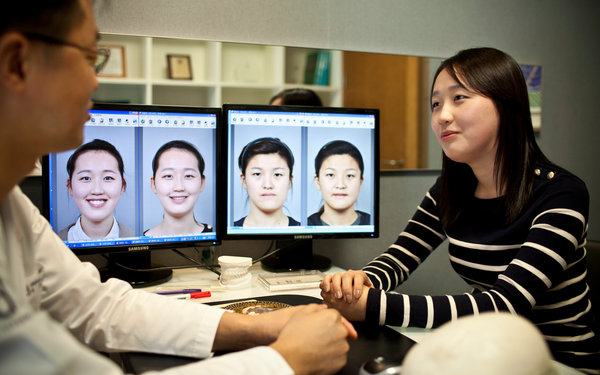
This exchange is representative of a larger cultural dialogue in South Korea. While older generations or those with more traditional leanings may view surgery with skepticism, the younger demographic and those within the entertainment industry often perceive it as a practical means of self-improvement. The normalization of these procedures is so pervasive that for many celebrities, the choice is not whether to undergo surgery, but how to manage public disclosure.
The Standardization of Beauty: The Miss Daegu Controversy
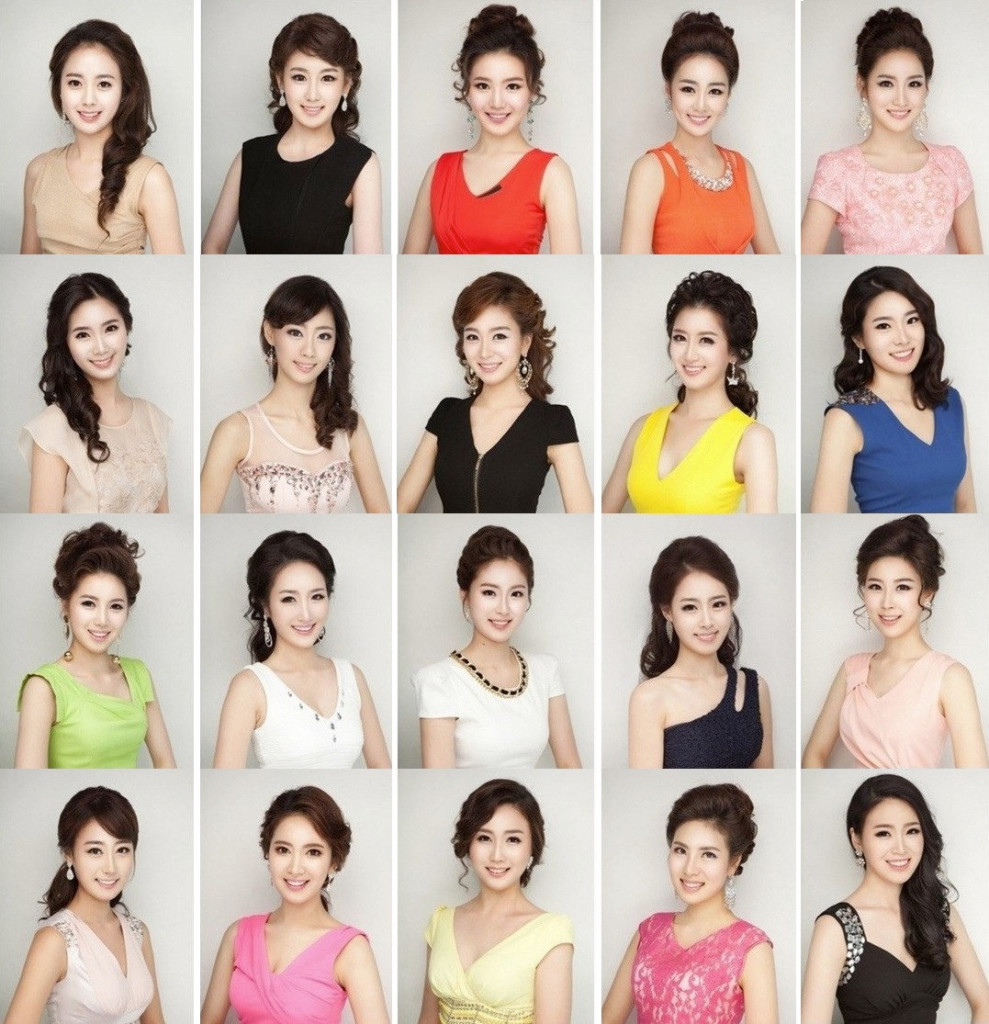
The consequences of a standardized beauty ideal became a global talking point following the release of promotional photos for the 2013 Miss Daegu pageant, a regional preliminary for the Miss Korea competition. The twenty candidates featured in the photographs exhibited such striking similarities in their facial features—large eyes with double eyelids, high nose bridges, pale skin, and V-shaped jawlines—that they were widely referred to in international media as "clones."
This incident sparked a renewed debate over the "industrialization of beauty" in South Korea. Critics argued that the pervasive influence of plastic surgery had created a singular, manufactured template for attractiveness, erasing individual uniqueness. The "Miss Korea face" has become a recognizable aesthetic, often attributed to the specific techniques favored by surgeons in Seoul’s Apgujeong district, commonly known as the "Beauty Belt." This area houses hundreds of clinics and serves as the epicenter of the global medical tourism industry, attracting patients from across Asia and beyond.
The uniformity seen in beauty pageants is often mirrored in the K-pop industry, where "visuals" are a primary criterion for trainee selection. The pressure to conform to these specific standards is not only exerted by talent agencies but is reinforced by a public that frequently criticizes any deviation from the established norm.

Statistical Overview of the South Korean Aesthetic Market
South Korea consistently ranks as having one of the highest rates of plastic surgery per capita in the world. According to data from the International Society of Aesthetic Plastic Surgery (ISAPS), the nation’s aesthetic market has seen exponential growth over the last two decades. While invasive procedures like rhinoplasty and blepharoplasty (double eyelid surgery) remain popular, there has been a significant surge in non-invasive treatments, such as Botox and fillers, which are marketed as "lunchtime procedures."
Several factors contribute to these high statistics:
- Economic Accessibility: The high concentration of clinics in urban centers like Gangnam has led to competitive pricing, making procedures accessible to the middle class.
- Marketing and Ubiquity: Plastic surgery advertisements are omnipresent in South Korean life, appearing in subway stations, on buses, and across digital platforms. These advertisements often frame surgery as a "gift" or a necessary step toward a successful career.
- Employment Pressure: In South Korea’s competitive job market, "Lookism" (discrimination based on appearance) is a documented challenge. Many job seekers include professional photos on their resumes, and it is widely believed that a more "favorable" appearance can provide a competitive edge in interviews.
Chronology of the Aesthetic Shift in South Korea
The history of plastic surgery in South Korea is often traced back to the post-Korean War era. Dr. Ralph Millard, a military surgeon stationed in South Korea in the 1950s, is credited with performing the first recorded double eyelid surgeries in the country. Initially, the procedure was intended to help Koreans appear more "approachable" to Westerners or to repair injuries, but it eventually evolved into a tool for aesthetic enhancement.
By the 1990s, the rise of Hallyu (the Korean Wave) began to export South Korean beauty standards across the globe. As K-dramas and K-pop gained popularity in China, Japan, and Southeast Asia, the "Korean look" became a sought-after aesthetic. This period marked the transition of plastic surgery from a private medical matter to a public cultural phenomenon.

In the 2010s, the industry faced a backlash regarding "ghost surgeries"—cases where a high-profile surgeon would consult with a patient, but the actual procedure would be performed by an unlicensed or less experienced "shadow doctor" while the patient was under anesthesia. This led to calls for stricter regulations and the installation of CCTV cameras in operating rooms, a debate that continues to influence medical policy today.
Media Influence and the Lack of Diverse Representation
A critical factor in the proliferation of plastic surgery is the role of South Korean media in glorifying a narrow definition of beauty. Unlike Western media, which has seen a gradual (though still imperfect) move toward body positivity and diverse representation, South Korean media remains largely committed to a singular aesthetic.
Prominent figures who do not fit the traditional beauty mold are often relegated to comedic roles, where their appearance is the subject of ridicule. Comedians like Kim Shin-young and Jung Ju-ri have frequently built routines around their perceived "unattractiveness" compared to idol stars. This dynamic reinforces the idea that there is only one "correct" way to be beautiful, and those who do not conform are destined for a lower social or professional status.
Furthermore, the concept of "natural beauty" (mo-tae-mi-nyeo) is often used as a marketing tool. When a celebrity is proven to have had no surgical intervention, it becomes a major headline, further elevating the status of those who naturally possess the traits that others must pay to achieve. This creates a paradox where surgery is both encouraged as a social necessity and stigmatized as "fake" compared to natural genetic luck.
Broader Impact and Societal Implications
The societal implications of this beauty-obsessed culture are profound. For many South Koreans, the decision to undergo surgery is not a matter of choice but a perceived obligation to society. The "vicious cycle" described by sociologists suggests that as more people undergo surgery to meet a standard, that standard becomes even more entrenched, forcing others to follow suit just to remain "average."
Psychologically, while some individuals report increased confidence following surgery, others experience "body dysmorphic tendencies," where the completion of one procedure leads to the desire for another in an endless pursuit of perfection. The normalization of risky procedures, such as "V-line" jaw surgery (which involves shaving the bone), highlights the extremes to which individuals may go to meet societal expectations.
In recent years, however, small signs of change have emerged. Movements such as "Escape the Corset" have seen some Korean women rejecting strict beauty standards by cutting their hair short and forgoing makeup. Additionally, some celebrities have begun to speak more candidly about the pressures of maintaining their appearance, suggesting a growing weariness with the industry’s demands.
Conclusion
The prevalence of plastic surgery in South Korea is a complex phenomenon driven by a combination of economic factors, media influence, and intense societal pressure. While individuals like G.NA argue for the psychological benefits of aesthetic enhancement, the broader trend toward a standardized, manufactured ideal raises significant questions about the loss of individuality and the health of the nation’s social psyche. Until the South Korean media and public discourse begin to celebrate a more inclusive and diverse range of beauty, the reliance on surgical intervention is likely to remain a central, albeit controversial, pillar of the culture. The evolution of this industry will continue to serve as a mirror for South Korea’s ongoing struggle to balance rapid modernization with the preservation of authentic identity.