The global expansion of the South Korean music industry, commonly referred to as the Hallyu wave, has been fueled largely by the unprecedented dedication of its fans. These supporters are known for organizing massive charitable donations, coordinating intricate "fan projects" that light up stadiums, and driving digital sales to record-breaking heights. However, this intense devotion often manifests in a darker, more intrusive form of entitlement. As the industry continues to grow, a series of high-profile incidents involving artists from SM Entertainment and YG Entertainment have highlighted a growing crisis: the dehumanization of idols under the guise of consumer rights. From cyberbullying and digital stalking to physical endangerment at airports, the boundary between admiration and harassment has become increasingly blurred, forcing a conversation about the psychological and physical safety of performers in the K-pop ecosystem.
Digital Harassment and the Deletion of Social Media Presence
In mid-2013, the digital space became a primary battleground for fan-driven harassment, exemplified by the experience of f(x) member Krystal. Following a series of "likes" on her Instagram photos by BIGBANG leader G-Dragon, Krystal became the target of a relentless smear campaign. Fans of G-Dragon, fueled by rumors of a potential romantic involvement, flooded Krystal’s account with malicious comments and coordinated hacking attempts. The severity of the cyberbullying eventually forced the artist to deactivate her account, @kjungxox, marking a significant moment where fan interference dictated an idol’s personal access to digital communication.
This incident was not an isolated case of digital territorialism. The culture of "shipping"—pairing idols together—often leads to extreme vitriol toward female artists who are perceived as threats to the "availability" of male idols. In the case of Krystal, the harassment extended beyond mere comments; the multiple attempts to compromise her personal data and private life through hacking highlighted a shift from fandom to digital stalking. This behavior reflects a broader trend within K-pop where fans feel a sense of ownership over an idol’s social circles, viewing any interaction with the opposite sex as a breach of an unwritten contract of exclusivity.
The "Only 13" Movement and the Marginalization of Guest Members
The internal politics of fandom can also dictate the very structure of K-pop groups, as seen in the long-standing "Only 13" movement directed at Super Junior. Since 2007, a vocal segment of the Super Junior fandom (E.L.F.) has campaigned against the inclusion of Henry Lau and Zhou Mi as official members of the main group. These two artists were introduced as members of the sub-unit Super Junior-M, intended to target the Chinese market. However, the "Only 13" supporters argued that the core identity of Super Junior must remain limited to the original thirteen members who debuted or were added shortly after.
In July 2013, the tension reached a boiling point when Super Junior’s Eunhyuk felt compelled to issue a public clarification. He stated that while Henry and Zhou Mi were vital components of Super Junior-M, they were not "official" members of the primary Super Junior lineup. This statement was widely viewed as a concession to the demands of fans who had spent years protesting the duo’s involvement in group activities. By defining Henry and Zhou Mi as "guest members," the industry effectively signaled that fan demands—even those rooted in exclusion and xenophobia—carry enough weight to influence official group branding and the career trajectories of individual artists.
The Apology for a Private Life: The Case of SHINee’s Jonghyun
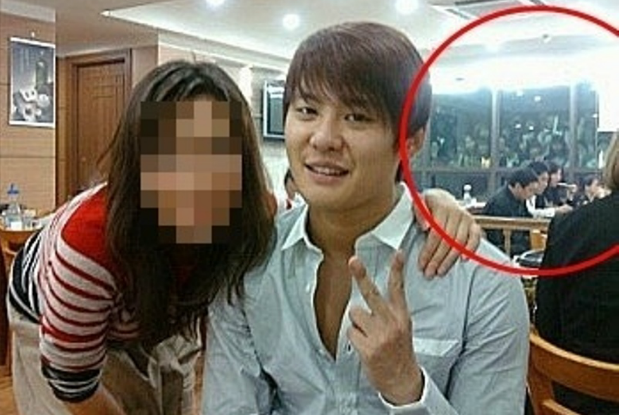
Perhaps the most poignant example of fan-induced pressure occurred in August 2013, when SHINee’s Jonghyun was photographed by fans while attending a movie with a female friend. Despite the lack of evidence regarding a romantic relationship, the mere suggestion of a private outing triggered a wave of "disappointment" across community sites. In response, Jonghyun issued a series of tweets that served as a formal apology to his fanbase.
In his statement, Jonghyun clarified that the woman was simply a friend and a non-celebrity, expressing regret for causing his fans distress. "Even though it’s not something I should be sorry about, I’m sorry," he wrote. This paradoxical statement captures the essence of the idol-fan dynamic: an artist apologizing for basic human behavior because it conflicts with the "perfect character" they are expected to portray. The incident underscored the reality that in K-pop, the private life of an artist is often treated as a public commodity, and any deviation from the image of the "ever-available bachelor" is treated as a professional failure.

Physical Safety and the Chaos of Airport Mobbing
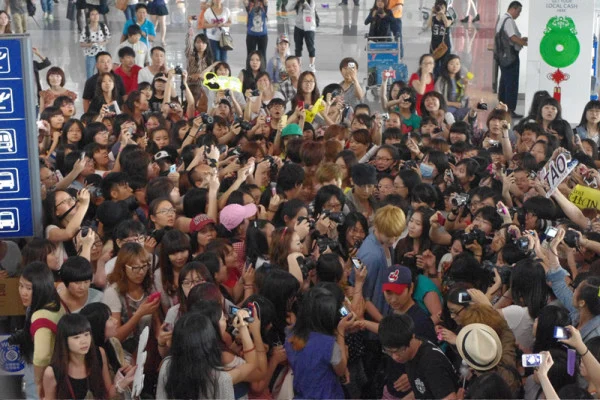
The entitlement of fans is not limited to the digital sphere; it frequently translates into physical danger. Major international hubs, particularly Incheon International Airport, have become sites of frequent "mobbing" incidents. When groups like EXO or SHINee travel, they are often met by hundreds of fans who bypass security barriers to get closer to the artists. These encounters frequently result in stampedes where both fans and idols are pushed, tripped, or physically handled.
In several documented cases, artists have been seen visibly distressed or physically injured during these transitions. Despite the recurring nature of these events, entertainment agencies have historically been slow to implement rigorous private security protocols, often relying on standard airport police who are overwhelmed by the sheer volume of the crowds. The refusal of companies to reprimand this behavior stems from a desire to maintain a "friendly" image, but it creates a vacuum where the physical autonomy of the artist is sacrificed for the sake of fan access. The lack of vocal condemnation from agencies emboldens "sasaeng" fans (obsessive fans who invade privacy) to continue their intrusive behaviors without fear of legal or social repercussions.
The Consumer Fallacy: Is the Customer Always Right?
The root of these issues lies in the commercialization of the idol-fan relationship. K-pop fans are among the most high-spending consumers in the global music market, purchasing multiple copies of albums to influence chart rankings and spending thousands on "fansigns" and merchandise. This high level of financial investment leads to a psychological sense of "shareholdership." Fans often believe that because they fund an idol’s career, they have a right to dictate that idol’s personal choices, group dynamics, and public behavior.
However, industry analysts argue that this "customer is always right" mentality is a fallacy when applied to human beings. Unlike a tangible product, an idol is an individual with civil rights and a need for psychological boundaries. The current K-pop model, which markets idols as "ideal partners" or "close friends" through parasocial interaction, intentionally blurs these lines to maximize profit. When agencies fail to set boundaries, they reinforce the idea that idols are characters in a story written by the fans, rather than professionals performing a job.

The Role of "Netizens" and the Culture of Perfection
The term "Netizen" (internet citizen) carries significant weight in South Korea, where online public opinion can end a career overnight. The expectations placed on idols by netizens are often hypocritical; while fans claim to protect their idols from "haters," they often employ the same tactics of surveillance and criticism to keep the idols "in line." This culture of perfection demands that idols remain scandal-free, perpetually grateful, and socially isolated from anything that might disrupt their curated image.
This pressure creates a toxic environment where negativity is avoided at all costs, and genuine self-expression is stifled. When an idol like Jonghyun or Krystal is forced to apologize or retreat from social media, it validates the behavior of the vocal minority. The industry’s reliance on "image" means that even a hint of a bad reputation is viewed as a financial liability, leading companies to mollify aggressive fans rather than defending their artists’ right to a private life.
A Call for Structural Change and Fan Accountability
For the K-pop industry to remain sustainable and ethical, a shift in the power dynamic is necessary. This requires action on three fronts:
- Agency Responsibility: Entertainment companies must prioritize the mental and physical health of their artists over short-term fan satisfaction. This includes implementing stricter security at public venues, taking legal action against hackers and sasaeng fans, and refusing to issue apologies for an artist’s private, non-criminal activities.
- Artist Autonomy: Artists should be encouraged to set boundaries. While the fear of backlash is real, the precedent set by those who speak out against harassment is vital for the industry’s evolution.
- Fan-Led Regulation: The most effective change must come from within the fandoms themselves. Just as fans organize to promote music, they must organize to self-regulate. Mature segments of the fandom need to vocalize opposition to cyberbullying and physical mobbing, creating a social cost for inappropriate behavior.
The "blind negativity" that has characterized many of the incidents in 2013 and beyond is a poison to the very culture fans claim to love. As K-pop continues to dominate the global stage, the treatment of its performers will be the ultimate measure of the industry’s maturity. The transition from seeing idols as "property" to seeing them as "professionals" is not just a moral necessity, but a requirement for the continued growth of the Hallyu wave. Without these boundaries, the "gritty side" of the K-pop coin threatens to overshadow the talent and hard work that define the genre.