
South Korea Reevaluates Celebrity Soldier Program Amid Growing Scandals and Public Outcry Over Disciplinary Breaches

The mandatory military conscription system in South Korea remains one of the most significant social and political touchstones in the nation, serving as a rite of passage that defines the transition from youth to adulthood for nearly all able-bodied men. Under the current legal framework, necessitated by the 1953 armistice that left the Korean Peninsula in a technical state of war, all male citizens between the ages of 18 and 28 are required to serve approximately 21 months in the armed forces. This system is designed to maintain a standing force of nearly 600,000 personnel to counter potential threats from North Korea. While the policy is a cornerstone of national security, it has recently come under intense scrutiny following a series of high-profile scandals involving "celebrity soldiers"—performers and athletes who serve within the Defense Media Agency as public relations recruits.
The concept of the celebrity recruit was originally established to bolster the morale of the rank-and-file soldiers and to promote the military’s image through various media projects, radio broadcasts, and musical performances. However, the perceived disparity between the grueling reality of frontline service and the relatively comfortable conditions afforded to famous recruits has ignited a national debate regarding fairness and institutional integrity. The latest controversy involving prominent figures such as Se7en (Choi Dong-wook) and Sangchu (Lee Sang-chul) of the hip-hop duo Mighty Mouth has brought these tensions to a breaking point, prompting the Ministry of National Defense to launch an unprecedented investigation into the conduct of the Public Relations Unit.
The Catalyst: The SBS On Site 21 Investigative Report
The current crisis reached a fever pitch following an investigative broadcast by the SBS program On Site 21. The report documented several celebrity soldiers, including Se7en and Sangchu, engaging in behavior that flagrantly violated military regulations. Following a performance in Chuncheon to commemorate the 63rd anniversary of the Korean War, the soldiers were observed leaving their designated barracks in civilian clothing—a major breach of protocol for active-duty personnel.
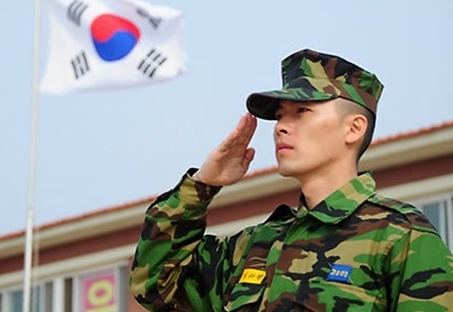
The footage revealed the recruits using personal cellphones, consuming alcohol, and, most controversially, visiting a massage parlor known for providing adult services at 4:00 AM. When confronted by SBS journalists, the soldiers engaged in a physical altercation with the camera crew, attempting to seize equipment and evade questioning. The "knee therapy" excuse provided by the soldiers—claiming they visited the establishment for medicinal massage rather than illicit services—was met with widespread derision from the public. This incident was not an isolated event but rather the culmination of a series of reports suggesting that the Defense Media Agency had become a sanctuary for stars to bypass the hardships of traditional service.
A Chronology of Growing Resentment
The scrutiny of celebrity soldiers did not begin with Se7en and Sangchu. Public dissatisfaction has been mounting for years, fueled by a perceived lack of discipline and the "over-awarding" of vacation days to famous recruits.
- The Rain (Jung Ji-hoon) Controversy (January 2013): Global superstar Rain was photographed meeting actress Kim Tae-hee while on official duty. Investigations revealed that Rain had been granted an excessive number of holidays—94 days in 2012 alone—compared to the 45 to 50 days typically granted to regular soldiers over their entire two-year enlistment. Rain was sentenced to a week of confinement, a punishment many viewed as a mere "slap on the wrist."
- The Se7en and Sangchu Incident (June 2013): The SBS exposé provided visual evidence of curfew violations and unauthorized visits to adult entertainment venues. This shifted the conversation from "perks" to "criminal misconduct" and "moral decay" within the PR unit.
- Institutional Backlash (July 2013): Following the broadcast, the Ministry of National Defense initiated a special audit of the 15 celebrity soldiers currently serving under the Defense Media Agency. The investigation aimed to determine the extent of the preferential treatment and whether the unit should continue to exist.
Data and Disparities: Regular Soldiers vs. Celebrity Recruits
To understand the public’s outrage, one must look at the quantitative and qualitative differences between the service of an average conscript and that of a PR recruit. Regular soldiers are typically stationed in remote mountainous regions or along the heavily fortified Demilitarized Zone (DMZ). They endure sub-zero temperatures during winter patrols, have no access to personal electronic devices, and live in communal barracks with minimal privacy.
In contrast, the SBS report and subsequent military audits revealed that celebrity recruits enjoyed a suite of luxuries that were fundamentally at odds with the "shared sacrifice" ethos of the military:

- Personal Belongings: Recruits were found to possess civilian wardrobes, personal laptops, and PlayStation gaming consoles.
- Communication: While regular soldiers were limited to public payphones, celebrity recruits frequently used unauthorized cellphones to maintain their social and professional networks.
- Living Conditions: PR recruits often stayed in motels or hotels during "promotional tours" rather than returning to military bases, allowing them to bypass curfews and alcohol bans.
- Furloughs: Statistics provided to the National Assembly indicated that celebrity soldiers received, on average, twice as many vacation days as regular conscripts, often justified as "reward leave" for performances.
Official Responses and the Defense Ministry’s Dilemma
The Ministry of National Defense initially attempted to downplay the severity of the SBS report. Early statements suggested that the visit to the massage parlor was for "medical purposes," a claim that was quickly retracted as public anger grew. The backlash reached the floor of the National Assembly, where lawmakers across the political spectrum demanded the abolition of the PR unit.
A spokesperson for the Ministry stated, "We take the current situation very seriously. The purpose of the PR unit was to improve the image of the military, but it is currently doing the opposite. We will conduct a thorough investigation and hold those responsible accountable under military law."
As the investigation progressed, the Ministry faced a difficult choice: reform the unit with stricter oversight or abolish it entirely. Critics argue that the unit is inherently flawed because it attempts to mix the "star system" of the entertainment industry with the "egalitarian system" of a conscripted military. The anonymous testimony of a celebrity recruit, identified as "A," who complained that performing twenty times a month was "taxing," only served to alienate the public further, as many viewed these performances as a continuation of their lucrative careers rather than true military service.
Socio-Political Implications and the Fairness Doctrine
In South Korean society, military service is viewed as the ultimate equalizer. Regardless of wealth or status, every man is expected to contribute to the nation’s defense. When celebrities are seen to be evading this responsibility or receiving special treatment, it strikes at the heart of social cohesion. The "fairness doctrine" is particularly sensitive among the younger generation, who face a hyper-competitive job market and feel that the 21-month hiatus already puts them at a disadvantage.

Furthermore, the Se7en scandal has reignited the debate over military exemptions. Currently, only Olympic medalists and certain high-level classical musicians are eligible for exemptions. Before his enlistment, Se7en had argued that Hallyu (Korean Wave) stars contribute as much to the nation’s global prestige as athletes and should be considered for similar benefits. However, the recent scandals have rendered this argument politically toxic. The prevailing sentiment is that if Hallyu stars wish to be respected as national icons, they must prove their loyalty by serving without complaint or privilege.
Analysis of the Impact on the Hallyu Industry
The fallout for the individuals involved is likely to be career-altering. In South Korea, a "military scandal" is often a death knell for a celebrity’s public image. High-profile cases from the past, such as Steve Yoo’s draft-dodging and subsequent banishment from the country, or Psy’s requirement to serve a second term after failing to fulfill his duties properly, serve as cautionary tales.
For Se7en, whose relationship with actress Park Han-byul was already under intense public scrutiny, the visit to an adult massage parlor represents a double blow to his reputation as both a soldier and a public figure. The Hallyu industry, while resilient, relies heavily on the "moral purity" and relatability of its stars. When the veil of celebrity is lifted to reveal a sense of entitlement and a disregard for national duty, the "post-enlistment popularity" that many stars hope for often evaporates.
Conclusion: The End of an Era for Celebrity Soldiers?
The Ministry of National Defense is expected to release the final results of its investigation in the coming weeks. Early indications suggest that the Defense Media Agency may face a total overhaul or complete dissolution. If the unit is abolished, current celebrity recruits would likely be reassigned to regular infantry units to serve out the remainder of their terms as "ordinary" soldiers.

The Se7en and Sangchu scandal has served as a wake-up call for the South Korean military establishment. It has demonstrated that the PR benefits of having famous faces in uniform are far outweighed by the damage done to institutional morale and public trust when those faces are caught breaking the rules. As South Korea continues to navigate its complex security situation, the demand for a fair, transparent, and disciplined military remains paramount. The era of the "celebrity soldier" as a privileged class appears to be coming to an end, replaced by a renewed emphasis on the principle that in the defense of the fatherland, everyone must stand on equal ground.