

The Global Expansion of K-pop and the Socio-Cultural Challenges of the International Fan Diaspora

The rise of the Korean Wave, or Hallyu, has transformed the South Korean music industry from a localized cultural product into a multi-billion-dollar global phenomenon. Central to this expansion is the international fan diaspora—a vast, decentralized community of consumers who reside outside the Korean peninsula. While digital platforms like YouTube, TikTok, and Weverse have bridged the geographical gap between Seoul and the rest of the world, international fans, often referred to as "i-fans," navigate a unique set of logistical, linguistic, and social challenges. These obstacles, ranging from the delay of translated content to the stigma associated with consuming non-Western media, define the modern experience of global K-pop consumption.
The Evolution of the International Fandom: A Chronology
The trajectory of the international K-pop fandom can be categorized into three distinct eras. The first era, spanning the late 1990s to the mid-2000s, was characterized by "underground" consumption. Fans in Southeast Asia and small pockets of the West relied on file-sharing sites and physical CD imports to access music from pioneering groups like H.O.T. and Shinhwa. During this period, translations were nearly non-existent, and the community was fragmented.

The second era, beginning around 2008, saw the advent of social media and the "Global Hallyu" push led by Second Generation groups such as Girls’ Generation, Big Bang, and Super Junior. This period marked the birth of organized "fansubbing" groups—volunteers who dedicated hours to translating variety shows and interviews. The third and current era, initiated by the viral success of Psy’s "Gangnam Style" in 2012 and solidified by the record-breaking achievements of BTS and Blackpink, has seen K-pop enter the mainstream global consciousness. Despite this mainstream visibility, the structural difficulties faced by i-fans remain prevalent.
The Linguistic Barrier and the "Subbing" Economy
One of the most persistent hurdles for the international diaspora is the language barrier. For much of K-pop’s history, the burden of translation fell entirely on the fans. When a group appears on a Korean variety show or hosts a live broadcast, there is often a significant time lag before English or Spanish subtitles are provided.
This delay creates a tiered experience within the fandom. While domestic Korean fans can engage with content in real-time, international fans must often wait for volunteer "subbing" teams to translate, typeset, and encode videos. This process is frequently hampered by copyright strikes on platforms like YouTube, where official broadcast networks take down fan-translated content, inadvertently cutting off the very audience they seek to grow. Consequently, many i-fans are forced to navigate unofficial, often insecure websites to access information, leading to a sense of exclusion from the immediate cultural conversation.

Socio-Cultural Stigma and the "Flower Boy" Aesthetic
International fans frequently encounter social friction within their local communities. In many Western cultures, the aesthetic standards of K-pop—which often emphasize "flower boy" (kkotminam) imagery, including makeup, dyed hair, and soft masculinity—clash with traditional Western ideals of manhood.
This discrepancy leads to a recurring cycle of misunderstanding. Fans often report having to defend their interests against peers who question the gender or sexuality of male idols. The act of displaying a K-pop idol as a phone wallpaper or sharing a music video can result in "othering," where the fan is viewed as having "eccentric" or "foreign" tastes. This stigma is not merely social; it reflects a broader Eurocentric bias in global media, where Asian performers are often infantilized or hyper-stylized rather than being recognized for their technical musical and choreographic proficiency.
The Missionary Burden: Evangelizing K-pop
Because K-pop is still viewed as a niche interest in many regions, international fans often take on a self-imposed role as "brand ambassadors." Driven by a desire to see their favorite artists succeed on global charts like the Billboard Hot 100 or the UK Official Charts, fans actively attempt to introduce the genre to their friends and family.

However, this "initiation" process is fraught with difficulty. The high-concept, maximalist nature of K-pop music videos—featuring rapid-fire editing, synchronized choreography, and avant-garde fashion—can be overwhelming for the uninitiated. New viewers often struggle with the lack of familiarity with the Korean language and the "idol system" itself. For the i-fan, the lackluster or confused response from their peers can be a source of frustration, reinforcing the feeling that their cultural passion is isolated from their immediate physical reality.
The Complexity of K-pop Lexicography
The K-pop industry operates with a specialized vocabulary that can be impenetrable to outsiders. Terms such as "bias" (one’s favorite member), "comeback" (a new release), "fansign" (a meet-and-greet event), and "aegyo" (cute expressions) form a linguistic shorthand that facilitates communication within the fandom.
The struggle for the i-fan arises when this terminology bleeds into everyday life. Explaining the nuance between a "fansite" (a dedicated photographer) and a "sasaeng" (an obsessive stalker) requires a level of cultural context that most non-fans do not possess. This linguistic divide creates a "bubble effect," where fans communicate fluently with others online across the globe but find themselves unable to articulate their interests to those in their own household or workplace.

Geographical Inequity and the "World Tour" Fallacy
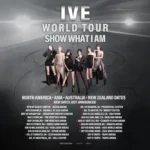
Perhaps the most significant grievance for the international diaspora is the logistical neglect of certain regions. While K-pop labels frequently announce "World Tours," these itineraries are often limited to major hubs in East Asia and a few select cities in the United States and Western Europe.
Fans in regions such as Latin America, the Middle East, Africa, and parts of Southeast Asia are frequently excluded from live performance circuits. For these fans, the K-pop experience is entirely digital. They consume concerts through low-quality live streams or "fancams" (fan-recorded videos), leading to a phenomenon where their participation in the fandom is restricted to the "i" in i-fan—the internet. This geographical distance creates a sense of "long-distance longing," where fans invest significant financial resources in albums and merchandise but are denied the visceral experience of a live concert.
Branding and the English Language Paradox
The naming conventions of K-pop groups often present a unique challenge for international audiences. Labels frequently use acronyms or unconventional spellings to ensure search engine optimization (SEO) and brand uniqueness. However, these names can be difficult to explain or pronounce for native English speakers. Groups like Teen Top, whose name stands for "Teenager Emoboys Emoticon Next Generation Talent Object Praise," illustrate the linguistic creative liberties taken by Korean agencies that do not always translate smoothly into a Western marketing context.

Furthermore, the inclusion of English lyrics in K-pop songs—often referred to as "Engrish"—can be a point of contention. While these lyrics are intended to increase global appeal, they occasionally feature grammatical inconsistencies or non-sequiturs. For native English-speaking fans, these lines can be jarring, requiring a level of "suspension of disbelief" to enjoy the track.
Cultural Dissociation and the Shift in Identity
A notable psychological impact on long-term international fans is the gradual dissociation from their own local pop culture. As fans immerse themselves in the Korean entertainment ecosystem, they may find themselves more familiar with the charts in Seoul than the radio hits in their own country.
This shift can lead to moments of "reverse culture shock," where local music sounds foreign and K-pop sounds like home. While this highlights the power of K-pop as a form of "soft power" for South Korea, it also places the i-fan in a liminal space—too "Koreanized" for their local culture but still an outsider to Korean society.

Industry Implications and Future Outlook
The challenges faced by i-fans have not gone unnoticed by the major South Korean entertainment "Big Four" (HYBE, SM, YG, and JYP). In recent years, there has been a concerted effort to mitigate these issues:
- Direct Globalization: Companies are now debuting "global groups" with members from diverse backgrounds (e.g., Blackswan, Katseye, and VCHA) to eliminate the "foreignness" of the genre.
- Platform Integration: Apps like Weverse now offer professional, multi-language translation services, reducing the reliance on volunteer fansubbers.
- Strategic Partnerships: By partnering with Western labels like Universal Music Group and Geffen Records, K-pop agencies are securing better distribution and more expansive tour routes.
Despite these advancements, the core experience of the international fan remains one of resilience. The diaspora continues to serve as the primary engine for K-pop’s global growth, contributing to billions of views and millions of album sales annually. According to the 2023 Luminate Year-End Music Report, K-pop witnessed a 56% increase in on-demand audio and video streams globally, a testament to the dedication of a community that overcomes language, distance, and social stigma to support their artists.
In conclusion, the international K-pop fan diaspora is a vital, albeit often misunderstood, segment of the global music economy. Their struggle to navigate a world that is not yet fully equipped for cross-cultural digital consumption is a defining feature of 21st-century fandom. As the industry continues to evolve, the "i-fan" remains a bridge between cultures, proving that music can indeed transcend the boundaries of language and geography, provided one has the patience to wait for the subtitles.