

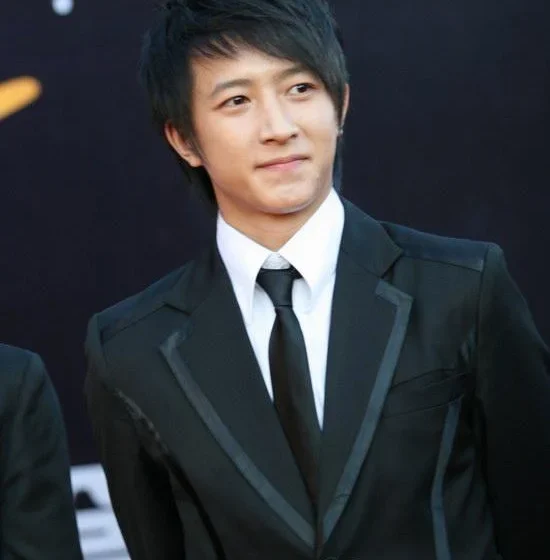
The Intersection of Law and Culture Analyzing Kris Wu’s Lawsuit Against SM Entertainment and the Concept of Jeong

On May 15, 2014, the global K-pop industry was sent into a state of shock when Kris Wu (Wu Yifan), the leader of EXO-M, filed a lawsuit against his management agency, SM Entertainment, to terminate his exclusive contract. The legal action, submitted to the Seoul Central District Court, did not merely signal a contractual dispute between an artist and a corporation; it ignited a firestorm of emotional discourse regarding loyalty, the ethics of the South Korean entertainment industry, and the deep-seated cultural nuances that define interpersonal relationships in East Asia. As one of the most prominent members of EXO, a group then at the zenith of its "Overdose" comeback, Kris’s sudden departure raised fundamental questions about the sustainability of the "idol" model and the psychological impact of the "slave contract" narrative that has haunted SM Entertainment for over a decade.
A Chronology of the Conflict and Immediate Aftermath
The timeline of the crisis moved with startling velocity. On the morning of May 15, news broke that Kris had sought legal counsel from the same firm that represented Han Geng during his 2009 departure from Super Junior. The timing was particularly precarious, as EXO was scheduled to hold its first solo concert, "EXO FROM. EXOPLANET #1 – THE LOST PLANET," just one week later.
By the afternoon of the filing, the internal cohesion of EXO appeared to fracture publicly. Several members of the group, including those in the Korean sub-unit EXO-K and the Chinese sub-unit EXO-M, unfollowed Kris on social media platforms like Instagram. Tao, a fellow Chinese member of EXO-M who had been perceived as having a close bond with Kris, took to Weibo and Instagram to express a sense of profound abandonment. He characterized Kris’s departure as a unilateral decision made without regard for the team’s collective hard work. Meanwhile, SM Entertainment released a brief statement expressing bewilderment and promising to ensure that EXO’s upcoming activities and concerts would proceed with the remaining 11 members.
In the days following, Kris remained in China, largely silent except for a brief Weibo post stating, "I am doing well. I wish everyone the best and that things go better for you all. I am thankful to all the people who support me." Back in Seoul, the remaining members were forced to reorganize their choreography and vocal parts for a two-hour concert in less than seven days, a feat that further fueled the narrative of Kris as a "betrayer" among certain segments of the fanbase and the industry.
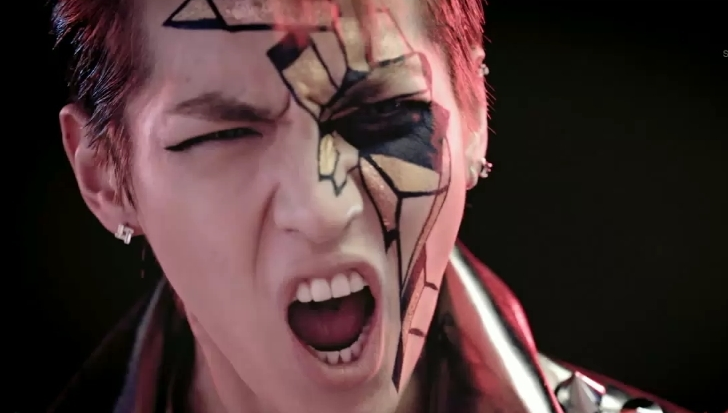
The Legal and Professional Allegations
The core of Kris’s lawsuit rested on the claim that SM Entertainment treated him as an object rather than a creative artist. According to his legal representatives, the agency unilaterally decided his schedules without consulting his physical health or personal preferences. The suit alleged that the agency violated basic human rights, citing an exhaustive schedule that left little time for rest and resulted in deteriorating health.
Furthermore, the lawsuit highlighted financial discrepancies. Kris’s team argued that despite EXO’s massive commercial success and the grueling nature of their promotions, the distribution of income was opaque and fundamentally unfair. This echoed the "slave contract" controversy that first gained international notoriety in 2009 when three members of TVXQ (now known as JYJ) sued SM Entertainment. That landmark case led the South Korean Fair Trade Commission to implement "standardized contracts" to prevent excessively long terms, yet Kris’s suit suggested that the underlying power dynamics remained skewed in favor of the conglomerate.
The Cultural Framework: Understanding Jeong and Haan
To analyze the vitriol directed at Kris by his former bandmates and a portion of the public, one must look beyond legalities and into the Korean sociological concepts of jeong and haan. These concepts form the invisible architecture of Korean social life and are essential to understanding why a professional resignation is often interpreted as a personal betrayal.
Jeong is a complex term that translates roughly to "affection," "attachment," or "bond." Unlike the Western concept of love, which is often individualized, jeong is collective. It is the emotional glue that develops through shared experiences, time, and mutual struggle. In the context of a K-pop group, where members live, eat, and train together for years before debuting, the jeong developed is intended to be unbreakable. When Kris filed his lawsuit just before the group’s first concert—the culmination of their shared struggle—he was seen as severing this collective bond.
The violation of jeong leads to the emergence of haan. As noted by researchers Chung and Cho from the UCLA School of Medicine, haan is a state of profound agony, resentment, and sorrow that arises when loyalty is betrayed. The more intense the jeong was, the more bitter the haan becomes. For the remaining EXO members, who had vowed to "stay together forever," Kris’s exit was not just a breach of contract; it was a psychological trauma. Tao’s emotional outbursts and the group’s collective "IDGAF" (I don’t give a f***) attitude during rehearsals were manifestations of this cultural resentment.

Comparative Analysis: The Foreign Idol Experience
The Kris Wu case also brought to the forefront the unique challenges faced by non-Korean idols. While jeong is a cornerstone of Korean identity, its application to foreigners—and the foreigners’ ability to fully integrate into it—remains a subject of debate. Kris, being Chinese-Canadian, navigated a different cultural heritage. While the Chinese concept of qing shares etymological roots with jeong, the social expectations of collectivism in the Chinese entertainment industry have evolved differently.
Historical precedents such as Han Geng’s departure from Super Junior show a recurring pattern. Han Geng left SM Entertainment citing restrictive laws for foreign performers in Korea and unfair treatment. However, as Super Junior’s Heechul noted in a televised discussion on Ssulzun, the landscape had changed significantly between 2009 and 2014. By the time of Kris’s debut, the industry had become more accommodating to foreign members, offering them more visibility and opportunities. Heechul’s critique of Kris centered on the "discourtesy" shown to fans who had invested emotionally and financially in the upcoming concert. This suggests that while the industry had modernized its logistics, the cultural expectation of total devotion to the "family" (the agency and the group) remained absolute.
Market Impact and the Agency’s Response
The economic ramifications of the lawsuit were immediate. On the day the news broke, SM Entertainment’s stock price plummeted by nearly 6%, wiping out millions of dollars in market capitalization in a single afternoon. This volatility highlighted the fragility of the K-pop business model, which relies heavily on the perceived stability and "purity" of its idol groups.
SM Entertainment’s strategy in the wake of the lawsuit was multifaceted. First, they moved to minimize the "brand damage" by removing Kris’s image from concert merchandise and offering refunds to fans who no longer wished to attend. Second, they utilized the remaining members to solidify a narrative of resilience. The "We Are One" slogan was amplified, transforming the concert into a rally of solidarity. By positioning the remaining eleven members as the victims of an unexpected abandonment, the agency successfully pivoted the public’s focus from the potential validity of Kris’s legal grievances to the emotional pain of the "loyal" members.
Broader Implications for the K-pop Industry
The Kris Wu vs. SM Entertainment saga served as a harbinger for a series of departures that would eventually redefine the "third generation" of K-pop. Within a year, two other Chinese members of EXO, Luhan and Tao, would follow suit, filing their own lawsuits to terminate their contracts. This exodus forced K-pop agencies to re-evaluate how they manage international talent and whether the traditional "total-immersion" training model is compatible with the career aspirations of global artists.

The conflict also highlighted a growing divide in fan culture. In China, Kris was largely supported, with fans viewing his move as a courageous step toward individual autonomy and a better career path in the booming Chinese film and music markets. Conversely, in South Korea, the emphasis remained on the group’s sanctity. This divergence illustrates how the globalization of K-pop has created a clash of values: the Western/global emphasis on individual rights and contracts versus the traditional Korean emphasis on collective loyalty and emotional bonds.
Ultimately, the Kris Wu lawsuit was a pivotal moment that exposed the "gilded cage" of the idol industry. While the legal battle was eventually settled with Kris and Luhan’s contracts remaining valid with SM Entertainment until 2022 (though they were permitted to promote independently in China), the emotional scars within the fandom and the industry remained. The case stands as a definitive study of how the pursuit of individual agency can be interpreted as a betrayal of a collective identity, and how the concept of jeong continues to govern the hearts and minds of the K-pop world, long after the legal papers are signed.