2NE1’s Sandara Park Opens Up On Her Struggles While Living In The Philippines
Article Editorial Team
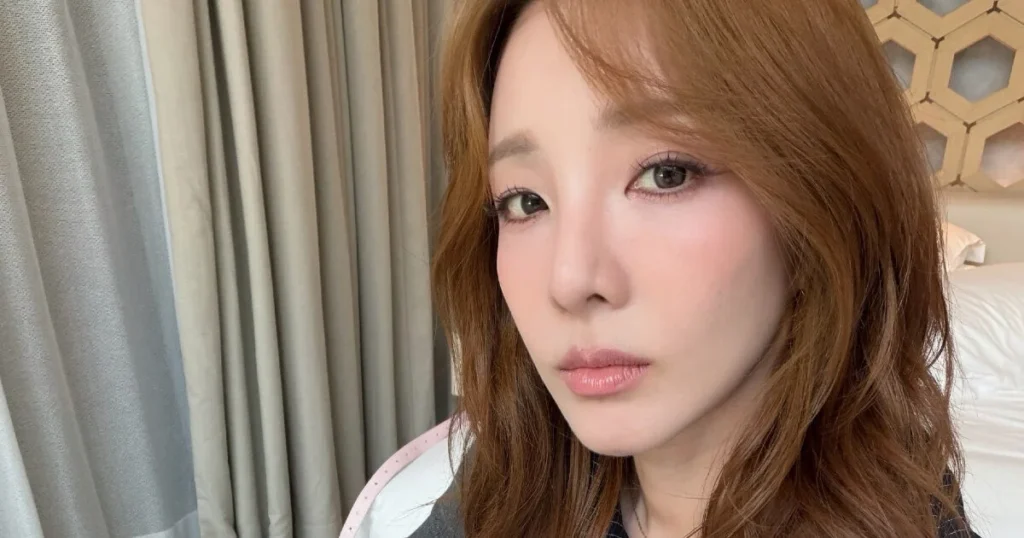
Sandara Park, a pivotal figure in the global ascent of K-pop and a member of the legendary girl group 2NE1, recently shared a profound and vulnerable look into her formative years. During a guest appearance on the YouTube talk show "Yoon DoHyun’s ETC," hosted by veteran rock musician Yoon Do Hyun, the artist detailed the significant psychological and social challenges she faced after immigrating to the Philippines as a young child. Her revelations provide a stark contrast to her public persona as a vibrant, high-energy performer, highlighting a decade-long struggle with social anxiety and selective silence that shaped her path to international stardom.
A Formative Transition: From South Korea to the Philippines
Sandara Park’s journey is unique among K-pop idols of her generation. While many idols spend their youth within the rigorous trainee systems of Seoul, Park’s upbringing was defined by the complexities of the immigrant experience. She moved from South Korea to the Philippines when she was in the fourth grade, at approximately ten years of age. This transition occurred during a critical developmental window, marking the beginning of a period that would span her entire adolescence and early adulthood.
"I immigrated to the Philippines when I was in fourth grade, around ten years old," Park explained during the interview. "I stayed there until my early twenties, so I spent all those critical years—from puberty to adulthood—there."
The move was prompted by her father’s business interests, a common narrative for many Korean families who relocated to Southeast Asia in the 1990s. However, for a child who was already naturally reserved, the sudden shift in language, culture, and social environment proved to be an overwhelming obstacle.
The Weight of Silence: Overcoming Language Barriers and Bullying
The most striking revelation from Park’s interview was the depth of her social withdrawal. She confessed that for nearly a decade, she lived in a state of near-total silence in public settings. This was not merely a matter of being "the quiet girl" in class; it was a profound defense mechanism triggered by the fear of judgment and the trauma of being mocked by her peers.
When Yoon Do Hyun inquired about her adjustment to Filipino life, Park was candid about the difficulty. "It was very tough," she admitted. "I was already shy, but even more so as a child. I think I lived almost ten years without speaking."
The root of this silence was grounded in the harsh reality of peer interaction. Park noted that her initial attempts to integrate were met with ridicule. As she struggled to navigate both English and Tagalog (the primary languages of the Philippines), her pronunciation often became a target for schoolmates.
"I couldn’t speak English well, nor Filipino, and once I tried to speak but mispronounced words, and the kids laughed," she recalled. "They were elementary students, so it was understandable, but it hurt me deeply, and I just stopped talking."
This self-imposed silence was so absolute that it led to significant misunderstandings with authority figures. Park recounted an incident where a teacher, believing she was physically unable to speak, attempted to communicate with her using sign language. The realization that her teacher thought she was mute was a startling moment for the young Park, yet it did not immediately break the wall of silence she had built around herself.

Music as a Cultural Anchor and Psychological Escape
During these years of isolation, music served as Park’s primary connection to her identity and her homeland. While her public life was characterized by silence, her private life was filled with the sounds of the burgeoning K-pop scene and global pop icons. This period coincided with the "First Hallyu Wave," and Park found solace in the media she could obtain from local video stores.
"After school, I would always go home and spend time listening to music or watching popular Korean music videos I’d borrow from video stores," she told Yoon Do Hyun.
She cited the legendary group Seo Taiji and Boys—the group that arguably birthed modern K-pop—as a foundational influence. Watching their performances allowed her to dream of a reality far removed from her quiet daily life in the Philippines. As she entered her teenage years, her influences expanded to include Western pop powerhouses like Britney Spears and Christina Aguilera. These artists represented a level of confidence and vocal expression that Park lacked in her social life, fueling a desire to find her own voice on a stage where she wouldn’t be judged for her "mispronunciations" but celebrated for her performance.
The Philippine Breakthrough: Star Circle Quest and the "Pambansang Krung-Krung"
While the interview on "Yoon DoHyun’s ETC" focused on her internal struggles, it is essential to contextualize these revelations within her eventual rise to fame. In 2004, despite her history of extreme shyness, Park auditioned for the ABS-CBN talent search show "Star Circle Quest" in the Philippines. This move was a radical departure from her decade of silence.
During the competition, Park became a sensation. The Filipino public was charmed by her unique personality, eventually dubbing her the "Pambansang Krung-Krung" (the National "Crazy" Personality), a term used affectionately to describe her quirky and unpredictable charm. She finished as the runner-up and became a household name in the Philippines, starring in numerous films and television series and even releasing a hit novelty single, "In or Out."

This period was the ultimate turning point. The girl who had been too afraid to speak for ten years was suddenly the center of national attention. Her success in the Philippines served as a proof of concept for her talent, eventually catching the eye of YG Entertainment executives in South Korea.
Returning to Korea and the Global Impact of 2NE1
In 2007, Sandara Park made the pivotal decision to leave her established career in the Philippines to return to South Korea as a trainee under YG Entertainment. This move required her to start from scratch in an industry known for its brutal competitiveness.
Two years later, in 2009, she debuted as a member of 2NE1 alongside CL, Bom, and Minzy. The group revolutionized the K-pop landscape with their "girl crush" concept, moving away from the "cute" or "sexy" tropes that dominated the era. Park, known for her avant-garde hairstyles and youthful visuals, became a fashion icon and a vital part of a group that would go on to sell millions of records and headline world tours.
The irony of her trajectory is not lost on fans: the child who was once mocked for her speech became a member of one of the most vocally and visually expressive groups in music history. Her ability to transition from the "silent immigrant" to a "global superstar" remains one of the most compelling narratives in the industry.
Analysis: The Psychological Toll of the "Third Culture" Experience
Park’s reflections shed light on the "Third Culture Kid" (TCK) phenomenon—children who grow up in a culture different from their parents’ or their nationality. For many TCKs, the struggle to belong can lead to social anxiety or selective mutism, as described by Park.

Her story is a testament to the resilience required to overcome such barriers. In the context of the modern K-pop industry, where mental health is increasingly becoming a topic of open discussion, Park’s willingness to discuss her childhood trauma is significant. It humanizes an icon who has often been viewed through the lens of perfection and celebrity.
Furthermore, her experience highlights the importance of cultural representation. Her success in the Philippines before her debut in Korea bridged a gap between the two nations, fostering a deep and lasting bond between Filipino fans and K-pop that persists today.
2NE1’s Resurgence and Park’s Ongoing Legacy
The timing of Park’s interview is particularly poignant as 2NE1 recently announced a massive comeback to celebrate their 15th anniversary. After years of hiatus and individual pursuits, the group is set to embark on a global tour, beginning in late 2024.
For Sandara Park, this new chapter is not just a professional milestone but a full-circle moment. The girl who once hid in her room listening to VCDs is now a veteran artist mentoring a new generation of performers. Her journey from the silence of a Philippine classroom to the roar of international stadiums serves as a powerful reminder that formative struggles do not define one’s ultimate potential.
As Park continues to navigate her career as a soloist, actress, and variety star, her openness about her past ensures that her legacy is built on more than just hit songs; it is built on a foundation of authenticity and the quiet strength it took to finally find her voice.
Related News