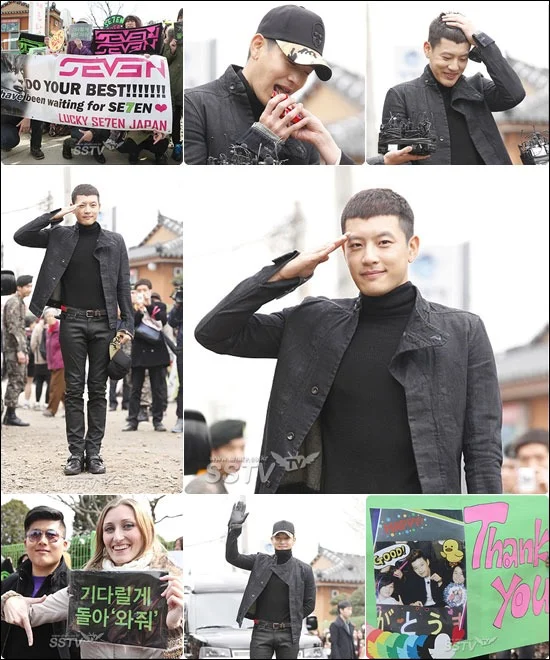
The South Korean Ministry of National Defense is currently facing unprecedented scrutiny following a series of high-profile scandals involving celebrity recruits, exposing a deep-seated culture of preferential treatment and systemic lack of discipline within the Defense Media Agency. For every able-bodied South Korean male, military service is an inescapable obligation, a rite of passage mandated by the precarious geopolitical reality of a peninsula still technically at war. Under the Military Service Act, all capable men must devote approximately 21 to 24 months to national defense, a requirement born from the 1953 armistice that halted the Korean War but never officially ended it. However, the recent conduct of prominent stars, specifically Se7en (Choi Dong-wook) and Sangchu (Lee Sang-chul) of Mighty Mouth, has ignited a national firestorm regarding the fairness of this universal conscription.
The Geopolitical and Social Framework of Korean Conscription
To understand the gravity of the current scandal, one must first grasp the role of the military in South Korean society. With North Korea maintaining one of the world’s largest standing armies and frequently engaging in provocative rhetoric and missile testing, South Korea relies on a conscription-based model to ensure its defense readiness. This shared sacrifice is viewed as the ultimate equalizer; regardless of wealth or status, young men are removed from their civilian lives, stripped of modern luxuries like cell phones and private internet access, and stationed in remote regions to undergo grueling physical training.
While the law allows for a few exceptions—such as Olympic medalists or those with debilitating health conditions—the social stigma of avoiding service is immense. Public figures who attempt to dodge the draft often face permanent career exile. Consequently, the "celebrity recruit" system, or Public Relations (PR) unit under the Defense Media Agency, was established to allow entertainers to serve while utilizing their talents for military musicals, radio broadcasts, and morale-boosting performances. However, what was intended as a tool for public outreach has instead become a symbol of elite privilege.
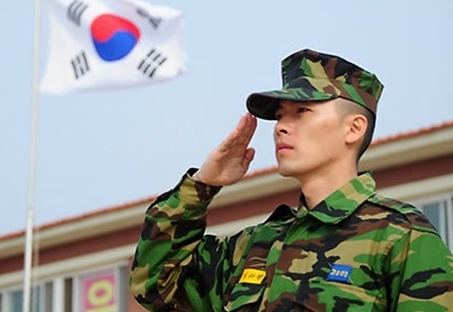
The SBS On Site 21 Investigation: A Chronology of Indiscretion
The current crisis reached a breaking point following a televised investigation by the SBS program On Site 21. On the night of June 25, 2013, following a military-sanctioned performance in Chuncheon to commemorate the 63rd anniversary of the Korean War, several celebrity recruits were filmed engaging in activities that directly violated military protocol.
According to the investigative report, after the official event concluded, the recruits, including Se7en and Sangchu, checked into a motel but subsequently left the premises in civilian clothing—a major violation of military regulations which require soldiers to remain in uniform while on duty. The footage captured the soldiers using personal mobile phones, consuming alcohol, and moving freely through the city well past the mandatory curfew.
The most damning evidence emerged at approximately 4:00 AM, when Se7en and Sangchu were filmed entering an adult massage parlor known for providing "illegal services." Upon exiting the establishment, the two soldiers were confronted by SBS journalists. The encounter turned physical as the recruits attempted to seize the reporters’ cameras and microphones, an act of aggression that was broadcast to millions of viewers. This behavior stood in stark contrast to the disciplined image the Ministry of National Defense (MND) sought to project through its PR unit.
The "Knee Therapy" Defense and Official Responses
In the immediate aftermath of the broadcast, the Ministry of National Defense launched a special audit into the Defense Media Agency. The initial explanations provided by officials only served to further incense the public. The Ministry initially claimed that the soldiers visited the massage parlor for "medical purposes" or "knee therapy," a statement that was widely ridiculed by the public and compared to the implausible cover stories often issued by entertainment agencies during civilian scandals.

Sangchu later attempted to take full responsibility for the incident, citing his seniority as the reason for the lapse in judgment. However, the SBS report had already pulled back the curtain on a much larger issue. The investigation revealed that celebrity recruits were routinely granted access to luxuries unavailable to the average soldier, including private gym facilities, video game consoles, televisions, and a civilian wardrobe. Furthermore, the report included testimonies suggesting that these recruits often engaged in "wanton rule-breaking" and "excessive partying," viewing their service more as a hiatus from the spotlight than a period of national duty.
Comparative Data: The Privilege Gap
The public’s anger is rooted in a quantifiable disparity between celebrity recruits and regular conscripts. Data analyzed during the Ministry’s audit revealed that celebrity soldiers received significantly more time off than their counterparts in combat units. On average, a regular soldier in the Republic of Korea (ROK) Army receives approximately 43 to 45 days of leave over a 21-month period. In contrast, records indicated that celebrity recruits often accumulated over 150 days of leave and "special furloughs," nearly triple the standard amount.
The logistical freedom afforded to these stars was further highlighted by the case of the singer Rain (Jung Ji-hoon), who earlier in 2013 was disciplined for meeting his girlfriend, actress Kim Tae-hee, while on official duty. Despite the breach of conduct, Rain received only a week of confinement—a punishment many viewed as a "slap on the wrist." The scheduled discharge of Rain on July 10, without further penalty despite the ongoing investigation into the PR unit, has reinforced the perception that the Ministry is protective of its high-profile assets.
The Argument for Reform and the Morale Crisis
The primary justification for the PR unit has always been "morale." The MND argues that performances by popular idols and actors provide a necessary psychological boost to soldiers stationed in high-stress environments, such as the Demilitarized Zone (DMZ). However, sociologists and military analysts argue that the current scandal has achieved the opposite effect.

When regular conscripts, who are performing physically demanding tasks in the dead of winter or under extreme heat, see their celebrity peers living in motels, wearing civilian clothes, and visiting adult entertainment venues, the sense of "shared sacrifice" is shattered. Instead of boosting morale, the PR unit has become a source of resentment (antimony) and a reminder of social inequality.
The debate has also touched upon the "Hallyu" (Korean Wave) defense. Before his enlistment, Se7en had publicly suggested that top stars contribute to the nation’s global prestige in a manner similar to Olympic athletes and should perhaps be eligible for exemptions. This sentiment has been rejected by the majority of the public, who argue that K-pop stars are products of a commercial market rather than national representatives in a traditional sense. With the K-pop market being highly saturated, the temporary absence of one star for 21 months is unlikely to impact the industry’s global momentum.
Implications and the Future of the Celebrity Recruit System
The fallout from the Se7en and Sangchu scandal has placed the Ministry of National Defense in a precarious position. The credibility of the entire military justice system is at stake. If the Ministry fails to impose rigorous penalties, it risks a broader crisis of confidence among the millions of families whose sons are currently serving or are slated for enlistment.
The Ministry’s investigation is expected to conclude with a comprehensive overhaul of the Defense Media Agency. There are growing calls from both the public and members of the National Assembly to abolish the celebrity recruit system entirely. Critics argue that if celebrities wish to be treated as ordinary citizens in their professional lives, they must "suck it up" and serve under the same conditions as every other young man in the country.

As of July 2013, the Ministry has indicated that it is considering all options, including the total dissolution of the PR unit. Should this occur, all current celebrity recruits would be reassigned to regular field units to serve out the remainder of their terms. This would mark the end of a 16-year experiment in military PR, proving that in the eyes of the South Korean public, the principle of fairness outweighs the value of celebrity-driven promotion. The ultimate lesson of this debacle is clear: in a conscripted military, there can be no "princes" among the rank and file. If the military is to maintain the respect of the nation, it must ensure that the burden of defense is carried equally by all, regardless of fame or fortune.