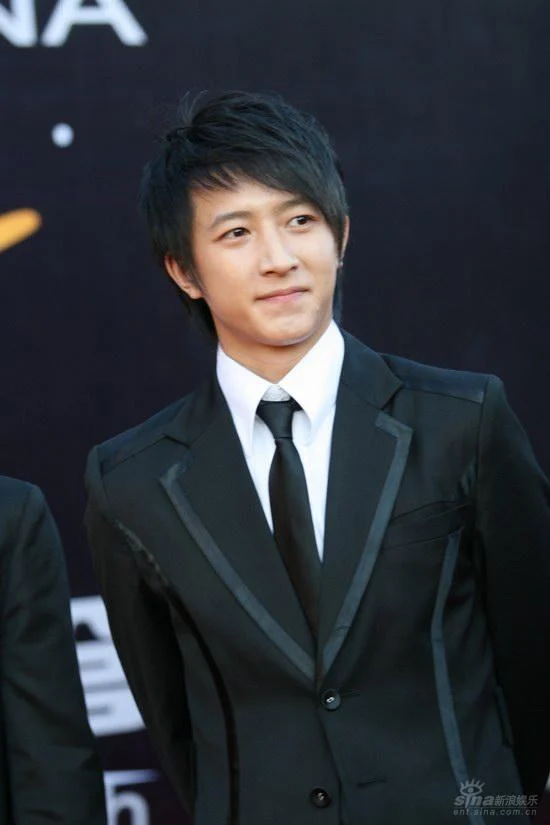
The South Korean entertainment industry faced a significant disruption on May 15, 2014, when Kris Wu (Wu Yifan), the leader of the Mandarin-focused subgroup EXO-M, filed a lawsuit against his agency, SM Entertainment, to terminate his exclusive contract. The legal action, submitted to the Seoul Central District Court, sent shockwaves through the global K-pop fandom, coming at a time when EXO was arguably the most successful young group in Asia. While the legal grounds centered on contractual inequities and human rights, the fallout revealed a complex interplay of cultural values, specifically the Korean concepts of "jeong" and "haan," which dictated the emotional responses of the agency, the remaining members, and the public.
The Legal Foundation of the Dispute
The lawsuit filed by Kris Wu’s legal representative, the law firm Hankyul—which had previously represented former Super Junior member Hangeng in a similar case—asserted that the contract between the artist and SM Entertainment was invalid. The core grievances focused on a lack of financial transparency, an disregard for the artist’s health, and the restriction of personal autonomy.
According to legal filings, Kris Wu argued that the agency treated him as an object of profit rather than an individual artist. The defense claimed that SM Entertainment unilaterally decided schedules without consulting the artist and failed to provide clear accounting records despite repeated requests. Furthermore, the lawsuit highlighted that the extreme workload and constant pressure had led to health issues, including suspected myocarditis, which the agency allegedly ignored. These "slave contracts," a term that gained prominence following the 2009 legal battle involving TVXQ (DBSK), typically involve long-term durations, unfair profit distribution, and limited freedom of movement, all of which were central to Kris’s claims.
A Chronology of the 2014 Crisis
To understand the intensity of the backlash, one must look at the timeline surrounding the lawsuit. The timing was particularly sensitive, as it coincided with a major promotional cycle for the group.
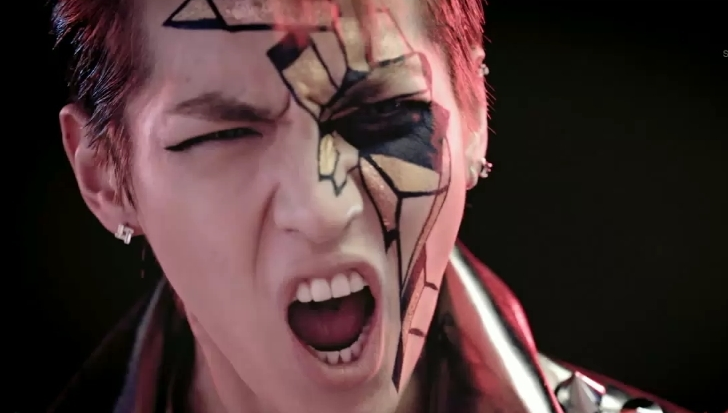
- May 7, 2014: EXO releases their second mini-album, Overdose. The group is at the peak of their popularity, having recently won multiple "Daesang" (Grand Prize) awards at year-end ceremonies.
- May 15, 2014: News breaks that Kris has filed for contract termination. He remains in China following promotions, effectively ceasing all communication with the agency in Seoul.
- May 16–22, 2014: A period of intense social media activity follows. Members of EXO begin unfollowing Kris on Instagram. SM Entertainment announces that the upcoming solo concert will proceed with eleven members.
- May 23, 2014: EXO begins their first solo concert tour, EXO From. EXOPLANET #1 – The Lost Planet, at the Olympic Gymnastics Arena. The concert, originally designed for twelve members, is re-choreographed in less than a week.
- July 2014: Court-mandated mediation begins between Kris and SM Entertainment, though both parties remain far apart in their demands.
Member Reactions and the Narrative of Betrayal
The immediate reaction from the remaining EXO members was characterized by a mixture of shock and public condemnation. Tao (Huang Zitao), who would later file his own lawsuit in 2015, was the most vocal initially. In a post on Weibo, Tao expressed a sense of abandonment, stating that while many people wished to see the group stay together forever, "someone had to leave us." He further suggested that the public was being misled by appearances, hinting that the "betrayal" felt by the team was deeper than the legal documents suggested.
Other members, including Xiumin and Suho, echoed these sentiments in more controlled environments. During a press conference for their solo concert, the members described themselves as "heartbroken and upset." The timing of the lawsuit, just days before their first major career milestone, led to accusations that Kris was being "discourteous" to the fans and the team. This sentiment was further amplified by senior artists under the same label. Heechul of Super Junior, speaking on the variety show Ssulzun, noted that the situation was different from Hangeng’s 2009 departure. Heechul argued that while Hangeng faced genuine systemic barriers as one of the first foreign idols in Korea, Kris had been given ample opportunities and support, making his sudden exit feel like a violation of trust.
The Cultural Framework: Understanding Jeong and Haan
The intensity of the "betrayal" narrative in the Korean media cannot be fully understood without the anthropological context of jeong. Often translated as "feeling," "attachment," or "affection," jeong represents the invisible bond that connects people in a collective society. It is the emotional glue that transforms a group of colleagues into a "family."
In the K-pop industry, agencies heavily invest in the concept of jeong to market groups. Fans are encouraged to view the idols not just as performers, but as brothers or sisters bound by shared suffering and triumph. When Kris filed his lawsuit, he did not just break a legal contract; in the eyes of the Korean public and the agency, he broke jeong.
According to psychological studies, such as those conducted by Chung and Cho (2006), the violation of jeong leads to the manifestation of haan. Haan is a uniquely Korean emotional state characterized by deep resentment, sorrow, and a sense of injustice. The more profound the original jeong-based relationship, the more bitter the haan becomes when that loyalty is perceived to be betrayed. This explains why the reaction from SM Entertainment and the fans was not merely professional but deeply visceral. The "victim" of the betrayal—the remaining members and the fans—felt a collective psychological trauma that manifested as public shaming and the removal of Kris from the group’s history.

Comparative Analysis: Hangeng vs. Kris Wu
The case of Kris Wu is frequently compared to that of Hangeng, the first Chinese artist to debut in a major K-pop group. Hangeng’s departure from Super Junior in 2009 was a watershed moment for the industry. However, the nuances between the two cases are significant.
Hangeng’s legal battle was largely seen as a fight against systemic discrimination. At the time, South Korean laws restricted foreign performers to appearing on only a few broadcast stations, severely limiting Hangeng’s career prospects compared to his Korean counterparts. His victory in court led to the Fair Trade Commission (FTC) introducing standardized "model contracts" to prevent the 13-year "slave contracts" that were then common.
By 2014, when Kris filed his suit, many of these legal protections were already in place. As Heechul pointed out, Kris did not face the same broadcast restrictions. This led to a divergence in public opinion: while Hangeng was eventually viewed by many as a pioneer who fought for the rights of foreign idols, Kris was often framed as an opportunist who used the K-pop training system as a springboard to a lucrative solo career in the Chinese market.
Corporate Strategy and Public Opinion Management
SM Entertainment has a history of utilizing its significant media influence to shape the narrative during contract disputes. Following the 2009 JYJ lawsuit, the agency was accused of using its industry leverage to block the departing members from appearing on music programs and variety shows.
In the Kris Wu case, the agency’s strategy involved a "scorched earth" approach to the artist’s brand within Korea. Kris’s merchandise was immediately withdrawn from concert venues, and the group’s official slogan, "We Are One," was emphasized to reinforce the unity of the remaining members. By facilitating interviews where the remaining members expressed their disappointment, the agency successfully shifted the focus from the potentially valid legal claims regarding overworking and health to a narrative of interpersonal loyalty and nationalistic sentiment.

Broader Impact and Industry Implications
The departure of Kris Wu was the first in a series of exits from EXO, followed by Luhan later in 2014 and Tao in 2015. These events forced a reckoning within the K-pop industry regarding the management of foreign idols.
- Contractual Evolution: Agencies began to offer more flexible terms for Chinese members, often allowing them to establish their own "studios" in China to manage their solo activities while remaining part of the group. This model, utilized by artists like EXO’s Lay (Zhang Yixing) and GOT7’s Jackson Wang, became a blueprint for balancing group commitments with domestic market demands.
- The "China Line" Risk: The lawsuits created a temporary "investment scare" regarding Chinese trainees. Some agencies became more cautious about debuting foreign members, fearing they would leave once they gained enough fame to sustain a solo career in their home countries.
- Legal Precedents: The eventual settlement between Kris, Luhan, and SM Entertainment in 2016 established a compromise where their contracts remained valid until 2022, requiring them to share a percentage of their Chinese earnings with the agency, even though they were no longer active members of EXO.
Conclusion
The legal battle between Kris Wu and SM Entertainment was more than a dispute over profit distribution or scheduling; it was a collision between a burgeoning individualistic career path and a deeply entrenched collectivist culture. While the legal framework of "slave contracts" provided the basis for the lawsuit, the emotional framework of jeong and haan provided the social consequences.
As the K-pop industry continues to expand globally, the tension between corporate control and artist autonomy remains a central theme. The 2014 crisis served as a pivotal lesson for agencies on the importance of balancing professional management with the delicate emotional bonds that define the K-pop experience. For Kris Wu, the lawsuit marked the end of his K-pop career but the beginning of a massive, albeit controversial, solo career in China. For EXO, it was a trial by fire that redefined their identity and solidified their status as a resilient powerhouse in the industry.