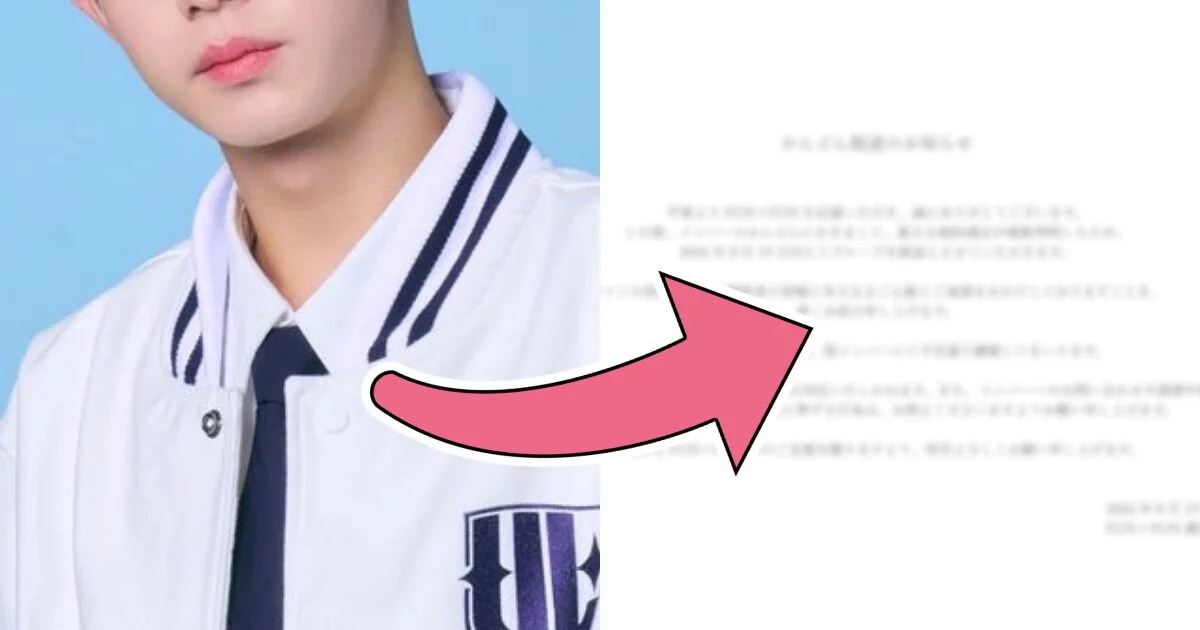
Seoul, South Korea – In a swift and unexpected turn of events, Kandon, a member of the rookie K-pop group FunXFun, has been removed from the ensemble, barely seven months after their official debut. The announcement, made by FunXFun’s management on August 19, 2026, cited "multiple serious rule violations" as the definitive cause for his immediate departure, leaving fans and industry observers grappling with the abrupt termination of a nascent career. The exact nature of these alleged violations remains undisclosed, a common practice in the intensely private and image-conscious South Korean entertainment industry.
Official Statement and Immediate Fallout
The news broke via an official statement disseminated by FunXFun’s management, which was also posted on the group’s official social media channels. The terse notice conveyed profound regret while confirming Kandon’s immediate severance from the group as of August 19, 2026. The statement expressed sincere apologies to fans and all involved parties for the "great concern and inconvenience" caused by the incident. It further clarified that FunXFun would continue its scheduled activities as a reconfigured unit with the remaining members. In a move characteristic of such sensitive situations, the management explicitly stated that it would not respond to individual inquiries regarding the matter and urged the public to refrain from contacting members, making defamatory remarks, or spreading speculation-based statements. This directive underscores the industry’s attempt to control narratives and mitigate potential public relations damage.
The swiftness of the decision—coming less than a year after Kandon’s introduction as a founding member and only seven months post-debut—highlights the stringent contractual obligations and behavioral expectations placed upon K-pop idols. Debuting in the competitive K-pop landscape is the culmination of years of arduous training, and an early termination of this nature is a rare but stark reminder of the volatile nature of the industry. For a group as new as FunXFun, this incident presents a significant challenge, potentially disrupting their carefully planned trajectory and requiring immediate strategic adjustments.
Kandon’s Journey: From Survival Show to Sudden Departure
Kandon, whose real name is Yeo Gangdong, first garnered public attention through his participation in the highly popular K-pop survival show Universe League. These programs are notorious for their rigorous competition, demanding performances, and intense public scrutiny, serving as a high-stakes proving ground for aspiring idols. Universe League, like many of its counterparts, offered contestants a chance at debut through public voting and judges’ evaluations, creating a direct connection between trainees and a burgeoning fanbase.
During his tenure on Universe League, Yeo Gangdong showcased his talents and personality, building a following that hoped to see him debut. However, his journey on the show concluded in episode 9, where he faced elimination. Despite this setback, his talent and potential were recognized, leading to his eventual recruitment and announcement as a founding member of FunXFun in November 2025. This transition from a survival show contestant to a confirmed group member is a common pathway in the K-pop industry, offering a second chance for those who didn’t win the final lineup but impressed agencies.
FunXFun officially debuted in December 2025, launching into the saturated K-pop market with hopes of establishing a strong presence. The period following a debut is critical for a new group, as they strive to build momentum, expand their fanbase, and gain recognition. Kandon’s presence was part of this initial push, and his sudden removal just over half a year later indicates a severe breach of trust or contract that management deemed irreparable. This timeline underscores the brevity of his official idol career, marking it as one of the shortest tenures in recent K-pop history.
The Unspoken "Rule Violations" in K-Pop
While FunXFun’s management has chosen to keep the specifics of Kandon’s "multiple serious rule violations" confidential, such opaque announcements are standard practice in the K-pop industry. This lack of transparency often fuels intense online speculation among fans and media, as the public attempts to decipher the severity and nature of the transgressions.
In the highly regulated world of K-pop, idols are bound by notoriously strict contracts that extend far beyond professional conduct. These "morality clauses" or "behavioral guidelines" often dictate aspects of an idol’s private life, encompassing everything from dating restrictions and social media usage to personal relationships and public image management. Common violations that have historically led to contract termination or suspension include:
- Dating Scandals: Idols are frequently expected to maintain an image of availability and focus solely on their career, making romantic relationships a controversial topic.
- Social Media Misconduct: Inappropriate posts, interactions, or leaks of sensitive information.
- Private Life Controversies: Any behavior deemed unbecoming of a public figure, which could range from excessive partying to undisclosed personal issues impacting group activities.
- Disrespecting Company Rules: Direct defiance of management directives or internal policies.
- Legal Issues: Even minor infractions can lead to severe repercussions due to the public nature of an idol’s role.
- Attitude Problems or Lack of Professionalism: Disrupting group dynamics or showing insufficient dedication.
The severity of Kandon’s alleged violations must have been considerable for the agency to take such drastic action, especially given the financial investment and public relations effort already committed to the group’s debut and initial promotions. Terminating an idol’s contract so early represents a significant loss for the company, indicating that the alleged breaches outweighed the potential costs of re-strategizing the group’s future.

The K-Pop Idol Ecosystem: Contracts, Image, and Fan Expectations
The K-pop industry is built on a foundation of intense dedication, rigorous training, and meticulously crafted public images. Agencies invest millions in scouting, training, and debuting idols, expecting a return on investment that relies heavily on the idol’s pristine reputation and connection with fans. This high-stakes environment leads to contracts that are often criticized for their restrictive nature, sometimes spanning seven to ten years and including clauses that grant agencies significant control over an idol’s personal and professional life.
The concept of "idols" in South Korea extends beyond mere performers; they are often seen as aspirational figures and role models. This societal expectation, coupled with the immense devotion of fanbases, creates an ecosystem where any perceived flaw or misconduct can be amplified and lead to severe backlash. Agencies, therefore, prioritize maintaining an unblemished image for their artists to protect their brand and marketability.
For rookie groups like FunXFun, the early stages are crucial for establishing a loyal fanbase. Any scandal, particularly involving a founding member, can damage the group’s initial momentum, alienate potential fans, and create an atmosphere of instability. The agency’s quick action, though harsh, might be interpreted as an attempt to contain the damage and signal to the public and remaining members the seriousness with which they uphold their internal regulations.
Implications for FunXFun and Kandon’s Future
The departure of Kandon necessitates an immediate restructuring for FunXFun. The group, which likely debuted with a specific lineup, choreographies, and vocal distributions, will now have to adapt to a new configuration. This typically involves:
- Re-arranging Music and Choreography: Songs might need to be re-recorded or re-distributed vocally, and stage performances will require new formations and movements.
- Re-branding and Re-introduction: The agency may need to issue new promotional materials, update group profiles, and potentially address the change directly with fans to reassure them about the group’s future.
- Maintaining Fan Morale: The remaining members will face the challenge of performing without a former colleague, while also needing to comfort and re-engage a potentially disappointed or confused fanbase.
For Kandon (Yeo Gangdong), his future in the K-pop industry appears uncertain. An early termination due to "serious rule violations" casts a long shadow over an artist’s career prospects. Other agencies may be hesitant to sign an idol with such a public record of contractual breaches, fearing similar issues or negative public perception. While some former idols manage to re-debut or pursue solo careers in other entertainment fields (acting, modeling), the path is significantly more challenging after such an incident. His ability to rebuild trust with the public and find new opportunities will depend heavily on the specifics of his actions, his ability to reflect, and the passage of time.

Broader Industry Ramifications and Fan Reactions
Kandon’s case, while not unique in the annals of K-pop, serves as a fresh reminder of the precarious nature of an idol’s career. It reinforces the power dynamics between agencies and artists, and the non-negotiable emphasis on contractual adherence and image maintenance. For new idols entering the industry, it underscores the high stakes and the constant scrutiny they will face.
Online, fan reactions have been a mix of shock, disappointment, and intense curiosity. Many express sadness for Kandon, acknowledging the hard work he put in to debut, while others voice concern for the remaining members of FunXFun and the group’s future. The absence of specific details about the violations has, predictably, led to rampant speculation across social media platforms and fan forums. This digital discourse highlights the dual-edged sword of fan engagement: while crucial for group success, it also amplifies rumors and can create a challenging environment for crisis management.
Industry analysts suggest that such incidents, while detrimental in the short term, often lead agencies to re-evaluate their trainee selection processes and internal monitoring systems. The overarching message remains clear: the K-pop industry demands not only talent and dedication but also an unwavering commitment to the strict behavioral codes and contractual agreements that govern an idol’s life, both public and private. As FunXFun prepares to move forward without Kandon, the incident serves as a stark illustration of the unforgiving realities of pursuing stardom in the global phenomenon that is K-pop.