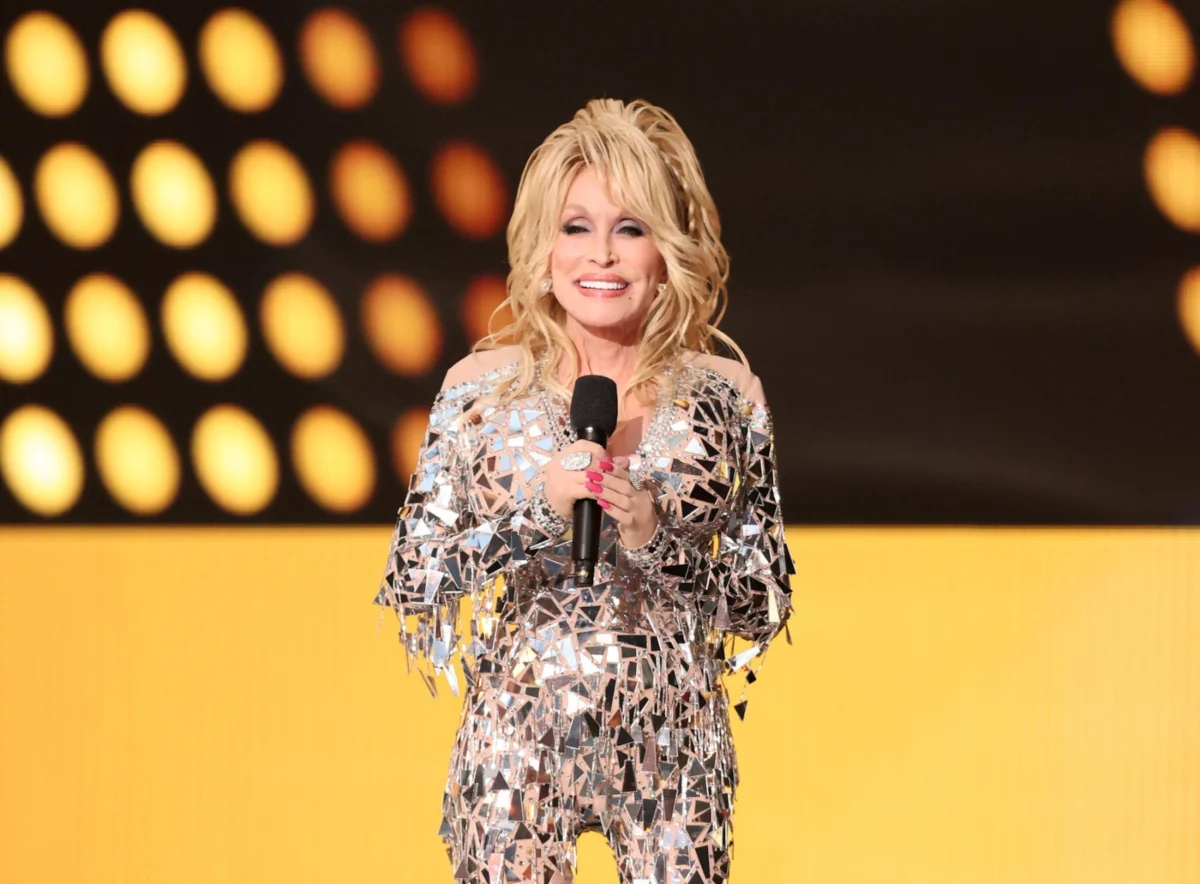
In a testament to her enduring artistry and remarkable career longevity, country music icon Dolly Parton has achieved a significant milestone, charting more top 40 albums on the all-genre Billboard 200 in the 2020s than in any other decade of her illustrious career. This accomplishment underscores Parton’s consistent ability to resonate with audiences across generations, solidifying her status as a true legend of the music industry. Over seven decades, from the 1960s through the present, Parton has amassed an impressive 50 entries on the prestigious Billboard 200 chart, with 15 of those reaching the top 40. The current decade has seen her achieve four such top 40 albums, a feat that eclipses her previous bests in the 1970s, 1980s, 1990s, and 2000s.
A Career Defined by Chart Success and Musical Evolution
Dolly Parton’s journey on the Billboard 200 began in 1969 with her debut album alongside her frequent collaborator Porter Wagoner, Just the Two of Us. This marked the initial entry in a discography that would consistently reflect her evolving sound and broad appeal. From her early duets with Wagoner, which saw four albums chart between 1969 and 1971, to her first solo entry in the same year with My Blue Ridge Mountain Boy, Parton established a foundational presence on the album charts.
Her breakthrough into the top 40 of the Billboard 200 occurred in 1978 with Here You Come Again. The album, propelled by its title track, reached a peak position of No. 20. The single itself was a massive success, climbing to No. 3 on the Billboard Hot 100 and marking Parton’s first of eight top 40 hits on the singles chart. This marked a pivotal moment, signaling her crossover appeal beyond traditional country music audiences.
The late 1970s and early 1980s proved to be a period of sustained chart activity for Parton. Following Here You Come Again, she quickly followed with more top 40 album placements: Heartbreaker in 1978 (No. 27), Great Balls of Fire in 1979 (No. 40), and 9 to 5 and Odd Jobs in 1981 (No. 11). The latter album was intrinsically linked to her iconic hit single "9 to 5," which topped the Billboard Hot 100 and earned Parton her first Academy Award nomination for Best Original Song from the film of the same name, in which she starred alongside Jane Fonda and Lily Tomlin. This period showcased her ability to not only dominate the album charts but also to produce enduring singles that became cultural touchstones.
The collaborative spirit that has often marked Parton’s career continued to yield chart success. In late 1984, her holiday album Once Upon a Christmas, a duet project with Kenny Rogers, reached the top 40 of the Billboard 200. This followed their earlier monumental collaboration on "Islands in the Stream," which became Parton’s second No. 1 hit on the Billboard Hot 100 in 1983.
A significant artistic and commercial triumph arrived in 1987 with the release of Trio, a collaboration with Linda Ronstadt and Emmylou Harris. This album soared to No. 6 on the Billboard 200, marking Parton’s first top 10 placement on the chart without being the sole credited artist. Trio also garnered Parton her first, and to date only, Grammy Award nomination for Album of the Year, highlighting the critical acclaim this project received.
The 1990s saw Parton continue her strong presence on the charts, with two more top 40 albums: Eagle When She Flies in 1991 (No. 24) and Slow Dancing With the Moon in 1993 (No. 16). The 2000s added another top 40 entry with Backwoods Barbie in 2009, which peaked at No. 17. These albums demonstrated her consistent ability to connect with her fanbase and maintain relevance in a rapidly evolving music landscape.
The 2020s: A Resurgence of Chart Power
The current decade has witnessed a remarkable surge in Parton’s chart performance. In 2014, she achieved her first top 10 Billboard 200 album without any featured artists with Blue Smoke, which debuted and peaked at No. 6. She followed this with another strong showing in 2016 with Pure & Simple, reaching No. 11.
However, it is in the 2020s that Parton has truly set a new personal best for top 40 album placements. Her four top 40 albums this decade are:
- A Holly Dolly Christmas (2020): Reached No. 16 on the Billboard 200. This festive collection showcased Parton’s enduring ability to deliver seasonal cheer with her signature style.
- Run, Rose, Run (2022): Peaked at No. 34. This album was associated with the novel of the same name co-authored by Parton and James Patterson, demonstrating her multi-faceted creative output.
- Diamonds & Rhinestones: The Greatest Hits Collection (2022): Achieved No. 27. This compilation celebrated her extensive catalog and provided a new entry point for many listeners.
- Rockstar (2023): This all-star collaboration project debuted and peaked at an impressive No. 3 on the Billboard 200, marking Parton’s highest-charting album on the chart to date.
The Significance of "Rockstar"
The release of Rockstar in 2023 was a landmark event, not only for its chart performance but also for its thematic and musical direction. Marketed as Parton’s first true rock album, its genesis was directly inspired by her induction into the Rock & Roll Hall of Fame in 2022. While primarily known for her contributions to country music, Parton has consistently explored diverse genres throughout her career, including Americana, bluegrass, children’s music, Christian, dance/electronic, and pop. Rockstar represents a bold expansion into the rock genre, featuring a sprawling 30-song tracklist comprised of both covers and original compositions.
The album’s star power is undeniable, boasting an extensive list of guest artists from across the rock and pop spectrum. Notable collaborators include Pat Benatar, Miley Cyrus, Melissa Etheridge, Joan Jett and The Blackhearts, Elton John, Lynyrd Skynyrd, Paul McCartney, Stevie Nicks, Chris Stapleton, Ringo Starr, Sting, and Steven Tyler. This eclectic lineup underscores Parton’s ability to bridge musical divides and command the respect of artists from various genres. The critical and commercial success of Rockstar is a powerful affirmation of her broad appeal and her willingness to push creative boundaries, even late into her career.
A Legacy of Chart Dominance and Cultural Impact
Dolly Parton’s sustained presence on the Billboard 200 over seven decades is a rare feat in the music industry. It speaks to a profound connection with her audience and a consistent output of quality music that transcends trends. Her ability to adapt and evolve while remaining true to her core artistic identity has been key to her enduring success. The Billboard 200, as the premier all-genre album chart in the United States, serves as a critical barometer of an artist’s commercial impact and cultural relevance. Parton’s consistent appearance on this chart, particularly her record-breaking performance in the 2020s, solidifies her position not just as a country music icon, but as one of the most significant artists of all time.
The implications of her chart resurgence are multifaceted. For aspiring artists, Parton’s career serves as a compelling example of the rewards of authenticity, perseverance, and a willingness to innovate. For the music industry, her continued success highlights the enduring power of established artists and the potential for diverse genres to find mainstream appeal. As Parton continues to create and inspire, her discography on the Billboard charts will undoubtedly remain a subject of fascination and a testament to a career that has already achieved legendary status. Her ability to consistently deliver impactful music, from her early country roots to her recent rock explorations, ensures her legacy will continue to grow for decades to come. The data from Billboard charts consistently reflects this, showing a sustained and, in the case of the 2020s, an accelerating level of engagement with her work. This enduring popularity is a testament to her songwriting prowess, her distinctive vocal delivery, and her undeniable charisma, qualities that have captivated listeners for over sixty years.