The global expansion of the South Korean music industry, commonly referred to as the "Hallyu" or Korean Wave, has created one of the most diverse and interconnected fanbases in modern entertainment history. As K-pop transcends national borders, it increasingly relies on the participation and consumption of international audiences, particularly in the West. However, this globalization has brought to the forefront a complex set of tensions regarding cultural boundaries, specifically the intersection of Black culture and Korean entertainment. While the genre’s sonic and aesthetic foundations are deeply rooted in Black American musical traditions—including R&B, hip-hop, and soul—the industry has frequently struggled with issues of cultural appropriation, racial stereotyping, and a lack of nuanced representation for its Black supporters.
The Historical Foundations and the Debt to Black Artistry
To understand the current discourse surrounding Black fans in the K-pop space, it is necessary to analyze the genre’s genealogical roots. Since the early 1990s, with the emergence of Seo Taiji and Boys, the "K-pop" sound has been defined by its synthesis of Western genres. The transition from traditional Korean "trot" music to the modern idol system was facilitated by an heavy adoption of New Jack Swing, hip-hop, and contemporary R&B.
Industry pioneers such as Tiger JK and Yoon Mi-rae (Tasha Reid) played pivotal roles in establishing hip-hop as a legitimate art form in South Korea. Yoon Mi-rae, who is of African American and Korean descent, remains a foundational figure, representing a rare direct bridge between the two cultures. In the modern era, idols frequently cite Black icons such as Michael Jackson, Prince, and D’Angelo as primary influences. For instance, members of BTS have utilized social media platforms to recommend artists like India Arie, signaling a level of genuine musical appreciation. However, critics argue that while the music is embraced, the cultural context from which it originates is often stripped away, leading to friction when idols adopt the aesthetics of Black culture without understanding its historical weight.
Related Articles

A Chronology of Cultural Friction
The relationship between K-pop and its Black audience has been marked by a series of recurring controversies. These incidents often follow a predictable pattern: an idol or agency releases content featuring problematic imagery, Black fans voice concerns, and the broader fandom reacts with a mix of support and defensive dismissal.
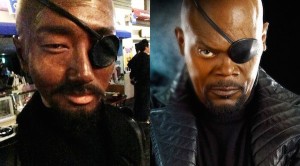
In the early to mid-2010s, several high-profile incidents highlighted this disconnect. In 2013, Yesung of Super Junior faced significant backlash for wearing blackface in an imitation of Nick Cannon. Similarly, the use of the Confederate flag in fashion—seen in various K-pop music videos and promotional materials—has been a point of contention. While some fans defend these actions by citing a lack of historical education regarding U.S. history in the South Korean school system, others point out that in a hyper-connected digital age, ignorance is an increasingly fragile defense for multi-million dollar corporations aiming for global market penetration.

The year 2015 served as a flashpoint for these discussions. The release of 4Minute’s "Crazy" and Keith Ape’s "It G Ma" sparked debates over whether these artists were paying homage to hip-hop or merely utilizing "Blackness" as a trendy, edgy costume. Furthermore, rappers like San E have been criticized for lyrics perceived as antagonistic toward the very culture they emulate. These events suggest a systemic issue where the industry seeks the "cool factor" of Black culture while remaining insulated from the realities of Black lived experiences.
The "Kanye West Defense" and Cultural Blind Spots
A recurring phenomenon in K-pop discourse is the "Kanye West Defense," where non-Black fans use the actions of a single Black celebrity to justify problematic behavior by Korean idols. This was notably observed when fans defended the use of the Confederate flag by citing Kanye West’s use of the imagery during his "Yeezus" era. Sociological analysts argue that this is a form of "symbolic pacification," where a mainstream media caricature is used to invalidate the legitimate grievances of a marginalized group.

The misunderstanding of "appropriation" versus "appreciation" remains at the heart of these conflicts. Cultural appreciation involves a deep understanding of a culture’s history and a respect for its creators. In contrast, appropriation is characterized by the use of another culture’s symbols as a costume or gimmick, often by a dominant or outside group that does not face the same systemic prejudices as the original culture. When K-pop idols adopt "hip-hop concepts" only to discard them for "pure pop" once a trend fades, it reinforces the perception that Black culture is being treated as a disposable commodity.
Authenticity vs. The "Minstrel" Trap
In the realm of Korean hip-hop (K-hip-hop), the tension between authenticity and imitation is particularly acute. Observers have noted a distinct difference between artists who have studied the genre’s roots and those who merely emulate the most popular contemporary trends. Groups like BTS, Block B, and Epik High have, at various times, been praised for their engagement with the history of the genre, though they have not been immune to controversy.
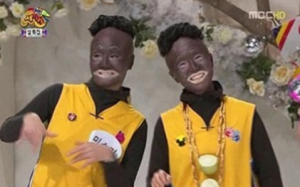
The most severe critiques involve the concept of the "minstrel show"—a historical form of entertainment that relied on racist caricatures of Black people. Critics argue that when idols adopt exaggerated "street" personas, use racial slurs, or mimic AAVE (African American Vernacular English) without context, they risk falling into a modern form of minstrelsy. This creates a pre-resentment among Black fans who fear that their culture is being watered down or mocked for the entertainment of a demographic that remains largely isolated from Black social issues.
Fan Advocacy and the Role of International Education
Despite these challenges, Black fans have remained a vocal and influential segment of the K-pop community. Rather than abandoning the genre, many have taken on the role of educators. Organizations and fan collectives have frequently reached out to Korean entertainment agencies to provide context on why certain actions are offensive.

There have been instances of successful intervention. For example, Seven Seasons, the agency representing Block B, has been noted for responding positively to fan feedback regarding cultural insensitivity. Such instances suggest that the industry is capable of growth when prompted by its global consumer base. However, the burden of education often falls disproportionately on Black fans, who must simultaneously navigate the "passive-aggressive" dismissal of fellow fans who label their concerns as "fake outrage."
Representation and the "Invisible" Black Fan
Beyond the actions of the idols themselves, the K-pop fandom’s internal culture often overlooks the existence of Black participants. This is most evident in fan-produced content, such as "reader-insert" fan fiction or "POV" social media trends. These narratives frequently assume a default physical appearance for the reader—typically white or East Asian—leaving Black fans unable to identify with the content.

Furthermore, the "lovey-dovey" illusion promoted by the idol industry often excludes Black women. Panelists in cultural roundtables have noted that while K-pop promotes a fantasy of accessibility, Black women are often treated as "exotic" or undesirable within the narrow beauty standards prevalent in East Asian media. This creates a unique fan experience where Black supporters may enjoy the music and performance while remaining hyper-aware of the social barriers that separate them from the "ideal" fan image.
Broader Impact and Industry Implications
As the K-pop industry continues to eye the North American and European markets, the necessity of cultural competency cannot be overstated. The financial stakes are high; according to data from the International Federation of the Phonographic Industry (IFPI), South Korea is one of the top ten music markets globally, with its growth heavily reliant on exports.
The implications of failing to address cultural appropriation are not merely social but economic. In an era of "cancel culture" and heightened social consciousness, brands and artists that fail to respect their diverse audiences risk significant reputational damage. The 2020 Black Lives Matter movement saw a shift in the K-pop industry, with major groups like BTS making significant donations and agencies issuing statements of solidarity. While some viewed this as a positive step toward allyship, others remain cautious, waiting to see if these gestures translate into long-term systemic change within the training and production phases of the idol industry.
In conclusion, the presence of Black fans in K-pop is a testament to the universal power of music and the genre’s undeniable talent. However, for the relationship to be truly reciprocal, the industry must move beyond aesthetic borrowing and toward a model of genuine respect and inclusion. As the "stained-glass window" of global music continues to expand, its beauty will ultimately depend on the ability of its creators to honor the myriad of colors and cultures that have contributed to its success. Respecting the roots of K-pop means respecting the Black community, not as a source of trends, but as a vital part of the global audience.