The Evolution of Fan Discourse: Navigating the Boundaries Between Constructive Criticism and Malicious Commentary in the Global K-pop Industry
Article Editorial Team
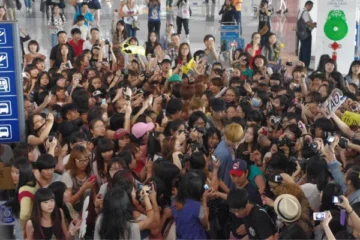
The global expansion of the South Korean music industry, commonly known as K-pop, has transformed the relationship between artists and their audiences into a complex digital ecosystem. As the industry’s valuation exceeds $10 billion annually, the nature of fan engagement has shifted from passive consumption to active participation. However, this increased proximity, facilitated by social media platforms and dedicated fan-to-artist communication apps like Weverse and Bubble, has also amplified the prevalence of malicious commentary. The distinction between constructive criticism and "hating"—destructive, often anonymous vitriol—has become a focal point for industry analysts, legal experts, and fan communities alike. Understanding this distinction is essential for maintaining the long-term health of the industry and the well-being of its performers.
The Landscape of Modern K-pop Discourse
In the contemporary K-pop landscape, the line between an engaged fan and a malicious "anti-fan" is frequently blurred. While the industry thrives on the passionate support of global fandoms, it is simultaneously plagued by a culture of hyper-criticism. Psychological studies into digital fandom suggest that the parasocial relationships inherent in K-pop can lead to a sense of entitlement among consumers. When an idol’s performance, personal life, or artistic direction deviates from fan expectations, the resulting feedback can range from helpful suggestions to targeted harassment.
The problem with "hating" is its inherently destructive nature. Unlike criticism, which seeks to improve a situation or highlight a genuine flaw for the purpose of growth, malicious commentary is designed to devalue the individual. In an industry where public perception is the primary currency, these attacks can have devastating professional and personal consequences. To foster a sustainable environment, the community has begun to emphasize five core principles of digital citizenship that differentiate constructive feedback from harmful rhetoric.
Defining the Parameters of Constructive Feedback
The first pillar of healthy discourse involves maintaining an impersonal focus. In the heat of online debates, it is common for commenters to pivot from the subject at hand—such as a specific vocal performance or a choreography error—to personal attacks regarding an idol’s appearance or character. Journalistic standards and ethical fan engagement dictate that comments should remain relevant to the issue being discussed. When discourse shifts toward irrelevant sneers about an idol’s personality or physical traits, the argument loses its validity and enters the realm of harassment. This principle extends to interactions between fans; attacking an individual’s intelligence or appearance during a disagreement does not strengthen a viewpoint but rather undermines the civility of the platform.

The second pillar is the utility of the criticism. Constructive feedback provides a path forward. Within the industry, agencies often monitor fan sentiment to gauge the success of a "concept" or a musical release. Feedback that identifies a specific area for improvement—such as the mixing of a track or the pacing of a variety show appearance—offers value to the production teams. In contrast, "crucifying" an idol for a mistake without offering a perspective on how they might improve is a hallmark of the "hater" mentality.
Furthermore, perspective is a critical component of professional discourse. The digital age often encourages "dramatics and exaggeration," where minor incidents are amplified into career-ending scandals. Maintaining perspective involves acknowledging that idols, like all human beings, are subject to error. The tendency to frame every minor lapse in judgment as a sign of an "awful human" is a disproportionate response that contributes to a toxic online environment.
The Legal and Ethical Red Lines
Perhaps the most serious aspect of online discourse is the proliferation of extreme threats. The K-pop industry has a documented history of idols receiving death threats and malicious "gifts." From the early days of the 2000s, when members of groups like TVXQ and Baby V.O.X were targeted with physical harm, to the modern era of digital death threats against members of BTS and Blackpink, the severity of this issue cannot be overstated.
There is a growing consensus among legal experts in South Korea that wishing harm upon another individual, regardless of their public status or past mistakes, is a boundary that must never be crossed. Agencies have increasingly moved toward a "zero tolerance" policy regarding such comments, citing that no amount of professional disagreement justifies the violation of a person’s right to safety and mental integrity.
Finally, the concept of "being the bigger person" has become a strategic necessity for fans and idols alike. The psychological principle of "don’t feed the trolls" suggests that retaliating against malicious commenters often escalates the situation, providing the "hater" with the attention they seek. Industry experts recommend disengaging from toxic threads to prevent the "spiraling" of negativity that can dominate social media algorithms.

Chronology of the Industry’s Response to Malicious Commentary
The transition from ignoring "haters" to actively policing them has followed a specific timeline in the South Korean entertainment sector:
- Early 2000s (The "Anti-Fan" Era): Anti-fans were largely localized in Korea, often engaging in physical harassment or organized boycotts. Agencies typically viewed this as a byproduct of fame and rarely took legal action.
- 2010–2015 (The Social Media Boom): As K-pop went global via YouTube and Twitter, the volume of malicious comments increased exponentially. International fans joined the fray, leading to complex cross-border digital harassment issues.
- 2017–2019 (The Mental Health Turning Point): The tragic losses of high-profile idols, including SHINee’s Jonghyun, f(x)’s Sulli, and Kara’s Goo Hara, served as a catalyst for a national conversation on cyberbullying. Sulli, in particular, had been a vocal advocate against malicious comments before her passing.
- 2020–Present (The Legal Escalation): Major agencies such as HYBE, SM Entertainment, and YG Entertainment began publishing regular updates on legal proceedings against commenters. The South Korean government also explored the "Sulli Law," aimed at curbing anonymous bullying through stricter online identification.
Data on the Impact of Cyber-Harassment
Statistical data highlights the scale of the challenge. According to a 2021 report on the South Korean entertainment industry, over 60% of idols surveyed admitted to experiencing symptoms of anxiety or depression related to online commentary. Furthermore, the Korea Communications Commission reported a 30% increase in cyber-defamation cases over a five-year period, much of it concentrated in the entertainment sector.
Agencies have responded by investing heavily in "legal response teams." For instance, HYBE (the agency behind BTS) frequently issues statements confirming that they have filed criminal complaints for defamation and insult under the "Act on Promotion of Information and Communications Network Utilization and Information Protection." These cases often result in fines or criminal records for the perpetrators, signaling a shift in how the industry protects its "human assets."
Official Responses and Agency Policies
Leading entertainment companies have standardized their approach to handling "haters." In 2023, SM Entertainment launched the "KWANGYA 119" center, a dedicated website where fans can report malicious comments and copyright infringements in real-time. This crowdsourcing of moderation allows the agency to collect evidence more efficiently for use in court.
In official statements, agencies often emphasize that while they welcome "sincere advice and criticism" from fans who wish for the artist’s growth, they will no longer tolerate "malicious intent." JYP Entertainment has similarly emphasized the mental health of its artists, frequently announcing hiatuses for members of groups like TWICE or Stray Kids to recover from the pressures of public scrutiny. These actions reflect a broader industry realization: the sustainability of the K-pop model depends on the psychological resilience of its performers.

Broader Implications for the Global Fandom
The evolution of fan discourse has implications beyond the K-pop industry. It serves as a case study for the broader digital world on the balance between free speech and the prevention of harassment. As K-pop continues to influence global pop culture, the standards set by its fandoms regarding "constructive versus destructive" feedback may influence how other digital communities govern themselves.
The move toward more civil discourse is not merely about protecting idols; it is about preserving the quality of the entertainment itself. When artists are subjected to constant, unconstructive vitriol, the creative process is stifled, and the "entertainment" value of the industry is diminished. By adhering to principles of stay-on-topic, offering helpful suggestions, and maintaining perspective, the K-pop community can ensure that the "chat" between idols and fans remains a source of inspiration rather than destruction.
Ultimately, the responsibility lies with the individual consumer. As the industry moves forward, the focus remains on fostering a community where disagreement is allowed, but dignity is non-negotiable. The transition from "hating" to "critiquing" is more than just a change in vocabulary; it is a necessary evolution for the survival of the global Hallyu wave.
Related News