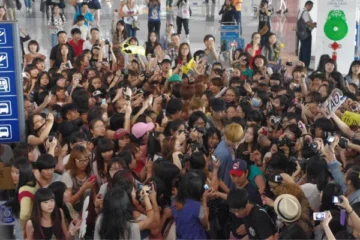
The Global Evolution of K-pop Fandom: Addressing the Multi-Faceted Challenges of the International Fan Diaspora
Article Editorial Team

The international K-pop fan diaspora represents a unique global community bound by a shared affinity for South Korean music, aesthetics, and culture, transcending geographical boundaries through the catalyst of digital technology. From the dense urban centers of Indonesia to the suburban landscapes of North America, these "i-fans" navigate a complex landscape of cultural exchange, linguistic barriers, and social stigma. While the Hallyu wave, or Korean Wave, has transformed K-pop into a multibillion-dollar global industry, the lived experience of the international consumer remains defined by a specific set of challenges that differ significantly from those of domestic fans in South Korea. This analysis explores the systemic, linguistic, and socio-cultural hurdles faced by international enthusiasts and examines how these factors influence the broader trajectory of the global music market.
The Linguistic Divide: The Struggle for Real-Time Access
One of the primary obstacles for the international K-pop community is the persistent language barrier. Unlike domestic fans who consume content natively, i-fans rely heavily on translations to engage with variety shows, interviews, and social media updates. Historically, this created a reliance on "fan-subbing" communities—unpaid volunteers who spend hours translating and timing subtitles for the benefit of the global collective.
The frustration often begins with the "lost translation" phenomenon. When a management agency uploads a highly anticipated video to platforms like YouTube, there is frequently a significant delay before official English subtitles are provided. This lag forces fans to seek out third-party sources, often navigating copyright-infringement-prone websites or low-quality mirrors. When official subtitles are absent, the international fan is reduced to a passive observer, appreciating the visual performance and charisma of the "bias" (a fan’s favorite member) while remaining alienated from the narrative context. While the industry has improved with the advent of platforms like Weverse and V-Live (now integrated into Weverse), which utilize AI and professional translation services, the nuance of Korean wordplay and cultural references often remains "lost in translation."

Socio-Cultural Friction and the Subversion of Gender Norms
International fans frequently encounter friction when explaining their interests to the "uninitiated" in their home countries. This is particularly prevalent regarding the aesthetic presentation of male K-pop idols. The South Korean concept of "kkonminam" (flower boys)—characterized by soft features, meticulous grooming, and occasionally androgynous fashion—often clashes with traditional Western ideals of masculinity.
A common experience for i-fans involves the defense of their favorite artists against derogatory or confused remarks from peers. For instance, an international fan displaying a photo of an idol known for an androgynous aesthetic, such as NU’EST’s Ren or certain members of SEVENTEEN, may face intrusive questions regarding the artist’s gender. This dynamic places the fan in the role of a cultural educator, tasked with explaining that different cultures maintain different standards of beauty and masculinity. The resulting "bewilderment" from the uninitiated often leads to a sense of isolation for the fan, who must navigate the skepticism of their local community while maintaining their digital connection to the K-pop world.
The Lexicon of Hallyu: A Specialized Terminology
The K-pop fandom has developed its own distinct nomenclature, a blend of Korean loanwords and specialized English terms that can make social interactions awkward for the uninitiated. Terms such as "bias," "comeback," "fansign," "aegyo" (cute behavior), and "sasaeng" (obsessive stalkers) form a linguistic shorthand essential for internal community communication but incomprehensible to outsiders.
When international fans inadvertently use this terminology in daily conversation, they often face "glazed-over eyes" from friends and family. Explaining the complexities of the industry—such as the difference between a "fansite" (a dedicated photographer) and a "sasaeng"—requires a deep dive into the mechanics of Korean idol culture. This specialized language creates a "black hole" of terminology that further separates the i-fan from their local cultural context, reinforcing the idea that K-pop is not just a musical preference, but a distinct subculture with its own rules and history.

Geographical Exclusion and the "World Tour" Paradox
For the international fan, the term "World Tour" is often viewed with skepticism. Despite the global popularity of groups like BTS, BLACKPINK, and Stray Kids, tour itineraries are frequently limited to major markets such as Japan, China, and a select few cities in the United States and Western Europe. Large regions, including South America, Southeast Asia, and the Middle East, are often overlooked, leaving millions of fans in a state of geographical exile.
This exclusion forces the international fan to participate in the fandom primarily through a digital lens. For many, the closest they will ever get to a live performance is a "fancam" (fan-recorded video) viewed in high definition on a laptop screen. This digital-only participation creates a sense of "i-fan" identity where the "i" stands not just for international, but for "internet-based." The economic reality of international shipping for merchandise and albums further compounds this distance, as fans often pay more in shipping fees and customs duties than for the products themselves.
The "Engrish" Phenomenon and Linguistic Adaptation
K-pop lyrics frequently incorporate English phrases to enhance global appeal and rhythmic flow. However, these lines are sometimes characterized by non-standard grammar or unconventional metaphors, colloquially referred to as "Engrish." Examples such as "You zoom zoom my heart like a rocket" or "Cola cola cola so fantastic" can be jarring for native English speakers.
While these phrases are often intended to be catchy and phonetically pleasing within the context of a Korean pop song, they present a unique hurdle for i-fans trying to introduce the music to cynical peers. The international fan must often defend these creative liberties as part of the genre’s charm or simply ignore the grammatical inconsistencies in favor of the overall production value. This highlights the tension between K-pop’s desire for global reach and the linguistic nuances of its international audience.

Cultural Disassociation and the Shift in Identity
A significant psychological impact of long-term K-pop consumption is the gradual disassociation from one’s own local culture. International fans often report a "confusion" when hearing local pop music in public spaces, finding it more foreign than the Korean tracks they consume daily. As they become more immersed in the "K-pop-osphere," their local music scene may begin to feel stagnant or unappealing in comparison to the high-budget, synchronized, and visually driven world of idols.
This shift can lead to a sense of cultural drift. The more a fan embraces the values and aesthetics of Hallyu, the more they may feel like an outsider in their own country. This is not merely a change in musical taste but a realignment of cultural identity, where the digital community of K-pop fans becomes the primary source of social and cultural validation.
Social Repression and the Right to Expression
International fans often face a form of "social repression" in public spaces. The act of "fangirling" or "fanboying"—characterized by visible excitement over new content or music videos—is frequently met with cold glares or judgment from the general public. In many cultures, intense fandom is viewed as immature or obsessive, forcing i-fans to restrain their reactions to pass as "socially acceptable."
This repression of emotion is a daily ordeal. Fans may find themselves hiding their phone screens in public or stifling laughter while watching a variety clip. The source content humorously notes that this could be seen as a violation of the spirit of the Universal Declaration of Human Rights, specifically the freedom from degrading treatment. While hyperbolic, the sentiment underscores the genuine social pressure felt by adults who engage in a hobby that is often unfairly dismissed as a teenage phase.

Chronology of Global Expansion and Industry Response
The plight of the international fan has evolved alongside the industry’s growth. In the 1990s and early 2000s (First Generation), K-pop was almost entirely domestic. International fans were a tiny minority who relied on physical CD imports and low-resolution forum uploads.
The 2010s (Second and Third Generations) saw the "YouTube Revolution," where groups like BIGBANG, Girls’ Generation, and eventually BTS broke into the global consciousness. During this era, the industry began to recognize the economic power of i-fans, leading to the creation of multi-language platforms and more inclusive marketing strategies.
In the current era (Fourth and Fifth Generations), entertainment giants like HYBE, SM, and JYP are actively catering to the international diaspora. This includes the formation of "global" groups with non-Korean members, the release of full English albums, and the acquisition of Western media companies to streamline global distribution. Despite these advancements, the core struggles of distance, language nuance, and social stigma remain persistent for the individual fan.
Analysis of Broader Implications
The resilience of the international K-pop fan community has significant implications for the future of the global music industry. The "i-fan" is no longer a peripheral consumer but a central pillar of the K-pop business model. Their ability to organize digital streaming parties, fund billboard advertisements for idol birthdays, and mobilize on social media has turned K-pop into a geopolitical tool for South Korean "soft power."

However, the industry must address the "unreachable" nature of many home countries if it wishes to sustain this growth. The reliance on digital participation is a double-edged sword; while it allows for rapid global spread, it risks burnout among fans who feel perpetually excluded from the "real" experience of the fandom. Furthermore, as K-pop continues to integrate into the global mainstream, the "uninitiated" will become fewer, potentially easing the social stigma and cultural friction that currently define the i-fan experience.
In conclusion, the international K-pop fan diaspora is a community defined by its endurance. Despite the "lost translations," geographical barriers, and social repression, i-fans continue to serve as the primary ambassadors of Korean culture to the world. Their struggle is not merely about music; it is a testament to the power of digital connection and the ability of art to bridge vast cultural and linguistic divides. As the industry moves forward, the "i-fan" will remain a vital, albeit often overlooked, architect of the global Hallyu phenomenon.
Related News