
The global expansion of South Korean popular music, commonly known as K-pop, has transformed from a regional phenomenon into a multi-billion-dollar international industry. As the Hallyu wave reaches diverse demographics across the Western hemisphere, particularly in the United States, it has brought to the forefront a complex dialogue regarding the genre’s foundational roots in Black American music and culture. While the industry prides itself on high-concept visuals and meticulous performance standards, a growing segment of its audience—Black K-pop fans—is increasingly vocal about the thin line between artistic appreciation and cultural appropriation. This discourse is not merely about aesthetic choices but involves deep-seated issues of historical context, racial sensitivity, and the systemic commodification of Black identity within the Korean entertainment machine.
The Historical Genesis of Black Influence in K-pop
To understand the current friction, one must examine the chronological evolution of the genre. K-pop’s modern iteration began in the early 1990s with the debut of Seo Taiji and Boys, who introduced American hip-hop and New Jack Swing to the Korean public. This era set a precedent: the "cool factor" in Korean music was inextricably linked to Black musical innovations. Throughout the 2000s and 2010s, major agencies like SM Entertainment, YG Entertainment, and JYP Entertainment increasingly sought out Black producers and choreographers to craft their signature sounds. Figures such as Teddy Riley, Rodney "Darkchild" Jerkins, and Brian Puspos have been instrumental in defining the sonic and physical vocabulary of groups like Girls’ Generation, EXO, and SHINee.
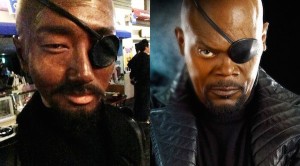
However, as K-pop became more global, the consumption of these influences often occurred in a vacuum, detached from the social and historical struggles of the Black community. This detachment has led to recurring instances of "concept" styling that Black fans find problematic. From the use of dreadlocks and cornrows as "edgy" costumes to the adoption of African American Vernacular English (AAVE) in lyrics, the industry frequently treats Black culture as a toolkit for authenticity without acknowledging the people who created it.

The Intersection of Global Fandom and Cultural Blind Spots
In a recent roundtable discussion featuring prominent Black K-pop commentators, the nuances of being a fan of a genre that often mimics one’s own culture while simultaneously excluding its people were explored. A significant point of contention involves the use of symbols with heavy historical baggage, such as the Confederate flag. While some fans and industry defenders argue that South Korean education systems do not mandate the study of U.S. history, critics point out that in a digital age, ignorance is a choice—especially for companies explicitly targeting the U.S. market.
The "Kanye West defense" is frequently cited by non-Black fans to justify the use of controversial imagery. This refers to instances where Black artists have reclaimed or used provocative symbols for artistic commentary. However, as noted by fans like Cjontai and Camiele, a single Black artist does not serve as a universal proxy for the entire Black community. When K-pop idols utilize such symbols for "fashion statements," it ignores the trauma associated with those images, leading to a disconnect between the artist’s intent and the audience’s reception.

Case Studies in Appropriation: 4Minute and Keith Ape
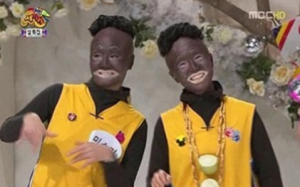
Two specific examples often cited in the debate over appropriation are 4Minute’s "Crazy" and Keith Ape’s "It G Ma." In "Crazy," the group adopted a "bad girl" persona heavily reliant on tropes associated with Black women, including specific dance moves and styling. Critics argue that this represents a "minstrelsy" of sorts, where Blackness is donned to convey toughness or rebellion and then discarded when the "concept" period ends.
Similarly, Keith Ape’s "It G Ma" sparked significant controversy for its perceived imitation of American rapper OG Maco’s "U Guessed It." While Keith Ape achieved viral success in the West, the discussion surrounding the track centered on whether it was a tribute to trap music or a hollow imitation that lacked respect for the genre’s origins. These instances highlight a recurring pattern: Korean artists frequently look to the most popular or "trendy" Black artists of the moment—such as Drake, Eminem, or Nicki Minaj—and emulate their aesthetic without engaging with the deeper history of hip-hop as a tool for social resistance.

The Reality of the Black Fan Experience
For Black fans, the experience of K-pop is often one of "conditional belonging." While they share the same enthusiasm for music and choreography as any other fan, they are frequently marginalized within the fandom itself. Taylore, a fan and writer, points out that fan-produced content, such as "reader-insert" fan fiction, often assumes a non-Black physical profile, making it difficult for Black fans to see themselves reflected in the community’s shared fantasies.
Furthermore, the issue of "colorism" remains a persistent barrier. Idols are often praised for having "milky white" skin, while darker-skinned members or fans are subjected to "tan-shaming" or jokes about their visibility. This internal prejudice within the industry and the fandom complicates the relationship for Black fans, who must navigate a space that often prizes an aesthetic standard that inherently excludes them.
Industry Responses and the Path Toward Education
Some progress has been made through direct fan engagement. Agencies like Seven Seasons, which manages the group Block B, have been noted for responding to international fans’ concerns regarding the use of racial slurs or offensive "impressions" of Black style. When fans reach out with educational intent rather than purely punitive anger, some companies have shown a willingness to adjust their approach.
However, the burden of education often falls on the fans themselves. The consensus among the Black K-pop community is that respect must be the baseline. This includes:

- Research: Agencies must conduct cultural due diligence before launching concepts that utilize ethnic hairstyles, religious symbols, or historically sensitive imagery.
- Authenticity over Caricature: Artists who wish to pursue hip-hop or R&B should be encouraged to study the pioneers of those genres—such as Tiger JK and Tasha Reid (Yoon Mi-rae) in Korea, or the founders of the Zulu Nation in the U.S.—rather than just mimicking Top 40 trends.
- Inclusive Marketing: As K-pop seeks to solidify its presence in the West, marketing strategies must acknowledge the diversity of the global audience, moving away from Eurocentric or colorist beauty standards.
Statistical Context and Global Market Implications
The economic stakes for K-pop are higher than ever. According to the 2023 Global Music Report by the IFPI, the South Korean music market saw a 19.6% growth in revenue, significantly outpacing the global average. A substantial portion of this growth is driven by North American consumption. As Black culture remains the primary driver of global youth culture and music trends, alienating the Black demographic is a strategic risk for Hallyu.
Data from social media analytics suggests that Black fans are among the most active "multi-stans," often driving digital engagement and trend-setting for K-pop groups on platforms like X (formerly Twitter) and TikTok. By failing to address issues of appropriation, the K-pop industry risks losing the "cool factor" and cultural legitimacy that these fans provide.

Analysis of Broader Implications
The tension between K-pop and Black culture is a microcosm of the "Global Village" paradox. While technology allows for the instantaneous sharing of art, it does not guarantee the sharing of the context behind that art. For K-pop to mature into a truly global cultural force, it must move past the "imitation" phase and enter a "dialogue" phase.
The success of groups like BTS, who have been vocal about their respect for hip-hop roots and have collaborated with artists like Megan Thee Stallion and Nicki Minaj, provides a blueprint for how the industry can evolve. When collaboration is mutual and respectful, it enriches the music and broadens the audience. When it is one-sided and extractive, it breeds resentment.
In conclusion, Black K-pop fans are not asking for the cessation of cultural exchange; rather, they are demanding a seat at the table and the respect that their culture’s contributions deserve. As the Hallyu wave continues to crest, the industry’s longevity in the international market may well depend on its ability to listen to its most marginalized—yet most influential—supporters. The beauty of music, as the roundtable participants noted, lies in its ability to be a "stained-glass window" of diverse colors. For that window to shine, every color must be treated with equal dignity and historical awareness.