South Korea Overexposure Law Sparks Debate Amid Misinterpretations of Public Indecency Regulations
Article Editorial Team

The implementation of a revised Minor Offenses Act in South Korea has triggered a significant international discourse regarding civil liberties, cultural expression, and the legacy of the country’s political history. On March 22, 2013, the administration of President Park Geun-hye officially enacted a new "overexposure law" designed to curb public indecency. While the government characterized the measure as a routine update to existing statutes aimed at maintaining public order, the law immediately became the subject of intense scrutiny both domestically and abroad. Sensationalist reports from various international media outlets initially framed the legislation as a return to authoritarian-era dress codes, specifically suggesting a ban on miniskirts—a claim that South Korean officials have since moved to clarify.
The law mandates a fine of 50,000 South Korean Won (approximately $45 to $48 USD) for individuals found guilty of "overexposure" in public spaces. According to the government’s definition, this applies to behavior that causes discomfort or a sense of shame to others through the exposure of body parts that are traditionally kept covered. Despite the broad language of the statute, the National Police Agency has emphasized that the law is intended to target specific acts of public indecency, such as streaking or public nudity, rather than the fashion choices of the general public or the entertainment industry.
Historical Context and the Legacy of the Yushin Era
To understand the intensity of the public reaction in South Korea, it is necessary to examine the country’s complex political history, particularly the period known as the Yushin era (1972–1979). During this time, President Park Chung-hee—the father of the current president, Park Geun-hye—maintained a strict military dictatorship. Under his rule, the government exerted significant control over the personal lives and appearances of South Korean citizens.
During the 1970s, police officers were famously equipped with bamboo rulers to measure the length of women’s skirts. Any skirt that ended more than 20 centimeters above the knee was considered a violation of public decency, and offenders were subject to fines or detention. Similarly, men were prohibited from wearing long hair; those who defied the regulation could be subjected to forced haircuts on the spot by patrolling officers. These measures were part of a broader effort to enforce social discipline and traditional Confucian values during a period of rapid industrialization.

Given this historical backdrop, the introduction of a new "overexposure" law by the daughter of the former dictator touched a sensitive nerve in the South Korean psyche. Critics and opposition politicians were quick to draw parallels between the new legislation and the repressive policies of the 1970s. The Democratic United Party (DUP) issued statements expressing concern that the law could be used as a tool for arbitrary state interference in personal freedoms, labeling the move as "retrogressive."
Clarifying the Legal Scope and Enforcement
In response to the growing public anxiety and the proliferation of rumors, the South Korean National Police Agency (NPA) held several briefings to clarify the intent and scope of the revised act. According to Inspector Ko Jun-ho of the NPA’s Crime Prevention Department, the law is not a new creation but an amendment to the existing Minor Offenses Act, which has been in place since 1954. The 2013 revision actually reduced the severity of some penalties while formalizing others to ensure they were consistent with modern legal standards.
"The reports suggesting that we will be regulating the length of skirts or the specific attire of citizens are entirely groundless," Inspector Ko stated during a press conference. He explained that the "overexposure" clause is specifically designed to address complaints regarding public nudity and lewd behavior in parks, transportation hubs, and other high-traffic public areas. The police clarified that the law would not apply to miniskirts, "hot pants," or the stage costumes worn by K-pop performers, provided that such clothing does not constitute a total exposure of private areas.
Furthermore, legal experts have noted that similar public indecency laws exist in nearly every developed nation. In the United States, most states have "indecent exposure" or "disorderly conduct" statutes that prohibit public nudity or the exposure of genitalia. The South Korean law, in its technical application, functions as a mechanism for local law enforcement to issue citations for behavior that was previously difficult to prosecute under more serious criminal codes.
The Role of Celebrity Influence and Social Media
The controversy was significantly amplified by the reactions of high-profile South Korean celebrities. Lee Hyori, a prominent K-pop singer and cultural icon known for her bold fashion choices, was one of the first to comment on the law via social media. Her tweet, which questioned if she would be fined for her stage outfits, went viral and was picked up by international news agencies. Other idols and entertainers expressed similar concerns, fearing that the law might signal a new era of censorship in the "Hallyu" (Korean Wave) industry.
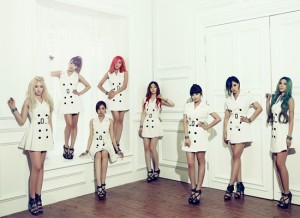
The entertainment industry is a vital component of South Korea’s economy and soft power. K-pop groups like Girls’ Generation (SNSD) and f(x) are famous for their synchronized choreography and stylish, often leg-baring outfits. The prospect of a government crackdown on such aesthetics caused alarm among fans and industry stakeholders. However, industry analysts suggest that the "overexposure" law is unlikely to impact televised performances, which are already regulated by the Korea Communications Standards Commission (KCSC). The KCSC maintains its own set of guidelines for "suggestive" content on broadcast television, which are separate from the criminal and civil statutes enforced by the police.
International Media Coverage and Sensationalism
The "overexposure law" provides a case study in how localized legal changes can be distorted by the global 24-hour news cycle. Major Western outlets, including CNN and the UK’s Daily Mail, published headlines that focused heavily on the "miniskirt ban" narrative. These reports often failed to mention the historical context of the Minor Offenses Act or the specific legal definitions provided by South Korean authorities.
The resulting international narrative painted a picture of a regressive South Korean government cracking down on modern fashion. This led to widespread criticism on social media platforms, where users accused the Park Geun-hye administration of being "out of touch" or "anti-feminist." This disconnect highlights the challenges of reporting on foreign legal systems, where cultural nuances and historical baggage are often sacrificed for more "clickable" or sensationalist headlines.
Timeline of Events
- February 25, 2013: Park Geun-hye is inaugurated as the first female President of South Korea.
- March 11, 2013: The Cabinet approves a series of revisions to the Minor Offenses Act during a meeting presided over by the President.
- March 15-20, 2013: Rumors begin to circulate on Korean social media platforms suggesting a return to 1970s-style dress regulations. Celebrity Lee Hyori posts a tweet expressing concern over the "overexposure fine."
- March 22, 2013: The revised Minor Offenses Act officially goes into effect.
- March 23-25, 2013: International media outlets pick up the story, frequently using headlines related to a "miniskirt ban."
- March 26, 2013: The National Police Agency issues a formal clarification, stating that the law targets public nudity and streaking, not fashion.
Broader Impact and Implications for Civil Liberties
While the "miniskirt ban" has been debunked as a myth, the debate over the overexposure law has opened a broader conversation about the limits of government intervention in South Korea. Civil rights advocates argue that even if the law is intended for extreme cases of indecency, the vague wording of "causing discomfort to others" leaves too much room for subjective interpretation by individual police officers.
"The issue is not whether the government is banning miniskirts today, but whether the language of the law allows for future abuses of power," said a representative from a Seoul-based human rights NGO. "In a healthy democracy, laws regarding public behavior should be as specific as possible to prevent arbitrary enforcement."

The controversy also underscores the unique challenges faced by President Park Geun-hye. As the daughter of a former military leader, her every move is scrutinized for signs of authoritarianism. This legislative episode demonstrates that for many South Koreans, the memory of the past remains a powerful lens through which the present is viewed.
In terms of practical impact, the law has resulted in a few dozen fines issued for public urination and extreme cases of exposure in its first few months, with no recorded instances of women being fined for wearing miniskirts. The K-pop industry continues to flourish with its established aesthetic, and public life in Seoul remains largely unchanged. However, the event serves as a reminder of the power of historical memory and the speed at which misinformation can travel in the digital age. Moving forward, the South Korean government faces the ongoing task of balancing public order with the protection of the vibrant personal freedoms that the country has fought to establish over the last three decades.
Related News