Navigating the Complex Ecosystem of K-pop Fandoms A Comprehensive Guide to Community Integration and Global Engagement
Article Editorial Team
The global ascent of Korean popular music, or K-pop, has transformed a regional niche into a multi-billion-dollar international industry, driven largely by a sophisticated and highly organized fan culture. For the uninitiated, the transition from being a casual listener to a dedicated member of a fandom involves navigating an intricate social and political landscape. While many consumers engage with the genre solely for its auditory and visual appeal, the majority of the K-pop experience is rooted in community participation, identity formation, and collective action. Understanding the mechanisms of these fandoms is essential for comprehending how the South Korean music industry maintains such high levels of consumer loyalty and economic momentum across diverse geographical borders.
The Hierarchical Structure of K-pop Fanbases
The architecture of K-pop fandom is uniquely granular, characterized by a nested hierarchy that distinguishes it from Western music fanbases. While general fandoms exist for large-scale franchises—such as the "Potterheads" of Harry Potter or "Whovians" of Doctor Who—K-pop operates on multiple simultaneous levels. A consumer typically identifies as a "K-pop fan" at the broadest level, but their primary loyalty usually lies with a specific group. For instance, a fan of the group SHINee is identified as a "Shawol."
Below the group level exists the "sub-fandom," which focuses on individual members of a group. This is where the concept of a "bias"—a favorite member—becomes central to the fan experience. To use the SHINee example, a fan whose primary focus is the member Taemin would be categorized as a "Taemint." This intricate division system allows for a highly personalized consumer experience but also introduces the potential for internal friction, often referred to as "solo stanning" versus "group stanning." In the professional context of the industry, these sub-fandoms are significant because they drive the sales of individual-member-version albums and solo brand endorsements, providing agencies with diverse revenue streams from a single musical act.
The Evolution of Official Fan Cafés and Membership Models
Historically, the epicenter of K-pop fandom activity has been the "official fan café." Hosted primarily on South Korean web portals like Daum, these cafés serve as the formal link between the artist’s management agency and the public. Membership in an official fan café is often tiered, requiring fans to complete "level-up" tasks—such as answering complex questions about the artist or providing proof of album purchases—to gain access to exclusive content.
For domestic fans in South Korea, these platforms offer tangible benefits, including priority access to music show recordings (such as M! Countdown or Inkigayo), exclusive merchandise, and direct "From Star" message boards where idols post personal updates. However, the system has historically presented a high barrier to entry for international fans due to language requirements and the need for a Korean social security number or phone number for verification.

In recent years, the industry has seen a shift toward more accessible, globalized platforms. The emergence of apps like Weverse (developed by HYBE) and DearU bubble (a subsidiary of SM Entertainment) has modernized the fan café concept. These platforms integrate translation services and international payment gateways, allowing fans in the United States, Europe, and Southeast Asia to participate in the "official" experience. Data from 2023 indicates that Weverse reached over 10 million monthly active users, highlighting the massive scale of digital fan integration in the modern era.
International Fan Sites and the Digital Grassroots Movement
Given the historical barriers to official Korean platforms, international fans developed a robust parallel ecosystem of unofficial fan sites and social media communities. These organizations are often run by volunteers who dedicate significant time to translating Korean media, editing high-definition photography, and coordinating global projects.
International fan sites provide several critical functions that agencies have only recently begun to internalize:

- Localization: Translation teams bridge the linguistic gap, ensuring that non-Korean speakers can engage with variety shows, interviews, and social media posts in real-time.
- Philanthropy and "Support" Projects: Fandoms often coordinate massive fundraising efforts to celebrate an artist’s debut anniversary or birthday. These include "rice wreaths" (donations of rice to charities in the artist’s name) and large-scale LED advertisements in high-traffic areas like New York’s Times Square or Seoul’s Gangnam District.
- Coordinated Advocacy: International fans use social media platforms, particularly X (formerly Twitter) and Tumblr, to mobilize for music video streaming goals or to petition for concert tours in their respective regions.
Chronology of Fandom Culture Development
The current state of K-pop fandom is the result of three decades of cultural evolution, often categorized by "generations" of groups:
- First Generation (Late 1990s – Early 2000s): Groups like H.O.T. and Sechs Kies established the foundation. Fandoms were primarily domestic, characterized by physical "fan wars" and the adoption of specific balloon colors to identify loyalty during joint concerts.
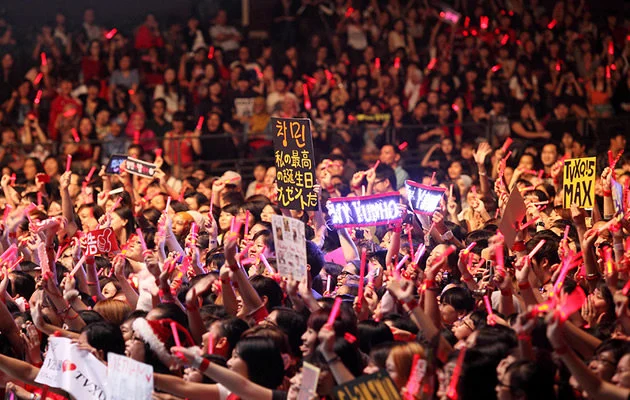
- Second Generation (Mid 2000s – Early 2010s): The era of TVXQ, BigBang, and Girls’ Generation saw the transition to digital fan cafés and the introduction of the "official lightstick"—a high-tech glowing wand that replaced balloons and became a staple of the K-pop concert experience.
- Third Generation (Mid 2010s – 2020): Groups like BTS and EXO leveraged social media to bypass traditional gatekeepers, leading to the explosion of global fandom. This era defined the "ARMY" (BTS fans) as a political and social force capable of influencing global music charts and philanthropic causes.
- Fourth and Fifth Generations (2020 – Present): The current era is defined by hyper-connectivity and virtual integration. Platforms like TikTok have become primary tools for fan engagement, and the line between "domestic" and "international" fans has blurred significantly as agencies prioritize global debuts.
Economic Impact and Industry Implications
The devotion of K-pop fandoms translates into significant economic power. Unlike Western music markets, which have shifted almost entirely to streaming, K-pop maintains a robust physical sales market. Fans often purchase multiple copies of the same album to collect randomized "photocards" or to increase their chances of winning a "fansign" (a lottery-based event where fans meet the artists).
According to the International Federation of the Phonographic Industry (IFPI), South Korea has consistently ranked as one of the fastest-growing music markets in the world, with K-pop acts dominating the Global Album Sales Chart. In 2022 and 2023, K-pop groups accounted for the majority of the top 10 best-selling albums worldwide. This data underscores the fact that K-pop fandom is not merely a hobby but a major driver of global physical media consumption.

Challenges and Internal Dynamics: Fandom Politics
While fandoms offer a sense of community, they are also prone to internal conflict and "fandom politics." These tensions can arise from several sources:
- Fan Wars: Competitive disputes between the fanbases of different groups, often centered on award show voting or music chart performance.
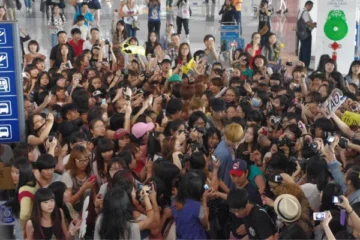
- Sasaeng Culture: An extreme and detrimental subset of fandom involving "sasaeng" fans—individuals who engage in stalking or invasive behavior that violates the privacy and safety of the artists. Agencies have increasingly taken legal action against such individuals to protect their talent.
- Management Critiques: Modern fans are highly informed and often organize to protest management decisions they perceive as unfair to the artists, such as poor promotion, overworking of members, or controversial creative directions.
Conclusion: The Future of the Fan-Artist Relationship
The landscape of K-pop fandom continues to shift as technology advances. The integration of AI, virtual reality, and blockchain-based "fan tokens" represents the next frontier for agencies looking to monetize and deepen fan engagement. However, the core of the fandom remains the emotional connection and the sense of belonging that fans find within their respective communities.
As the industry moves forward, the challenge for agencies will be balancing the commercialization of fan devotion with the need for sustainable and healthy fan environments. For the individual fan, the journey into K-pop is one of self-discovery and collective identity. Whether through editing videos on Tumblr, participating in a charity drive, or attending a sold-out stadium concert, the modern K-pop fan is a sophisticated participant in a global cultural dialogue. The strength of the genre lies not just in the music produced in Seoul, but in the millions of fans worldwide who organize, advocate, and consume with unparalleled intensity. In the final analysis, the K-pop phenomenon is as much a triumph of community building as it is a success of musical production.
Related News