The Intersection of K-pop and National Politics The Case of Girls Day and South Koreas First Female President
Article Editorial Team
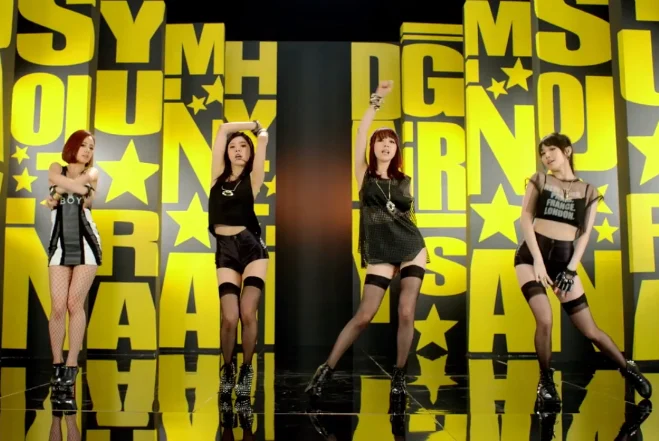
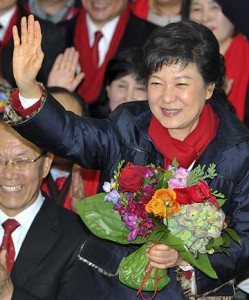
The transition of power in the Republic of Korea between 2012 and 2013 marked a significant turning point in the nation’s democratic history. On December 19, 2012, Park Geun-hye, representing the conservative New Frontier Party (Saenuri Party), secured a narrow victory in the presidential election, garnering 51.6% of the vote. Her inauguration in February 2013 as the first female president of South Korea was viewed by many as a symbolic breakthrough in a society historically defined by deep-seated Confucian patriarchal values. This political milestone resonated beyond the halls of the Blue House (Cheong Wa Dae), permeating the nation’s vibrant pop culture industry. In June 2013, the K-pop quartet Girl’s Day released "Female President," a single that sought to capitalize on this political zeitgeist. However, the juxtaposition of the song’s commercial "girl power" narrative against the stark socio-economic realities facing South Korean women provides a complex case study of how entertainment media navigates serious political milestones.
The Political Ascent of Park Geun-hye and the Saenuri Party
Park Geun-hye’s rise to the presidency was a phenomenon inextricably linked to the legacy of her father, Park Chung-hee, who ruled South Korea with an iron fist from 1961 until his assassination in 1979. While Park Chung-hee is credited with spearheading the "Miracle on the Han River" and the country’s rapid industrialization, his regime was also characterized by human rights abuses and the suppression of democratic dissent. Consequently, Park Geun-hye entered the Blue House as a deeply polarizing figure. To her supporters, she represented the stability and economic prowess of her father’s era; to her detractors in the progressive Democratic United Party (Minju Party), she was the scion of a dictator, accused of benefiting from a political lineage rather than merit.
Despite the controversy surrounding her background, the election of a woman to the highest office in South Korea was objectively revolutionary. For a nation that had only recently transitioned to a full democracy in the late 1980s, the visual of a female head of state suggested a modernization of the Korean social contract. International observers and domestic advocates initially hoped that Park’s presidency would serve as a "watershed moment" for gender rights, potentially catalyzing legislative changes to address the systemic inequalities that have long plagued the South Korean labor market and social sphere.
Socio-Economic Realities for Women in South Korea (2012–2013)
To understand the critique of "Female President" as a cultural artifact, one must examine the empirical data regarding gender inequality in South Korea during the period of its release. According to data from the Organisation for Economic Co-operation and Development (OECD), South Korea consistently reported the highest gender wage gap among member nations. In 2012, the wage gap stood at approximately 36.3%, meaning women earned significantly less than their male counterparts for comparable work.
Furthermore, South Korea exhibited a unique sociological trend regarding female education and labor participation. While South Korean women are among the most highly educated in the world, with college enrollment rates often exceeding those of men, this investment in human capital has historically failed to translate into professional advancement. The "M-curve" phenomenon—where women exit the workforce in their late 20s and 30s due to marriage and childbirth, only to return later in low-paying, part-time roles—remained a persistent barrier. In 2013, the female labor force participation rate hovered around 50%, significantly lower than the OECD average. Additionally, the lack of reproductive rights, including a strictly enforced ban on abortion (which was not overturned until 2019), highlighted the limited institutional autonomy afforded to women.
Chronology of the Cultural Response: The Release of "Female President"
The timeline of Girl’s Day’s comeback illustrates the industry’s attempt to align pop culture with national events:
- December 19, 2012: Park Geun-hye is elected president.
- February 25, 2013: Park Geun-hye is officially inaugurated.
- March 2013: Girl’s Day releases "Expectation," marking a shift from their previous "cute" image to a more mature, "sexy" concept.
- April 2013: Media attention on the group intensifies following the confirmation of member Hyeri’s relationship with first-generation K-pop star Tony Ahn, creating a significant PR boost.
- June 24, 2013: Girl’s Day releases the repackaged album and the title track "Female President."
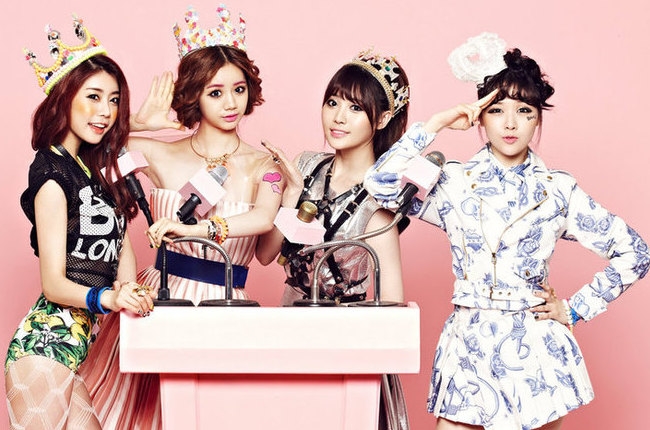
The song was marketed as a "girl power" anthem, with its title directly referencing the new administration. The marketing strategy was designed to frame the act of a woman taking the lead in a romantic relationship as a parallel to a woman taking the lead of the nation.
Analysis of "Female President" as a Cultural Narrative
The lyrical content of "Female President" centers on a singular premise: because the country has a female president, it is socially acceptable for a woman to initiate a kiss or express romantic interest first. The chorus asks rhetorically, "The president of our country is now a woman / So what’s the problem? Why can’t a girl do it? / Why can’t a girl kiss first?"
From a sociological perspective, this narrative has been criticized for trivializing the concept of female empowerment. By reducing the significance of a female head of state to the realm of dating etiquette, the song avoids the substantive issues of gender-based discrimination, the glass ceiling, and the lack of political representation for women. Critics argue that the "empowerment" presented is entirely reactive to men; even though men are absent from the music video, they remain the primary focus of the members’ actions and anxieties.
The visual representation in the music video further complicates the message. The video employs standard K-pop tropes of the "sexy" concept, including provocative choreography and styling that caters to the male gaze. One notable scene involves a romantic subplot between two members—Minah and an androgynous, suit-wearing Hyeri. While this was seen as a bold aesthetic choice, the power dynamic remains traditional: Minah portrays a coquettish, submissive role, giggling while being fed or pulled by her tie. This imagery contradicts the song’s overt message of "taking the lead," as the behaviors displayed often align with aegyo (a display of cuteness) rather than assertive leadership.
Divergent Perspectives and Official Reactions
While the political administration did not issue an official statement regarding the song, the public reaction was divided. Fans of the group praised the catchy production and the bold title, viewing it as a harmless and fun celebration of a new era. Conversely, feminist scholars and social critics noted that the song highlighted the "hollow" nature of commercial feminism in South Korea.
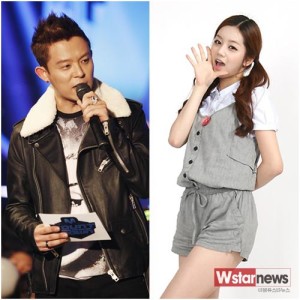
Industry analysts observed that "Female President" was a successful commercial pivot for Girl’s Day. The group, which had struggled to find a consistent identity since their 2010 debut and multiple member changes, found their footing by leaning into the "sexy" trend of 2013. The song earned them their first music show win on Inkigayo, though the win was somewhat overshadowed by a broadcast cancellation due to a news special, ironically highlighting the priority of real politics over its pop-culture derivatives.
Broader Impact and Implications for K-pop
The case of "Female President" serves as a precursor to the modern "girl crush" and "feminist" concepts that would become more prevalent in K-pop later in the decade. It illustrates the tension between the entertainment industry’s desire to appear socially relevant and its primary function as a commercial enterprise that often reinforces traditional beauty standards and gender roles.
The long-term impact of Park Geun-hye’s presidency on women’s rights remains a subject of intense debate. Her administration was ultimately cut short by impeachment in 2017 following a massive corruption scandal, an event that some argue set back the cause of female political representation in Korea. However, the 2012–2013 period remains a fascinating moment when the highest level of political achievement for a woman was reflected—albeit superficially—in the most popular form of national entertainment.
In conclusion, while "Female President" by Girl’s Day utilized a historic political milestone for marketing purposes, it failed to engage with the substantive challenges facing the demographic it claimed to empower. The song remains a testament to a specific era in South Korean history where the imagery of female power began to circulate in the public consciousness, even as the structural barriers of the "firmly entrenched patriarchy" remained largely intact. The disconnect between the song’s lyrics and the lived reality of South Korean women suggests that while a "female president" can be elected, the path to genuine gender equality requires more than a shift in romantic initiative.
Related News