South Korea Overexposure Law Sparks Debate Over Public Decency and Historical Authoritarianism
Article Editorial Team

The implementation of a revised Minor Offenses Act in South Korea has ignited a nationwide and international debate regarding the boundaries of government intervention in personal expression and the lingering shadows of the country’s authoritarian past. Effective as of late March 2013, the law, often referred to as the "overexposure law," was introduced under the administration of newly inaugurated President Park Geun-hye. While the South Korean government maintains that the legislation is a necessary update to public decency standards, critics and international media outlets have raised concerns that the law could signal a return to the restrictive social engineering seen during the mid-20th century.
Legislative Implementation and Initial Public Reaction
The revised law stipulates that individuals who cause "discomfort" to others by "overexposing" themselves in public places can be fined 50,000 South Korean Won (approximately $45 to $48 USD). The legislation was part of a broader package of amendments aimed at curbing public nuisances, including persistent stalking, public urination, and disruptive behavior. However, it was the clause regarding "overexposure" that immediately captured public attention, leading to widespread speculation about how the law would be enforced and who would be targeted.
Initial reactions within South Korea were polarized. Proponents of the law, largely represented by conservative factions and elder generations, argued that the measure was a common-sense approach to maintaining public order and decorum. They pointed to increasing instances of public indecency and a perceived erosion of traditional social values as justification for the fine. Conversely, younger South Koreans and civil liberties advocates expressed immediate alarm, fearing the law would be used as a tool for arbitrary policing and the suppression of personal fashion choices.
The Shadow of the Past: Historical Context of Fashion Regulation
To understand the intensity of the backlash against the overexposure law, one must look back to the 1970s, an era defined by the rule of President Park Chung-hee, the father of President Park Geun-hye. During the senior Park’s 18-year tenure, South Korea operated under a military-backed government that strictly regulated various aspects of civilian life, including appearance.
Under the Yushin Constitution, police officers were famously equipped with measuring sticks to enforce dress codes. Women wearing miniskirts that ended more than 20 centimeters above the knee were subject to fines or detention. Men were not exempt from these standards; those with hair deemed too long were frequently subjected to forced haircuts on the spot. These measures were framed as a "purification" of society, intended to prevent the spread of "decadent" Western influences and maintain a disciplined citizenry.

The election of Park Geun-hye in 2012 already carried significant historical weight, as she was the first female president of South Korea and the daughter of a polarizing figure. When the overexposure law was announced shortly after her inauguration, the phrase "Like father, like daughter" began to circulate among opposition politicians and on social media. The historical resonance of a Park administration regulating clothing created a visceral reaction among those who remembered the restrictions of the 1970s.
Media Misinterpretation and the "Miniskirt Ban" Narrative
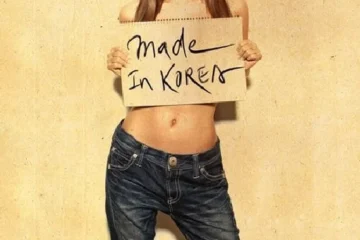
As news of the overexposure law crossed borders, it underwent a significant transformation in international media. Outlets such as the UK’s The Daily Mail and various Western tabloids ran headlines suggesting that South Korea had effectively "banned miniskirts." This narrative quickly went viral, fueled by the global popularity of K-pop, an industry where short skirts and provocative stage outfits are staples of the aesthetic.
The international framing of the story often lacked the nuance of the actual legal text. By focusing on the potential impact on K-pop stars and the fashion industry, global media created an image of a South Korea regressing into a puritanical state. This caused a wave of derision on social platforms, where international observers questioned how a technologically advanced democracy could implement what appeared to be a regressive dress code.
The reality of the law, however, was more aligned with standard "indecent exposure" or "public lewdness" statutes found in many Western democracies. South Korean legal experts noted that the law was intended to address extreme cases—such as public nudity or "streaking"—rather than the length of a skirt. Despite these clarifications, the "miniskirt ban" narrative proved difficult to dislodge from the public consciousness.
Official Clarifications and Legal Definitions
In response to the growing hysteria, the South Korean National Police Agency (NPA) issued several statements to clarify the scope and intent of the law. Officials emphasized that the law was not a new creation but a revision of an existing statute that had been on the books for decades. The revision was intended to clarify the fine amounts and streamline the enforcement process for minor offenses.
"The law is aimed at curbing public indecency that causes significant distress to others, such as appearing naked in public or engaging in lewd acts," a spokesperson for the NPA stated. "It is not, and never was, intended to regulate the fashion choices of citizens or the length of miniskirts."
Furthermore, legal analysts pointed out that for a fine to be issued, the "overexposure" must meet a high threshold of public indecency that violates established social norms of modesty. The vagueness of the term "discomfort," however, remained a point of contention. Critics argued that "discomfort" is subjective and could allow police officers to exercise personal bias when deciding whom to cite.
Celebrity Influence and the Digital Dissemination of Concern
The debate was further amplified by high-profile South Korean celebrities who took to social media to express their concern. Lee Hyori, a prominent K-pop icon known for her bold fashion and influence on youth culture, famously tweeted: "Is the overexposure fine for real? I’m so dead." Her comment, while likely hyperbolic, resonated with millions of fans and added fuel to the fire.
Opposition politicians also leveraged the controversy to critique the Park Geun-hye administration. Members of the Democratic United Party argued that the government should focus on more pressing national security issues—given the heightened tensions with North Korea at the time—rather than "patrolling the streets for skin." They framed the law as an unnecessary overreach of executive power and an insult to the maturity of the South Korean public.
The role of social media in this incident highlights a growing challenge for modern governments: the speed at which information (and misinformation) can spread. A domestic legal update was transformed into a global scandal within hours, demonstrating how historical trauma and celebrity influence can shape the perception of policy.
Broader Implications for South Korean Civil Liberties
Beyond the immediate controversy over fashion, the overexposure law serves as a case study for the ongoing tension between traditional Confucian values and modern liberal democracy in South Korea. The country has undergone a rapid transformation from a military dictatorship to a global cultural and economic powerhouse in just a few decades. This transition has left a generational gap in expectations regarding the role of the state in private life.
For the older generation, the state is often viewed as a moral arbiter responsible for maintaining social harmony. For the younger, "post-democratization" generation, any hint of government interference in personal expression is viewed with extreme skepticism. The overexposure law touched a nerve precisely because it sat at the intersection of these competing worldviews.
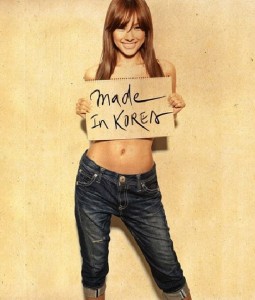
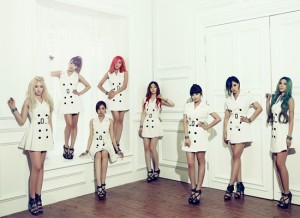
Furthermore, the law raised questions about the consistency of enforcement. In a country where the "legs" of K-pop idols are a major export and marketing tool, the idea of fining an ordinary citizen for "overexposure" struck many as hypocritical. The entertainment industry, which contributes significantly to South Korea’s "soft power" through the Hallyu (Korean Wave), operates on a level of visual provocation that the government actively supports through subsidies and cultural promotion.
Conclusion: Lessons in Policy and Perception
The 2013 overexposure law controversy eventually subsided as it became clear that police were not, in fact, patrolling Seoul with measuring sticks. Life in the capital continued with its usual display of fashion-forward trends, and the K-pop industry continued to thrive without significant wardrobe changes. However, the incident remains a significant moment in South Korea’s political history.
It underscored the sensitivity of the South Korean public to any perceived return to authoritarianism and highlighted the power of historical memory in shaping political discourse. For the Park Geun-hye administration, it was an early lesson in the importance of clear communication and the need to distance modern policy from the ghosts of the past.
Ultimately, the "miniskirt ban" that never was serves as a reminder that in the age of global connectivity, the intent of a law is often secondary to its perception. While the South Korean government sought to update a minor public order statute, they inadvertently triggered a national conversation about the identity of the country and the enduring struggle to balance order with liberty. The overexposure law may have been about public decency on paper, but in the hearts and minds of the public, it was a battle over the soul of a modern democracy.
Related News