Girls Generation Secures Video of the Year at Inaugural YouTube Music Awards Highlighting the Global Reach of K-pop
Article Editorial Team
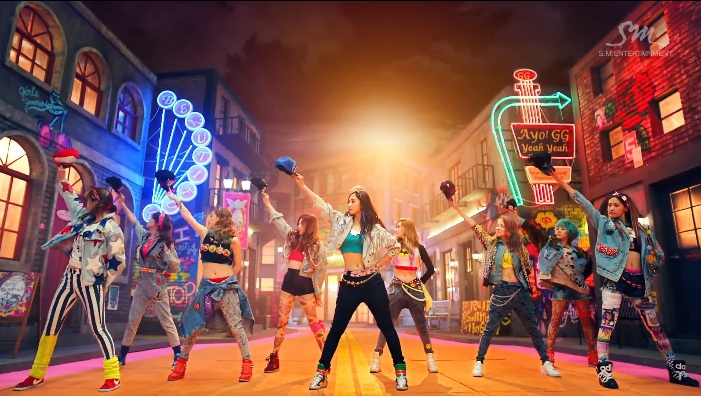
The landscape of the global music industry underwent a significant shift on November 3, 2013, when the South Korean girl group Girls’ Generation was announced as the winner of the Video of the Year award at the inaugural YouTube Music Awards (YTMA). Held at Pier 36 in New York City, the event was designed to recognize the artists and songs that saw the most engagement on the platform over the previous year. Girls’ Generation’s victory for their hit single "I Got a Boy" was not merely a win for the group or their label, SM Entertainment, but a definitive signal that K-pop had transitioned from a regional subculture into a formidable force within the international mainstream.
The victory came as a surprise to many Western media outlets and general audiences, particularly given the caliber of the competition. Girls’ Generation triumphed over global superstars including Justin Bieber, Miley Cyrus, Lady Gaga, Psy, One Direction, Macklemore & Ryan Lewis, Demi Lovato, Selena Gomez, and Epic Rap Battles of History. The win was a testament to the evolving nature of music consumption and the unprecedented mobilization of digital fandoms in the age of social media.
The Inaugural YouTube Music Awards: Context and Criteria
The 2013 YouTube Music Awards were established by Google’s video platform to challenge traditional music award ceremonies like the Grammys or the MTV Video Music Awards. Rather than relying on industry committees or simple popular votes, the YTMAs utilized a data-driven approach. Nominees were selected based on YouTube data from the previous 12 months, tracking views, likes, shares, comments, and subscriptions.
The specific category of Video of the Year was determined by fan engagement during the voting period. To vote, fans were required to share specific nomination videos across social media platforms like Twitter, Facebook, and Google+. This methodology favored artists with highly organized and digitally active fanbases. While the mainstream Western media focused on the raw view counts of artists like Justin Bieber or Miley Cyrus, the YTMA criteria emphasized the "velocity" of sharing—how quickly and consistently a video was disseminated across the web.
Chronology of the Win and Voting Mobilization
The journey toward the YTMA stage began on January 1, 2013, with the release of "I Got a Boy." The track was a stylistic departure for Girls’ Generation, featuring a fragmented, multi-genre structure that combined elements of bubblegum pop, hip-hop, and electro-pop. The music video, characterized by its vibrant aesthetic and complex choreography, quickly became a viral sensation, accumulating tens of millions of views within weeks.
When the YTMA nominations were announced in October 2013, the Girls’ Generation fandom, known as "Sones," initiated a global campaign to secure the award. The mobilization was a study in digital grassroots organization. Fans utilized a "relay" system to ensure constant voting activity 24 hours a day. By coordinating across different time zones, the fandom ensured that as one region went to sleep, another took over the responsibility of sharing the nomination link.
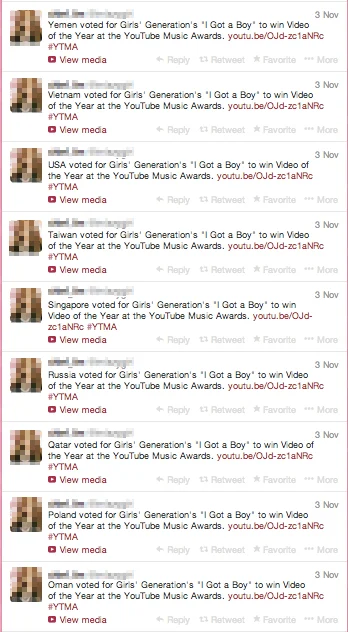
Social media archives from the period show a massive influx of automated and manual posts. The voting process saw fans creating multiple accounts and utilizing various digital identities to maximize their impact. This systematic effort resulted in "I Got a Boy" becoming the most shared video among the nominees, effectively bypassing the larger general-public recognition of Western artists in favor of a concentrated, high-intensity engagement strategy.
Analytical Breakdown of the Voting Mechanics
The victory raised questions regarding the validity of online voting systems and the disparity between a "vocal minority" and the "silent majority." In the case of the YTMAs, the data suggested that while Girls’ Generation may not have had the highest total view count compared to Miley Cyrus’s "Wrecking Ball" or Justin Bieber’s "Beauty and a Beat," their audience possessed a much higher "share-per-viewer" ratio.
Industry analysts noted that K-pop fandoms operate on a model of collective responsibility. Unlike casual listeners in the West who might watch a video once, K-pop fans are encouraged by community leaders to engage in "streaming parties" and "voting marathons." This behavior is often incentivized by the desire to "give back" to the artists, a cultural hallmark of the Hallyu wave. The result is a digital footprint that appears disproportionately large relative to the actual number of unique listeners, a phenomenon that has since become a standard metric in global music marketing.
Official Responses and the Acceptance Ceremony
The award ceremony itself was an experimental, live-streamed event directed by Spike Jonze. When Girls’ Generation was announced as the winner, member Tiffany (Stephanie Young Hwang) took the stage to accept the trophy on behalf of the nine-member group. Her acceptance speech was delivered in fluent English, reflecting the group’s international background and their readiness for a global platform.
"YouTube is my best friend. Is YouTube your best friend?" Tiffany asked the crowd. "This is heavy. Thank you so much. This is beautiful. To my fans, I love you guys. Without you, this wouldn’t be possible."
SM Entertainment later released an official statement expressing gratitude to the global fans. The agency highlighted that the award was a reflection of the group’s hard work and the universal appeal of their music and performance. The win was also celebrated in South Korea as a moment of national pride, further cementing Girls’ Generation’s status as "The Nation’s Girl Group."
Western Backlash and Fandom Relations
Despite the celebratory mood in the K-pop community, the win sparked a wave of controversy and backlash from fans of Western artists. On platforms like Twitter, the announcement was met with a surge of confusion and, in some cases, xenophobic rhetoric. Many users questioned who the group was and expressed frustration that a non-English speaking act had defeated established American stars.
This friction highlighted the cultural gap between the burgeoning K-pop scene and the traditional Western music industry. Passive-aggressive interactions between fandoms became common, with Sones defending the group’s longevity and technical skill, while detractors labeled the win a "fluke" or the result of "botting." However, the data remained clear: the rules of the competition were based on social sharing, and Girls’ Generation’s followers had simply navigated those rules more effectively than any other group.
Broader Impact and Industry Implications
The 2013 YTMA win was a pivotal moment in the timeline of K-pop’s global expansion. It proved that the success of Psy’s "Gangnam Style" in 2012 was not an isolated incident, but rather the vanguard of a broader movement. It demonstrated that Asian artists could compete—and win—on major American platforms without conforming to traditional Western promotional cycles.
1. The Power of Digital Platforms
The event underscored the decline of traditional gatekeepers like FM radio and cable television. YouTube had become the primary medium for music discovery, and the YTMAs validated this by prioritizing digital engagement over industry prestige. This opened the door for other K-pop acts, such as BTS and Blackpink, to eventually dominate Billboard charts and global streaming platforms.
2. Marketing and International Collaboration
Following the win, interest in Girls’ Generation’s American prospects intensified. The group had previously signed with Interscope Records for the US release of "The Boys" in 2011, which included an appearance on The Late Show with David Letterman. The YTMA victory provided a second wind for their international ambitions, leading to further discussions about the viability of K-pop groups in the North American market.
3. Structural Sophistication of K-pop
The win also brought attention to the "Total Package" model of SM Entertainment. The success of "I Got a Boy" was attributed to its high production value, the visual branding of the members, and a sophisticated social media strategy. This forced Western labels to re-examine the importance of "performance-based" music videos and the necessity of cultivating a highly engaged, "always-on" digital community.
Conclusion and Future Outlook
The Girls’ Generation victory at the 2013 YouTube Music Awards remains a landmark event in the history of digital media and international music. It served as a bridge between the era of local music markets and the current era of a unified, global digital stage. While the controversy surrounding the win highlighted the tensions of a changing industry, it ultimately proved that the metric for success had shifted from passive listening to active participation.
In the years following the win, Girls’ Generation continued to influence the industry through their longevity and solo ventures, while the path they helped pave has been trodden by dozens of other Korean artists. The 2013 YTMA "Video of the Year" was not just a trophy for a shelf; it was the definitive announcement that the world was watching, sharing, and listening to the sound of Seoul. As the group moved forward, the question of American expansion remained on the table, but their "worldwide" presence was no longer a matter of debate—it was a documented fact.
Related News