South Korea Overexposure Law and the Myth of the Miniskirt Ban: A Case Study in Misinformation and Political Legacy
Article Editorial Team

On March 22, 2013, an amendment to South Korea’s Minor Offenses Act officially went into effect, sparking an international media firestorm that characterized the nation’s first female presidency as a return to mid-century authoritarianism. The law, which was approved during a cabinet meeting presided over by newly-inaugurated President Park Geun-hye on March 11, introduced a fine of 50,000 South Korean Won (approximately $45–$48 USD at the time) for individuals found guilty of "overexposure" in public spaces. While the legislation was framed by the government as a modernization of existing public indecency statutes, it triggered a wave of domestic and international panic, with headlines across the globe erroneously claiming that South Korea had effectively banned miniskirts and regulated the hemlines of K-pop idols.
The controversy highlights a complex intersection of South Korean political history, the power of social media in the digital age, and the challenges of cross-cultural journalistic integrity. To understand the gravity of the reaction, one must look beyond the text of the law and into the historical trauma of the 1970s, the political climate of 2013, and the specific wording of the South Korean legal code.
The Legislative Context of the 2013 Amendment
The amendment to the Minor Offenses Act was not a new creation of the Park Geun-hye administration but rather a revision of a law that had been in place for decades. The primary objective, according to the National Police Agency, was to clarify the definitions of minor crimes and adjust fine structures. Under the revised Article 3, Section 1, Paragraph 33, the law targeted "overexposure" (과다노출), defined as "showing parts of the body that should be hidden, such as the breasts or buttocks, in a way that causes discomfort or embarrassment to others."
Government officials maintained that the law was specifically designed to address public nudity, streaking, and extreme cases of indecent exposure that had previously lacked a clear fine structure. Before the amendment, such offenses often required a formal court appearance or were handled under broader, more ambiguous statutes. By establishing a fixed 50,000 KRW fine, the government argued it was simplifying the legal process for minor public disturbances.
Historical Echoes: The Park Chung-hee Era and the Measuring Stick
The visceral reaction to the word "overexposure" cannot be separated from the legacy of President Park Geun-hye’s father, Park Chung-hee. Park Chung-hee, who ruled South Korea with an iron fist from 1961 to 1979, was known for his "Social Purification" measures during the Yushin era of the 1970s. Under his administration, the government exercised strict control over the personal expressions of the youth, viewing Western-influenced fashion and music as subversive to traditional Korean values and national discipline.

During the 1970s, South Korean police officers were famously equipped with bamboo rulers. They patrolled the streets of Seoul to measure the length of women’s skirts; if a hemline was more than 20 centimeters above the knee, the wearer could be fined or detained. Similarly, men with long hair were subject to forced haircuts on the spot. When Park Geun-hye was elected in late 2012, many liberal critics and older citizens who remembered the dictatorship expressed concern that her "law and order" platform might mirror her father’s repressive social policies. The announcement of the "overexposure" law, occurring just weeks after her inauguration, provided immediate fodder for these historical anxieties, leading to the popular refrain: "Like father, like daughter."
The Role of Celebrity and Social Media in the Hysteria
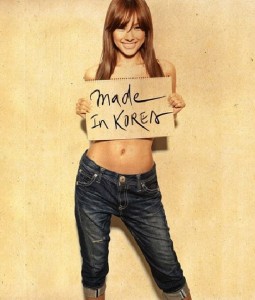
The transition from a domestic legal update to a global "miniskirt ban" narrative was accelerated by the influence of South Korean celebrities and the rapid-fire nature of social media. On March 15, 2013, K-pop icon Lee Hyori, known for her bold fashion and "sexy" image, tweeted to her millions of followers: "Is the overexposure fine for real? I’m totally dead."
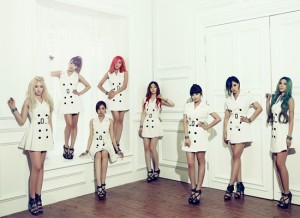
Lee’s comment, though likely hyperbolic or satirical, served as a catalyst. In the hyper-connected world of Hallyu (the Korean Wave), a statement from a top-tier idol carries significant weight. Fans and netizens immediately began sharing the tweet, interpreting it as a confirmation that the government was targeting the visual identity of the K-pop industry. Given that groups like Girls’ Generation, T-ara, and f(x) were synonymous with high-fashion miniskirts and "hot pants," the prospect of a government crackdown on hemlines seemed, to some, like an existential threat to the nation’s most successful cultural export.
Opposition politicians seized the opportunity to critique the new administration. Members of the Democratic United Party (now the Democratic Party of Korea) argued that the law was unconstitutionally vague. They pointed out that the term "discomfort or embarrassment" was subjective and could be exploited by police officers to moralize public fashion, much like the measuring-stick patrols of the 1970s.
Global Media and the Distortion of Facts
As the story moved from Korean-language forums to Western media outlets, the nuance of the legal text was largely lost. Outlets such as The Daily Mail in the UK and various international tabloids ran headlines suggesting that South Korea had banned miniskirts. Even reputable organizations like CNN and the BBC covered the "outcry" over the law, often leading with images of K-pop stars in short skirts.
The narrative of a "backward" or "repressive" Asian government attempting to police women’s bodies proved to be highly clickable content. Western audiences, largely unaware of the specific legal definitions or the fact that similar public indecency laws exist in nearly every US state and European country, accepted the "ban" as fact. This sparked a secondary wave of social media commentary where international observers ridiculed South Korea for what they perceived as a regression in civil liberties.
In reality, the law did not mention miniskirts, shorts, or any specific item of clothing. It focused on the exposure of "private parts." However, the lack of rigorous fact-checking in the initial reporting phase allowed the "miniskirt ban" myth to become the dominant global narrative.
Official Responses and Police Clarification
By late March 2013, the National Police Agency (NPA) was forced to launch a public relations campaign to quell the confusion. Inspector Ko Jun-ho of the NPA issued several statements clarifying that the amendment would not affect people wearing miniskirts or short pants.
"The focus of this amendment is on public nudity and indecent exposure," Ko stated in a televised briefing. "Commonly accepted fashion, such as miniskirts, does not fall under the category of ‘overexposure’ that causes offense. The law is intended to penalize people who are streaking or exposing themselves in a way that is clearly obscene."
Furthermore, the police clarified that the 50,000 KRW fine was actually a reduction in severity for some offenses that were previously punishable by higher fines or detention under different sections of the law. Despite these clarifications, the damage to the administration’s image—and the public’s perception of the law—was already done.
Geopolitical Backdrop: Rhetoric and Distraction
The timing of the law’s implementation coincided with a period of extreme tension on the Korean Peninsula. In early 2013, North Korea had conducted its third nuclear test, and Pyongyang was issuing daily threats of "pre-emptive nuclear strikes" and turning Seoul into a "sea of fire."
Political analysts have suggested that the "overexposure" controversy served as a domestic distraction, albeit an unintentional one. While the international community was focused on the potential for nuclear conflict, the South Korean public was deeply divided over domestic social issues. President Park Geun-hye’s administration was attempting to establish a "Creative Economy" and a "Strong Security" posture, but found itself bogged down by debates over the legacy of the Yushin era. The "miniskirt" controversy highlighted the fragility of the public’s trust in the government’s ability to modernize without reverting to old authoritarian habits.
Broader Impact and Implications
The 2013 overexposure law controversy serves as a seminal example of "fake news" or "misinformation" before the terms became ubiquitous in the late 2010s. It demonstrates how historical trauma can color the perception of current events, making a routine legislative update appear as a major policy shift.
For the K-pop industry, the "ban" never materialized. Idols continued to wear short skirts and provocative outfits, and the industry only grew in global dominance. However, the event prompted a broader discussion within South Korea about the role of the government in regulating public morality. It also highlighted a gendered double standard; while the law was gender-neutral, the public discourse focused almost exclusively on women’s clothing, ignoring the fact that the law was equally applicable to public urination or male streaking.
Ultimately, the 2013 amendment remains on the books, but it is rarely invoked for anything other than clear cases of public nudity. The "miniskirt ban" remains a myth—a cautionary tale of how a mixture of political history, celebrity influence, and sensationalist journalism can create a global narrative that is entirely divorced from legal reality. The incident remains a reminder for news consumers to probe beyond headlines, especially when those headlines confirm existing stereotypes or historical narratives about a particular nation.
Related News