Girls’ Generation Wins Video of the Year at Inaugural YouTube Music Awards Signaling Global K-Pop Dominance
Article Editorial Team
In a move that underscored the shifting landscape of the global music industry, South Korean pop group Girls’ Generation secured the prestigious Video of the Year award at the inaugural YouTube Music Awards (YTMA) held at Pier 36 in New York City. The victory, achieved for their genre-bending 2013 hit "I Got a Boy," marks a significant milestone in the globalization of Korean popular music, commonly known as K-pop. By surpassing established Western icons such as Justin Bieber, Miley Cyrus, Lady Gaga, and One Direction, Girls’ Generation has demonstrated the formidable power of digital-native fandoms and the effectiveness of systematic social media mobilization in the modern era of music consumption.
The YouTube Music Awards were established to recognize the artists and songs that saw the most growth and engagement on the platform over the preceding year. Unlike traditional award ceremonies that rely on a panel of industry experts or simple sales data, the YTMA winners were determined primarily by fan engagement metrics, specifically the number of times a nominated video was shared across social media platforms including Twitter, Facebook, and Google+. This criteria favored artists with highly active, digitally savvy fanbases, a category where K-pop groups have historically excelled.
The Methodology of a Digital Victory
The victory of Girls’ Generation was not merely a matter of chance but the result of a meticulously organized campaign by their global fan community, known as SONEs. The judging criteria for the Video of the Year award focused on videos that were shared the most frequently and rapidly, serving as a barometer for worldwide popularity and digital virality. While mainstream Western artists often boast higher cumulative view counts, the YTMA metric prioritized active advocacy and dissemination.
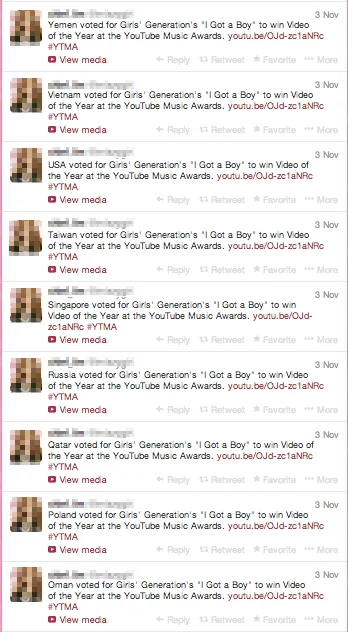
Throughout the voting period, K-pop fandoms utilized sophisticated strategies to maximize their impact. Observers noted the implementation of "relay sessions," where fans in specific time zones were assigned designated windows to vote and share content, ensuring a 24-hour cycle of engagement. This systematic approach allowed the fandom to maintain a constant presence on social media timelines, effectively flooding the digital space with promotional content for "I Got a Boy."
Furthermore, the voting process highlighted the creative, if sometimes unorthodox, methods used by fans to bypass platform limitations. Reports surfaced of fans utilizing multiple accounts and devices, often under pseudonyms, to bolster the share count. This level of dedication, while occasionally criticized by observers as "power voting," reflects a broader trend in music where the passion of a concentrated minority can outweigh the passive interest of a general majority.
Chronology of the "I Got a Boy" Phenomenon
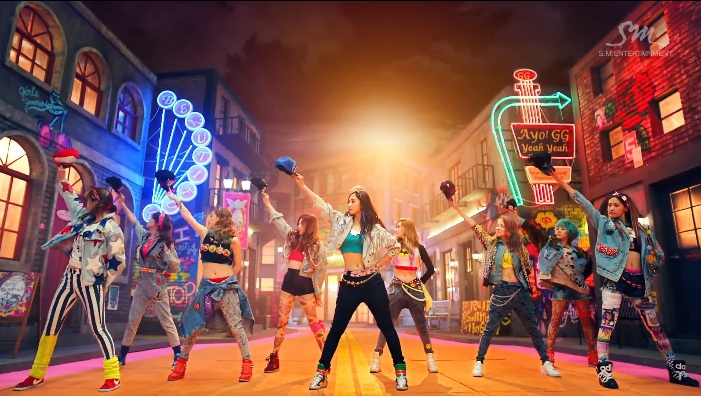
The journey to the YouTube Music Awards began on January 1, 2013, with the release of "I Got a Boy." The track was a radical departure from the group’s previous bubblegum pop and synth-pop sound, featuring a complex, multi-tempo structure that blended elements of hip-hop, rock, and electronic dance music. The music video, characterized by its vibrant streetwear aesthetics and high-energy choreography, immediately garnered international attention, amassing millions of views within hours of its debut.
By October 2013, YouTube announced the nominees for the first-ever YTMA. Girls’ Generation found themselves in a category alongside some of the most recognizable names in global music. The nominees for Video of the Year included:
- Justin Bieber – "Beauty and a Beat"
- Miley Cyrus – "We Can’t Stop"
- Lady Gaga – "Applause"
- One Direction – "Best Song Ever"
- Psy – "Gentleman"
- Macklemore & Ryan Lewis – "Thrift Shop"
- Selena Gomez – "Come & Get It"
- Demi Lovato – "Heart Attack"
- Epic Rap Battles of History – "Barack Obama vs. Mitt Romney"
On November 3, 2013, during the live-streamed ceremony hosted by actor Jason Schwartzman and musician Reggie Watts, Tiffany Hwang, a member of Girls’ Generation, accepted the award on behalf of the group. Her acceptance speech, delivered in English, expressed gratitude to the fans and to YouTube for providing a platform that bridges the gap between artists and audiences across different continents.
Industry Reactions and the "Who is Girls’ Generation?" Backlash
The announcement of the win triggered an immediate and polarized reaction across social media. While the K-pop community celebrated the win as a validation of the genre’s mainstream viability, a significant portion of the Western audience expressed confusion and, in some cases, hostility. The hashtag "Who is Girls’ Generation?" trended briefly as fans of the defeated Western nominees questioned the legitimacy of the results.
Some reactions were characterized by xenophobic undertones, reflecting a resistance to the entry of non-English-speaking artists into the American cultural mainstream. However, industry analysts pointed out that this tension is a natural byproduct of a diversifying global market. The win served as a "wake-up call" for the Western music industry, demonstrating that the traditional gatekeepers of fame—radio play and domestic television—are being bypassed by the democratic and borderless nature of digital platforms like YouTube.
For SM Entertainment, the agency behind Girls’ Generation, the win was a testament to their long-term strategy of "Cultural Technology." This approach involves the systematic training of artists and the targeted marketing of content to international audiences. The victory at the YTMA was not an isolated fluke but the culmination of years of slogging through international tours and building a robust digital infrastructure.
Data and Implications for the Global Music Market
The data surrounding the YTMA win reveals a shift in how "popularity" is measured in the 21st century. In the traditional model, popularity was often a reflection of broad, passive reach. In the YouTube era, it is increasingly defined by the depth of engagement. While Miley Cyrus’s "We Can’t Stop" may have had more cultural "noise" in the United States, the "I Got a Boy" campaign demonstrated a higher level of "active dissemination."
This distinction is crucial for marketers and record labels. It suggests that a dedicated, globalized niche can effectively compete with domestic heavyweights. For K-pop, this win followed the 2012 success of Psy’s "Gangnam Style," but it represented a different kind of achievement. While "Gangnam Style" was a viral novelty hit, Girls’ Generation’s win represented the power of an established idol group with a sustainable and organized following.
The implications for the American market are particularly noteworthy. Following the win, questions have been raised regarding the group’s future expansion into the United States. While Girls’ Generation had previously signed with Interscope Records for their 2011 release "The Boys," their presence in the U.S. had remained relatively niche. The YTMA win provides a significant boost to their profile, potentially reigniting interest from major American labels and distributors.
Future Outlook and the Longevity of K-Pop
As the dust settles on the inaugural YouTube Music Awards, the focus turns to the longevity of the K-pop movement. Critics who once dismissed the genre as a passing fad are now forced to reckon with its institutional staying power. Girls’ Generation, a group that has maintained its status at the top of the Korean industry for over six years, exemplifies the durability of the idol model. Their strength lies not only in their musical output but in their multi-faceted performance capabilities, brand image, and the marketing prowess of SM Entertainment.
The victory also sets a precedent for future awards ceremonies. It highlights the necessity for Western-centric awards to acknowledge the global nature of digital consumption. As YouTube continues to serve as the primary medium for music discovery, the influence of Asian, Latin American, and European artists on the global charts is expected to grow.
In conclusion, the YouTube Music Awards Video of the Year win for Girls’ Generation is more than just a trophy for a trophy cabinet; it is a symbolic moment that marks the end of Western exclusivity in the global pop conversation. It highlights the emergence of a new world order in music, where the click of a "share" button in Seoul, Singapore, or Sao Paulo carries as much weight as a radio spin in New York or London. As the industry moves forward, the success of Girls’ Generation will likely be viewed as the point at which the "international spotlight" finally became a truly global one.
Related News