South Korea Overexposure Law Clarified Amid Global Misconceptions Regarding Dress Code Restrictions
Article Editorial Team

The South Korean government’s implementation of a revised Minor Offenses Act in late March 2013 sparked an international media firestorm, leading to widespread claims that the country had effectively banned miniskirts. The legislation, which was one of the first major legal updates under the administration of President Park Geun-hye, introduced a fine of 50,000 South Korean Won (approximately $45 to $48 USD at the time) for individuals found guilty of "overexposure" in public spaces. While initial reports from several Western media outlets suggested a return to the era of state-mandated dress codes, a closer examination of the legal text and government statements reveals that the law was intended to address public indecency and nudity rather than regulate the length of women’s hemlines.
The confusion surrounding the law highlights the intersection of South Korean political history, the global influence of the K-pop industry, and the challenges of journalistic accuracy in the age of social media. To understand the gravity of the public reaction, it is necessary to examine the specific language of the amendment, the historical context of the Park family’s political legacy, and the role of celebrity influence in shaping public perception.
Legislative Background and the Scope of the Amendment
The amendment to the Minor Offenses Act was approved during a cabinet meeting chaired by President Park Geun-hye shortly after her inauguration. The primary objective of the revision was to modernize the existing legal framework regarding public behavior. According to the National Police Agency, the "overexposure" clause was specifically designed to target acts of public nudity and extreme indecency that caused discomfort or offense to others.
Specifically, the law aimed to provide a legal basis for fining individuals who engaged in "streaking" or exposed private parts of their bodies in public. Legal experts noted that such laws are common in many developed nations, including the United States and various European countries, where they are classified as "public indecency" or "disorderly conduct" statutes. In the South Korean context, officials argued that the law would also assist in curbing public nuisances, such as public urination, which had become a point of contention in urban nightlife districts.

Despite these intentions, the terminology used in the law—"overexposure"—was perceived as ambiguous. Without a strictly defined metric for what constituted "excessive" exposure, the public and the media began to fill the vacuum with speculation, leading to the narrative that the government was targeting the fashion choices of young women and the visual aesthetics of the South Korean entertainment industry.
Historical Context: The Legacy of Park Chung-hee
The intense domestic reaction to the law cannot be separated from the historical memory of the 1970s. President Park Geun-hye is the daughter of the late Park Chung-hee, a military leader who ruled South Korea from 1961 until his assassination in 1979. During the 1970s, under the "Yushin" Constitution, the elder Park’s administration implemented strict social controls as part of a broader effort to maintain public order and traditional Korean values.
During this period, police officers were famously equipped with bamboo rulers to measure the length of women’s skirts. If a skirt was found to be more than 20 centimeters above the knee, the wearer could face detention or fines. Similarly, men were subject to hair length regulations; those with hair deemed too long were often subjected to forced haircuts on the street. These measures were symbols of a repressive era that limited personal expression and civil liberties.
When the 2013 overexposure law was announced, opposition politicians and civil rights activists were quick to draw parallels between the new President Park and her father. The "like father, like daughter" rhetoric became a focal point for political dissent. Critics argued that even if the law was not intended to ban miniskirts, its vague wording granted the police too much discretionary power, potentially allowing for a return to subjective moral policing.
The Role of Celebrity Influence and Social Media
The transition of the story from a domestic legislative update to a global viral news item was accelerated by South Korean celebrities. Lee Hyori, a prominent K-pop soloist and cultural icon known for her bold fashion and advocacy, posted a message on the social media platform Twitter (now X) expressing concern over the law. Her comment, "Is the overexposure fine for real? I’m so dead," was interpreted by her millions of followers as a confirmation that the law would directly impact her career and wardrobe.
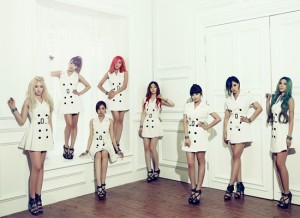
Other public figures and opposition members joined the fray, using social media to voice their disapproval. This domestic outcry caught the attention of international news organizations. Outlets such as The Daily Mail and CNN published headlines that leaned into the sensational aspects of the story, often featuring images of K-pop groups like Girls’ Generation (SNSD) and suggesting that the "hallyu" (Korean Wave) aesthetic was under threat.
The narrative of a "miniskirt ban" resonated globally because it contrasted sharply with the modern, high-tech, and fashion-forward image that South Korea had successfully projected through its cultural exports. The idea that the home of the "Gangnam Style" phenomenon was suddenly regressing into 1970s-style authoritarianism provided a compelling, albeit inaccurate, hook for international readers.
Chronology of Events
The development of the controversy followed a specific timeline that illustrates how a routine legal update escalated into a diplomatic and public relations challenge:
- March 11, 2013: The South Korean Cabinet, led by President Park Geun-hye, approves an amendment to the Minor Offenses Act.
- Mid-March 2013: Details of the 50,000 KRW fine for "overexposure" are released to the public.
- March 15–20, 2013: Opposition politicians and celebrities begin criticizing the law on social media, linking it to the era of Park Chung-hee.
- March 21, 2013: Major Western media outlets pick up the story, framing it as a ban on miniskirts and a crackdown on K-pop fashion.
- March 22, 2013: The law officially goes into effect.
- Late March 2013: The South Korean National Police Agency issues a formal clarification, stating that the law targets public nudity and "indecent exposure," not the length of skirts or individual fashion choices.
Analysis of Media Portrayal and Journalistic Integrity
The "miniskirt ban" episode serves as a case study in the dangers of "echo chamber" journalism. In the rush to report on a trending topic, many outlets prioritized the sensational claims found on social media over a primary-source analysis of the legislation. By the time the South Korean police clarified that the law would not affect the daily lives of citizens or the costumes of pop stars, the misinformation had already been cemented in the minds of a global audience.
Furthermore, the incident highlighted a specific Western bias in reporting on East Asian nations. There is often a tendency to frame legislative changes in these countries through the lens of "tradition versus modernity" or "authoritarianism versus democracy," sometimes at the expense of nuanced factual reporting. The assumption that the South Korean government would pass a law so detrimental to its own multi-billion-dollar entertainment industry—which relies heavily on visual appeal and fashion—ignored the economic and cultural realities of the country.

Broader Impact and Implications
While the law did not result in the mass arrest of miniskirt wearers, the controversy had several lasting effects. Politically, it forced the Park Geun-hye administration to be more cautious regarding the language of new regulations, as the public remained hyper-sensitive to any perceived echoes of her father’s regime.
Culturally, the event reaffirmed the power of K-pop stars as political influencers. The fact that a single tweet from a celebrity like Lee Hyori could trigger international news coverage demonstrated the significant soft power held by the entertainment industry.
In the long term, the South Korean overexposure law remains a footnote in the country’s legal history, but it continues to be cited as an example of how easily information can be distorted in the digital age. For South Korean citizens, the law eventually settled into its intended role: a minor statute used to maintain public decorum in extreme cases, while the vibrant and often provocative fashion of Seoul’s streets and stages continued unabated.
Ultimately, the "sea of fire" rhetoric from the North and the domestic debates over public indecency represent two very different types of tension within the Korean peninsula. While the former concerns international security, the latter reflects the growing pains of a young democracy navigating its past while defining its modern identity. The overexposure law was not a return to the 1870s or the 1970s; rather, it was a poorly communicated attempt at modern governance that collided with a powerful cultural zeitgeist.
Related News