“Female President” Has Nothing To Do With A Female President
Article Editorial Team
The Political Ascent of Park Geun-hye and the 2012 Election
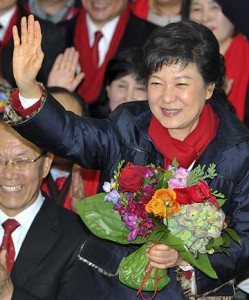
The election of Park Geun-hye was a multifaceted event in South Korean history. As the daughter of Park Chung-hee, the military leader who ruled South Korea for nearly two decades, her candidacy was viewed through a lens of both reverence and skepticism. To her supporters, she represented the stability and economic growth associated with her father’s legacy, often referred to as the "Miracle on the Han River." To her detractors, particularly within the opposition Democratic United Party (Minju Party), she was seen as a symbol of the nation’s authoritarian past, with critics frequently alleging that her rise to power was facilitated by her inherited political capital rather than a commitment to progressive reform.
Despite these controversies, Park’s inauguration in February 2013 was objectively revolutionary. For the first time in the history of the Republic of Korea, a woman occupied Cheong Wa Dae, the Blue House. This symbolic victory led many to speculate whether South Korea was entering an era of substantive change regarding women’s rights and gender equality. The expectations were high, given the nation’s historical struggles with gender-based discrepancies in the workforce and domestic life.
Cultural Mirroring: The Release of "Female President" by Girl’s Day
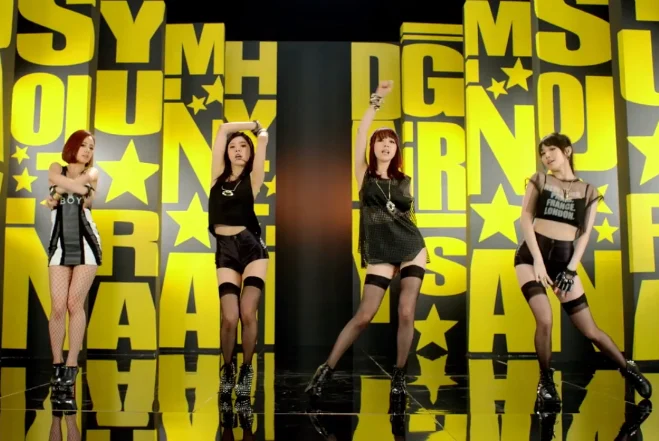
In June 2013, just months into Park Geun-hye’s term, the K-pop quartet Girl’s Day released their repackaged album featuring the lead single "Female President." The song’s title and promotional materials leaned heavily into the zeitgeist of female leadership. At the time, Girl’s Day was navigating a transition from a "cute" idol image to a more mature and "sexy" concept, a common trajectory for third-tier girl groups seeking to solidify their market share alongside contemporaries like A Pink, Dal Shabet, and Rainbow.
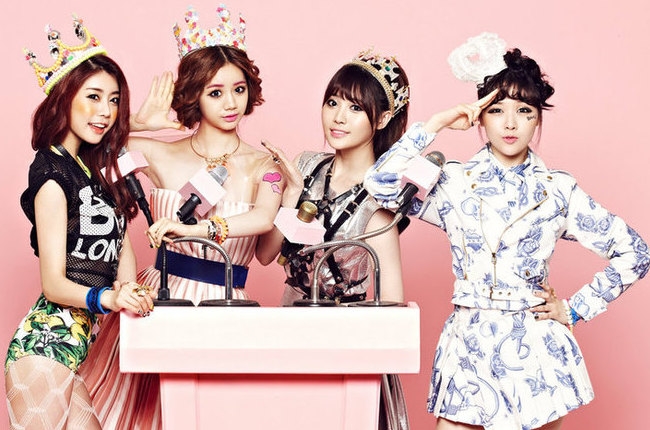
The release of "Female President" was strategically timed to capitalize on the national conversation surrounding female authority. The music video and lyrical content were ostensibly designed to celebrate a new era of "girl power." However, upon closer analysis, the song’s version of empowerment was scrutinized by critics for its perceived lack of depth and its reliance on traditional romantic tropes. The central theme of the song—the "revolutionary" act of a woman initiating a kiss or expressing romantic interest first—was seen by some as a trivialization of the broader struggle for gender equality.
A Chronology of the 2012–2013 Gender Discourse
To understand the impact of "Female President," one must examine the timeline of events that shaped the public consciousness during this period:
- December 19, 2012: Park Geun-hye wins the 18th presidential election with 51.6% of the vote.
- February 25, 2013: Park Geun-hye is officially inaugurated, promising a "Second Miracle on the Han River" and a focus on "creative economy."
- March–May 2013: National discussions increase regarding the "Glass Ceiling" in Korean corporations, as the new administration pledges to expand female representation in public sectors.
- June 24, 2013: Girl’s Day releases "Female President," utilizing a title that directly references the head of state to frame a narrative about dating dynamics.
- Late 2013: International organizations, including the OECD, release data highlighting that despite having a female president, South Korea’s gender metrics remained largely stagnant.
Socioeconomic Data and the Gender Reality in South Korea
While the symbolic presence of a female president was significant, the statistical reality for women in South Korea during this era remained challenging. South Korea has consistently reported some of the lowest rankings among OECD nations regarding gender equality.
According to OECD data from 2013, the gender wage gap in South Korea stood at approximately 36.3%, the highest among all member nations. This meant that for every dollar earned by a male worker, a female worker earned roughly 64 cents. Furthermore, the "Glass Ceiling Index" published by The Economist consistently ranked South Korea at the bottom of the list for working women. Factors contributing to this ranking included the low proportion of women in senior management roles and the high level of career interruption faced by women due to childbirth and domestic responsibilities—a phenomenon often referred to in Korean sociology as the "M-curve" in female employment.
Additionally, the legal landscape regarding reproductive rights remained restrictive. In 2013, abortion was largely illegal in South Korea, except in cases where the mother’s health was in grave danger or in instances of rape or incest. These systemic issues provided a stark contrast to the lighthearted "empowerment" narrative presented in pop culture.
Visual and Lyrical Analysis: The Contradiction of Empowerment
The music video for "Female President" attempted to blend political imagery with the aesthetics of the K-pop industry. One notable scene featured members Minah and Hyeri in a role-reversal narrative, where Hyeri donned androgynous, suit-based attire while Minah portrayed a more traditionally feminine role. The video culminated in a scene where Minah pulls Hyeri toward her by her tie, suggesting a subversion of traditional dating roles.
However, critics pointed out that the empowerment portrayed was strictly confined to the "male gaze." The styling—which included controversial skin-toned bodysuits—was argued to be more about visual titillation for a male audience than a statement on female autonomy. Furthermore, the lyrics alternated between encouraging women to be "go-getters" and describing them as feeling "worthless" or like "babies" when in the presence of a man they admire. This dissonance highlighted the challenge K-pop groups faced when attempting to engage with serious social themes while maintaining the commercial requirements of the idol industry.
Critical Reception and Industry Implications
The reaction to "Female President" was polarized. On one hand, it successfully boosted Girl’s Day’s profile, helping them transition into the upper echelons of the K-pop market. On the other hand, social commentators argued that the song was an example of "commodified feminism"—where the language of liberation is used to sell a product without challenging the underlying structures of inequality.
Industry analysts noted that the use of a political title was a "kitschy" marketing tactic that lacked a genuine policy-driven message. While the song asked, "Is it a crime for a woman to kiss first?" social activists pointed out that the actual crimes and legal barriers affecting women—such as workplace discrimination and lack of reproductive autonomy—remained unaddressed by both the cultural output and the early policies of the Park administration.
The Broader Impact and Long-term Legacy
The presidency of Park Geun-hye did not ultimately result in the "watershed" for women’s rights that some had optimistically predicted. Her administration was later overshadowed by political scandal and her eventual impeachment in 2017, which further complicated the legacy of the nation’s first female leader.
In the realm of pop culture, "Female President" remains a fascinating artifact of its time. It represents a moment when the K-pop industry attempted to synchronize with a major political milestone, yet struggled to move beyond the superficial application of "girl power" tropes. The song serves as a reminder of the gap between symbolic representation in high office and the lived reality of the average citizen.
Ultimately, the 2012–2013 period in South Korea demonstrated that while a female president could break a significant political glass ceiling, the cultural and institutional barriers to gender equality required more than just a change in leadership. It required a fundamental shift in both policy and the way gender is portrayed in the media. The discourse surrounding Girl’s Day’s "Female President" underscores the ongoing tension between pop culture’s role as a mirror of society and its potential to be a genuine catalyst for social change. While the impact of the song on the patriarchy was negligible, it remains a pivotal case study in the commercialization of political identity in the 21st century.
Related News