Girls Generation Triumphs at Inaugural YouTube Music Awards Securing Video of the Year for I Got A Boy
Article Editorial Team
The global music landscape witnessed a significant shift in November 2013 as the South Korean girl group Girls’ Generation, also known as SNSD, secured the Video of the Year award at the inaugural YouTube Music Awards (YTMA). Held at Pier 36 in New York City, the event was designed to recognize the artists and videos that drove the highest levels of engagement on the world’s largest video-sharing platform. Girls’ Generation’s victory for their genre-bending single "I Got A Boy" marked a watershed moment for the K-pop industry, signaling its transition from a regional phenomenon to a formidable force in the international mainstream. The win placed the nine-member ensemble in the global spotlight, echoing the viral success achieved by their compatriot Psy with "Gangnam Style" a year prior, while simultaneously raising questions regarding the mechanics of social-media-driven accolades.
The 2013 YouTube Music Awards and the Path to Victory
The YouTube Music Awards were established to honor excellence in music through a lens that traditional ceremonies like the Grammys or the MTV Video Music Awards often overlooked: digital virality and fan-driven data. Unlike traditional awards that rely on industry panels or sales figures, the YTMA winners were determined by a specific set of engagement metrics. The judging criteria focused on the videos that were shared most rapidly across social media platforms, including Twitter, Facebook, and Google+. This metric served as a clear indicator of worldwide popularity and the mobilization capacity of modern fandoms.
Girls’ Generation faced stiff competition in the Video of the Year category. The nominees included some of the most prominent names in Western pop music, such as Justin Bieber ("Beauty and a Beat"), Miley Cyrus ("We Can’t Stop"), Lady Gaga ("Applause"), Macklemore & Ryan Lewis ("Thrift Shop"), One Direction ("Best Song Ever"), Psy ("Gentleman"), Selena Gomez ("Come & Get It"), Demi Lovato ("Heart Attack"), and the "Epic Rap Battles of History" series. Given the stature of these global icons, the victory of a non-English language act was viewed by many industry analysts as an upset, yet it was a logical outcome of the specific data-driven methodology employed by YouTube.
Systematic Fandom Mobilization: The SONE Strategy
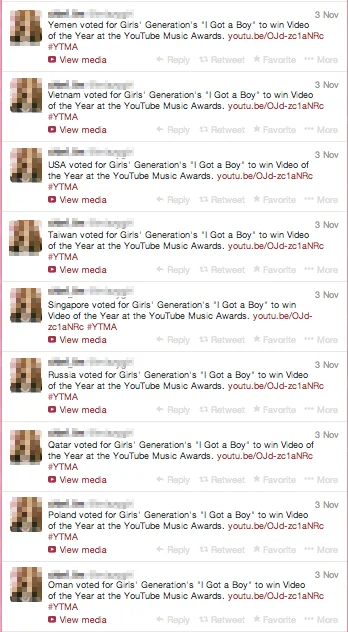
The success of "I Got A Boy" at the YTMAs was largely attributed to the highly organized and systematic efforts of the Girls’ Generation global fan base, known as SONE. Throughout the voting period, the group’s followers utilized social media to maximize the visibility of the nomination. Observations of the voting process revealed a level of coordination that surpassed typical fan interactions. On platforms like Twitter, the timeline was flooded with standardized messages: "I voted for Girls’ Generation’s I Got A Boy to win Video of the Year at the YouTube Music Awards."
Beyond simple sharing, the fandom implemented "relay sessions," where specific voting windows were overseen by fans living in different time zones. This ensured a continuous, 24-hour stream of social media activity, preventing the momentum from waning. Reports indicated that fans utilized multiple devices and accounts to amplify the group’s reach. In some instances, humorous or creative identities were used during the voting process, highlighting the communal and often playful nature of digital fandoms. This systematic team effort transformed the voting process into a global campaign, demonstrating the power of a dedicated minority audience to influence large-scale outcomes in a decentralized voting system.
Chronology of "I Got A Boy" and the Rise of SNSD
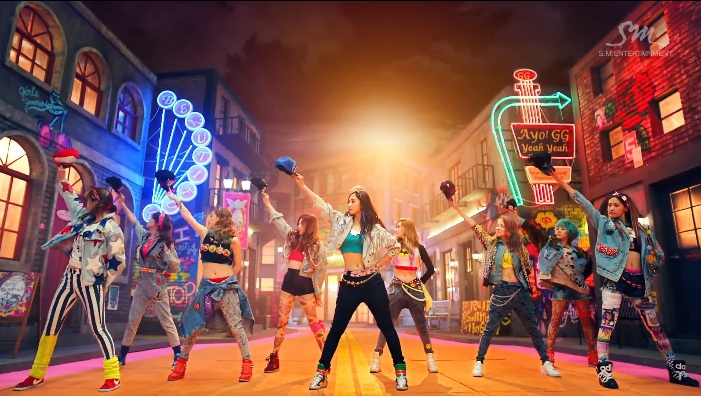
The journey to the YouTube Music Awards began on January 1, 2013, with the release of "I Got A Boy." The song was a departure from the group’s previous "bubblegum pop" image, featuring a complex, multi-tempo structure that blended elements of electropop, hip-hop, and rock. Upon its release, the music video garnered massive attention, reaching 10 million views on YouTube in just 55 hours, a record for a K-pop group at the time.
Girls’ Generation, formed by SM Entertainment in 2007, had already established themselves as the "Nation’s Girl Group" in South Korea. With hits like "Gee," "Genie," and "The Boys," they had successfully expanded into the Japanese market and were beginning to make inroads in the United States. Their 2011 release, "The Boys," saw them collaborating with American producer Teddy Riley and signing with Interscope Records, a subsidiary of Universal Music Group. The 2013 YTMA win served as a culmination of years of strategic marketing and performance excellence, solidifying their reputation as a top-tier international act.
Public Reaction and Industry Backlash
The announcement of Girls’ Generation as the winners of Video of the Year elicited a polarized response. Within the K-pop community, the mood was one of pride and validation, with many feeling that Korean pop culture had finally earned its rightful place in the global mainstream. Tiffany Young, representing the group at the ceremony, expressed gratitude in her acceptance speech, stating, "YouTube is my best friend. Is YouTube your best friend?" Her presence and fluent English helped bridge the gap between the K-pop industry and the Western audience attending the New York event.
However, the win also triggered a wave of confusion and hostility from fans of Western artists. On social media, supporters of nominees like Justin Bieber and Lady Gaga expressed disbelief, often using dismissive or xenophobic language to question the legitimacy of the group. Many viewers, unfamiliar with the K-pop genre, viewed the result as a fluke or an anomaly. This tension highlighted a cultural divide in the music industry, where the immense popularity of Asian artists remained a blind spot for many Western listeners.
The backlash also sparked a debate about the validity of social-media-driven awards. Critics argued that the "sharing" metric favored groups with highly active, tech-savvy fan bases rather than reflecting the preferences of the general public. This raised questions about "unique views" versus "repetitive sharing," suggesting that a majority of the social signals could be accounted for by a dedicated minority of users.
Broader Implications for the Music Industry
The victory of Girls’ Generation at the YTMAs provided a case study in the changing dynamics of the global music industry. It demonstrated that in the digital age, traditional gatekeepers—such as radio stations and Western television networks—no longer held a monopoly on what constitutes a "hit." YouTube and social media have democratized the path to stardom, allowing artists from non-English speaking markets to compete on a level playing field with established American superstars.
Furthermore, the win underscored the marketing prowess of SM Entertainment and the efficacy of the K-pop idol model. The industry’s focus on high-production music videos, synchronized choreography, and intense fan engagement proved to be perfectly suited for the YouTube era. The event also highlighted the potential for K-pop to move beyond the "one-hit wonder" status often associated with Psy, showing that the genre had a sustainable and loyal global following.
Future Prospects and Global Expansion
In the aftermath of the YTMA win, the industry turned its attention to the future of Girls’ Generation’s American expansion. Having confirmed their "worldwide" presence, the question remained whether the group would pursue a full-scale debut in the United States. While "I Got A Boy" was a critical and commercial success, the challenges of breaking into the Western market remained significant, including language barriers and differing promotional cycles.
The role of Interscope Records was also a point of interest. As the group’s U.S. partner, the label’s continued investment was seen as crucial for any further expansion. While the YTMA win provided a massive boost in visibility, it also served as a reminder of the need for informed decisions and appreciation for cultural differences within the wider music industry.
Conclusion
The 2013 YouTube Music Awards Video of the Year win for Girls’ Generation remains a landmark event in the history of modern music. It was a victory powered by a new generation of digital consumers who utilized social platforms to elevate their favorite artists to the global stage. While the win was met with a mix of celebration and controversy, its impact on the visibility of Korean pop culture is undeniable. As the music industry continues to evolve in the digital era, the success of "I Got A Boy" serves as a testament to the power of organized fandoms and the increasingly borderless nature of global entertainment. For Girls’ Generation, the award was not a fluke, but a hard-earned recognition of their longevity, talent, and the unwavering support of their global audience.
Related News