South Korea Overexposure Law and the Global Media Misinterpretation of Public Decency Regulations
Article Editorial Team

The implementation of a revised public decency ordinance in South Korea has sparked an international debate regarding civil liberties, cultural expression, and the legacy of authoritarianism. In March 2013, the South Korean government, under the newly inaugurated administration of President Park Geun-hye, enacted an amendment to the Minor Offenses Act. The law, which targets "overexposure" in public spaces, was immediately met with a firestorm of criticism both domestically and abroad. While government officials maintained that the law was a routine update to existing statutes regarding public indecency and nudity, a combination of historical trauma, celebrity influence, and sensationalist international reporting transformed the legal amendment into a global controversy centered on the supposed banning of miniskirts and the restriction of K-pop fashion.
The Legislative Reality of the Overexposure Law
The controversy began following a cabinet meeting on March 11, 2013, where President Park Geun-hye oversaw the approval of an amendment to the Minor Offenses Act. The revised law, which officially went into effect on March 22, 2013, introduced a fine of 50,000 Korean Won (approximately $45 to $50 USD) for individuals found guilty of "overexposure" in public. According to the legal text, the offense is defined as appearing in public with parts of the body that should be covered exposed in a way that causes "discomfort or shame" to others.
From a strictly legal perspective, the amendment was not a new creation but an adjustment of a law that had existed for decades. The primary change was the standardization of the fine amount. Previously, such offenses were handled through summary trials, a process that was often seen as cumbersome for minor infractions. By categorizing overexposure as a fine-based offense, the government aimed to streamline enforcement. National Police Agency officials repeatedly clarified that the law was intended to curb public nudity, indecent exposure, and behavior such as "streaking" or public urination, rather than to regulate the hemline of women’s skirts.
Historical Context: The Shadow of the Yushin Era
To understand why a seemingly routine legal update caused such a profound national reaction, one must look to South Korea’s political history. President Park Geun-hye is the daughter of the late Park Chung-hee, a military dictator who ruled South Korea from 1961 to 1979. During the 1970s, under the "Yushin" Constitution, the elder Park’s regime enforced strict social controls in an effort to maintain public order and traditional Korean values against the perceived encroachment of Western counterculture.
During this era, police officers were famously equipped with measuring sticks to ensure that women’s miniskirts did not end more than 20 centimeters above the knee. Men with long hair were also subject to "forced haircuts" in the streets. These measures became symbols of state intrusion into personal lives and the suppression of individual expression. Consequently, when the younger Park’s administration introduced a law mentioning "overexposure," the South Korean public—particularly the older generation who lived through the 1970s and the younger generation wary of conservative overreach—immediately drew parallels between the father’s authoritarianism and the daughter’s new policy. This historical baggage turned a minor legislative update into a sensitive political issue.

Chronology of the Controversy
The timeline of the "miniskirt ban" narrative illustrates how quickly misinformation can propagate in the digital age.
On March 11, 2013, the cabinet approved the amendment. Within hours, South Korean social media platforms were flooded with concerns. Opposition politicians, including members of the Democratic United Party, seized on the news to criticize the Park administration, accusing it of returning the country to the "era of the measuring stick."
On March 12 and 13, high-profile South Korean celebrities began to weigh in. Pop icon Lee Hyori, known for her bold fashion and "sexy" image, posted on Twitter (now X), "Is the overexposure fine for real? I’m so dead." Her comment, while likely tongue-in-cheek, was picked up by major domestic news outlets, further legitimizing the public’s fear that the law would target the entertainment industry and everyday fashion choices.
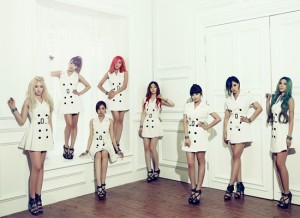
By mid-March, the story had crossed international borders. Major Western media outlets, including the Daily Mail and CNN, published headlines suggesting that South Korea was "banning miniskirts." These reports often framed the story within the context of K-pop, suggesting that groups like Girls’ Generation (SNSD) and f(x), famous for their leg-centric choreography and short costumes, would be forced to overhaul their wardrobes. This framing ignored the official statements from the Korean National Police and focused instead on the most sensational interpretation of the law.
The Role of Celebrity and Social Media
The influence of celebrity voices played a pivotal role in the escalation of the controversy. In South Korea, K-pop stars are not merely entertainers but cultural ambassadors. When figures like Lee Hyori expressed concern, it signaled to a global audience that the law was a direct threat to the "Hallyu" (Korean Wave) culture that the government itself had worked so hard to promote.
However, analysts note that the celebrity reaction was largely based on the same misinterpretations as the general public’s. The law did not specify clothing types; it used the term "indecent exposure" (gwa-do-no-chul), which in a legal context refers to the exposure of primary or secondary sexual characteristics. Despite this, the power of social media meant that the nuance of legal terminology was lost. The "miniskirt ban" became a viral meme, overshadowing the actual text of the legislation.
Official Clarifications and Government Response
In response to the mounting hysteria, the South Korean National Police Agency (NPA) issued several formal clarifications. On March 14, 2013, the NPA held a press briefing to address the "groundless rumors." Officials explained that the law was specifically designed to address "obscene acts" and "public indecency" that caused significant distress to others. They explicitly stated that fashion choices, including miniskirts and short shorts, did not fall under the purview of the law.
"The amendment is about punishing people who engage in activities like public nudity or excessive exposure that borders on public indecency," an NPA spokesperson stated. "There is no intention to regulate what citizens wear in their daily lives, nor is there any plan to return to the era of measuring skirt lengths."
Despite these assurances, the damage to the administration’s image was already done. The incident highlighted a significant trust gap between the Park Geun-hye government and the liberal-leaning segments of the population.
Supporting Data: Public Indecency Statistics
To provide context for the government’s move, it is helpful to look at the prevalence of minor offenses in South Korea. According to data from the National Police Agency, cases of public indecency and "minor disturbances" had seen a steady increase in urban centers like Seoul and Busan in the early 2010s.
In 2012, the year prior to the law’s amendment, police recorded thousands of instances of public intoxication leading to indecent behavior. The 50,000 KRW fine was intended to serve as a middle-ground deterrent—more significant than a mere warning but less severe than a criminal record. By standardizing the fine, the government hoped to reduce the administrative burden on the court system, which previously had to process these cases through formal summary judgments.
International Media Critique and Journalistic Integrity
The "miniskirt ban" controversy serves as a case study in the pitfalls of international reporting on foreign cultures. Western media outlets often rely on "stringers" or social media trends to cover news in East Asia, which can lead to a lack of depth and context. In this instance, the international press largely ignored the historical nuances of the Park Chung-hee era and the specific legal language of the amendment.

The framing of the story as a "war on K-pop fashion" was particularly effective for generating clicks, as K-pop was reaching a peak in global popularity in 2013. However, this reporting was factually inaccurate. By failing to consult the actual text of the Minor Offenses Act or the official statements of the South Korean police, these outlets contributed to a narrative that painted South Korea as a regressive society, despite its status as a leading modern democracy.
Broader Impact and Sociopolitical Implications
The overexposure law controversy reflects deeper tensions within South Korean society regarding gender, age, and political ideology. For many young Korean women, the fear of the law was rooted in a genuine concern about the patriarchal gaze and the state’s role in policing women’s bodies. Even if the law was not intended to ban miniskirts, the vague language of "causing discomfort or shame" was seen by critics as a tool that could be used subjectively by conservative police officers to target women.
Furthermore, the incident demonstrated the volatility of South Korea’s political landscape. The speed with which the "miniskirt ban" narrative took hold showed that the legacy of the 1970s dictatorship remained a potent political weapon. For the Park Geun-hye administration, it was an early lesson in the importance of transparent communication and the need to distance itself from the controversial aspects of the President’s father’s legacy.
Conclusion: The Importance of Context in a Globalized World
Ultimately, the South Korean overexposure law of 2013 did not lead to a mass confiscation of miniskirts or a change in K-pop’s aesthetic. The fashion industry continued to thrive, and public dress codes remained as liberal as they had been since the democratization of the late 1980s. However, the controversy remains a significant moment in South Korean media history.
It underscores the necessity for both domestic and international audiences to approach sensational news with skepticism. In an era where information travels instantly across borders, the loss of cultural and historical context can transform a minor administrative update into a major international scandal. The overexposure law was not an act of fashion censorship, but a routine legal amendment that fell victim to the ghosts of the past and the pressures of the modern 24-hour news cycle.
Related News