South Korea Clarifies Overexposure Law Amid Global Misconceptions Regarding Fashion Restrictions and Public Indecency Regulations
Article Editorial Team

The South Korean government, under the administration of President Park Geun-hye, enacted a revised version of the Minor Offenses Act on March 22, 2013, sparking a significant international debate regarding civil liberties and the regulation of public attire. The law, which includes a provision targeting "excessive exposure," was initially interpreted by several domestic and international media outlets as a de facto ban on miniskirts and other revealing clothing. However, official government statements and legal experts have since clarified that the legislation is aimed at curbing public indecency and streaking rather than dictating fashion choices for the general population or the nation’s prominent K-pop industry.
The controversy arose during the first weeks of the Park Geun-hye administration, the country’s first female presidency. The revision to the Minor Offenses Act was approved during a cabinet meeting on March 11, 2013, and officially implemented late that month. Under the new guidelines, individuals found guilty of "overexposure" in public spaces face a summary fine of 50,000 Korean Won (approximately $45 to $48 USD at the time of enactment). The swiftness of the implementation, combined with the historical baggage associated with the President’s lineage, created a vacuum of information that was rapidly filled by sensationalist reporting and social media speculation.
Historical Context and the Legacy of the 1970s
To understand the intensity of the public reaction, it is necessary to examine South Korea’s political history, specifically the era of the Yushin Constitution under President Park Chung-hee, the father of Park Geun-hye. During the 1970s, the elder Park’s military government enforced strict "social purification" measures. This included the deployment of police officers equipped with measuring sticks to ensure that women’s miniskirts did not end more than 20 centimeters above the knee. Men were also targeted for their appearance, with authorities conducting forced haircuts on those whose hair was deemed excessively long.
These measures were part of a broader authoritarian push to maintain traditional social order and suppress Western-influenced youth culture, which the government perceived as a threat to national discipline. Consequently, when the younger Park’s administration introduced a law using the term "overexposure," the South Korean public—and particularly the opposition parties—immediately drew parallels to the restrictive 1970s. The phrase "like father, like daughter" became a common refrain among critics who feared a regression into state-mandated morality and dress codes.

Chronology of the Legislative Dispute
The timeline of the 2013 overexposure law reflects a rapid escalation from a standard legal update to a global media event:
- March 11, 2013: The Cabinet of South Korea, led by President Park Geun-hye, approves an amendment to the Minor Offenses Act. The update was intended to modernize a law that had not seen significant revision in decades.
- March 22, 2013: The law officially takes effect. It introduces or clarifies fines for 28 different minor offenses, including persistent stalking, public spitting, and "excessive exposure."
- March 23–25, 2013: High-profile South Korean celebrities, including pop star Lee Hyori, express concern on social media. Lee tweeted, "Is the overexposure fine for real? I’m so dead," a comment that went viral and fueled the perception that the law targeted stage outfits and fashionable street wear.
- March 26–28, 2013: Major Western news organizations, including The Daily Mail and CNN, publish reports with headlines suggesting South Korea had "banned miniskirts." These reports often framed the story within the context of a "conservative crackdown" by the new administration.
- Late March 2013: The National Police Agency (NPA) and the Blue House (the presidential residence) issue formal clarifications to quell the growing hysteria.
Legal Definitions and Government Clarification
In response to the mounting criticism, the South Korean National Police Agency issued a detailed explanation of what the "overexposure" clause actually entails. According to the NPA, the law is specifically designed to address "indecent exposure" and "public nakedness" that causes offense or discomfort to others.
The legal text refers to individuals who "disgracefully expose their body parts that should be hidden, such as the genitals or buttocks, in a public place, thereby causing discomfort or embarrassment to others." Police officials emphasized that the law was a refinement of existing indecency statutes rather than an expansion of power to regulate the length of skirts or the depth of necklines.
"The revised law aims to provide a clearer legal basis for punishing streakers and those who engage in lewd acts in public, which previously fell into a legal gray area," a spokesperson for the NPA stated during a press briefing. The police further clarified that the law would not be applied to ordinary citizens wearing miniskirts, shorts, or typical summer attire. Furthermore, the 50,000 KRW fine was actually a reduction or a standardization of penalties that had existed in various forms since the 1980s, rather than an entirely new financial burden.
Public and Political Reaction
Despite the government’s attempts to clarify the intent of the law, the political opposition remained skeptical. Members of the Democratic United Party (now the Democratic Party of Korea) argued that the wording of the law remained dangerously vague. They posited that terms like "discomfort" and "embarrassment" are subjective and could be exploited by law enforcement to target specific groups or individuals based on the prevailing political climate.
Ki-sik Kim, a prominent opposition lawmaker at the time, criticized the administration for failing to consider the historical sensitivity of the issue. "The government should be focusing on the economy and national security, not on how much skin a citizen chooses to show," Kim stated. The opposition used the law as a platform to challenge the Park administration’s perceived lack of communication with the public and its tendency toward top-down governance.
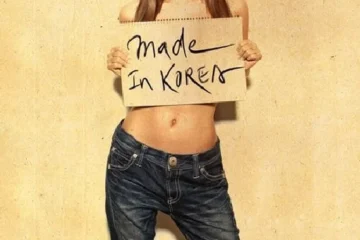
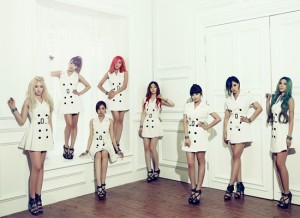
The cultural impact was equally pronounced. In the "K-pop era," where short skirts and provocative choreography are central to the industry’s global branding, the rumor of a fashion ban threatened a multi-billion dollar export. Entertainment agencies reportedly monitored the situation closely, though none officially altered their artists’ wardrobes. The "no-pants" look (wearing oversized tops with very short shorts) remained a staple of South Korean street fashion throughout the spring and summer of 2013, proving that the law had no practical effect on the fashion industry.
Data on Minor Offenses and Enforcement
Statistical data from the National Police Agency provides a broader view of the Minor Offenses Act’s application. The 2013 revision addressed 28 specific behaviors. Some of the other fines introduced or updated at the time included:
- Stalking: 80,000 KRW (approx. $75 USD)
- Public Spitting/Urination: 30,000 to 50,000 KRW (approx. $28 to $48 USD)
- Hoax Calls to Emergency Services: Up to 600,000 KRW (approx. $560 USD)
The inclusion of the "overexposure" clause alongside stalking and public urination suggests that the legislative intent was rooted in public order and sanitation rather than moral policing. Historically, South Korea has struggled with issues related to public urination and disorderly conduct following late-night drinking, a cultural phenomenon known as "hoesik." The police argued that the updated law gave them the necessary tools to manage these public nuisances more effectively.
Analysis of Media Sensationalism
The "miniskirt ban" narrative serves as a case study in the rapid spread of misinformation in the digital age. Analysts point to several factors that contributed to the global misunderstanding of the South Korean law. First, the "clickbait" nature of headlines regarding K-pop and fashion made the story highly shareable. Second, there was a lack of nuance in translating the specific legal Korean terminology into English. The term for "overexposure" (gwa-do-han no-chul) can be interpreted broadly in a fashion context, but in a legal context, it has historically referred to indecent exposure.

Furthermore, Western media often relies on a "traditional vs. modern" trope when reporting on East Asian societies. Framing South Korea as a nation "returning to its repressive roots" fit a pre-existing narrative of a conservative society struggling with its rapid modernization, despite the fact that South Korea is one of the most socially liberal democracies in Asia regarding youth fashion and expression.
Broader Implications and Final Assessment
The 2013 overexposure law controversy ultimately revealed more about South Korea’s internal political tensions and the power of historical memory than it did about actual changes in legal enforcement. While the law remains on the books, there have been no documented cases of the South Korean police using the Minor Offenses Act to fine individuals for wearing miniskirts.
The episode highlighted the "Park Geun-hye Effect," where every policy move by the president was viewed through the lens of her father’s legacy. It also underscored the necessity for governments to engage in transparent communication when updating laws that touch upon sensitive social issues. For the international community, the event served as a reminder that viral news stories regarding foreign legal systems require careful scrutiny and a deep understanding of local context.
Ultimately, the South Korean "miniskirt ban" of 2013 was a legislative update that fell victim to a perfect storm of historical baggage, celebrity influence, and sensationalist journalism. The nation’s streets and stages continue to reflect a vibrant, diverse, and uninhibited fashion culture, confirming that the "sea of fire" threatened by North Korea remains a far more significant concern for Seoul than the length of a hemline.
Related News