LE SSERAFIM’s "PUREFLOW" Album Concept Ignites Heated Debate Over Similarities to Red Velvet’s Distinctive Aesthetic
Article Editorial Team

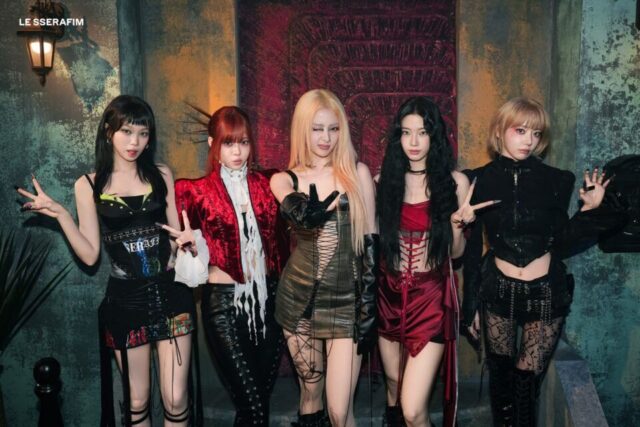
The eagerly anticipated second studio album from LE SSERAFIM, PUREFLOW, has yet to be released, but its preliminary promotional material has already plunged the K-Pop community into a fervent debate. Unveiled by Source Music, the teasers for PUREFLOW feature a striking dark, fairy tale horror aesthetic that has drawn immediate and widespread comparisons to the well-established conceptual universe of veteran K-Pop group Red Velvet. This isn’t the first instance of such parallels being drawn between the two groups, sparking renewed discussions about originality, artistic influence, and the competitive landscape of K-Pop concepts.
The Genesis of the Controversy: PUREFLOW’s Dark Allure
On May 11, 2026, Source Music initiated the promotional cycle for LE SSERAFIM’s upcoming album, PUREFLOW, slated for release on May 22, 2026, at 1 PM KST. The agency released a series of captivating teaser images and a concept trailer, designed to build anticipation among fans, known as FEARNOTs. These visuals immediately stood out for their distinctive stylistic choices: a heavy reliance on gothic motifs, eerie forest settings, unsettling visual cues, and an overall ambiance that veered sharply into the realm of dark fantasy and horror. Elements such as distorted reflections, shadowed figures, and an almost melancholic yet sinister beauty pervaded the initial glimpses into the album’s world.
While many FEARNOTs expressed excitement over LE SSERAFIM’s bold conceptual shift, embracing the group’s willingness to explore darker themes, a significant portion of the wider K-Pop fandom quickly identified striking similarities to Red Velvet’s iconic conceptual work. Social media platforms, particularly Twitter, became a hotbed for discussion, with users posting side-by-side comparisons of LE SSERAFIM’s PUREFLOW teasers alongside visuals from Red Velvet’s past comebacks. The core of the debate centered on whether LE SSERAFIM’s new direction was an homage, a coincidental thematic overlap, or a concerning lack of originality.

Red Velvet’s Conceptual Prowess: Masters of the Eerie and Enigmatic
To fully grasp the intensity of the current debate, it is essential to understand the unique conceptual niche carved out by Red Velvet. Since their debut in 2014 under SM Entertainment, Red Velvet has been renowned for their "Red" and "Velvet" duality, seamlessly oscillating between bright, upbeat, and quirky concepts (Red) and mature, sophisticated, and often dark or mysterious themes (Velvet). It is within the "Velvet" spectrum that they have particularly excelled in the dark fairy tale and horror-adjacent aesthetics.
Throughout their career, Red Velvet has consistently pushed boundaries with their visual narratives. Albums like The Red Summer (2017) showcased whimsical yet subtly unsettling elements, while Perfect Velvet (2017) delved deeper into the enigmatic with its title track "Peek-A-Boo," featuring a sinister game of hide-and-seek. Their subsequent releases, such as "Bad Boy" (2018) and "RBB (Really Bad Boy)" (2018), further solidified their reputation for intricate, dark, and often gothic storytelling, blending beauty with a sense of underlying dread. "RBB," in particular, is frequently cited in current comparisons, with its visuals depicting the members in a haunted, gothic mansion setting, encountering a werewolf, all while maintaining a high-fashion, eerie elegance. This era cemented their status as pioneers in delivering high-concept, visually rich narratives that often contained elements of psychological thrillers or dark fantasy.
However, it was arguably their 2019 release, "Psycho," and their 2023 comeback, Chill Kill, that fully crystallized Red Velvet’s mastery of the dark, unsettling, and art-house horror aesthetic. "Psycho" presented a gothic, theatrical narrative of a toxic love, while Chill Kill leaned heavily into a disturbed, fragmented fairy tale, exploring themes of trauma, brokenness, and distorted beauty. Chill Kill‘s teasers and music video, with their stark imagery, unsettling atmosphere, and narrative ambiguity, became a benchmark for this specific conceptual subgenre within K-Pop. The detailed world-building, symbolic imagery, and sophisticated execution of these concepts have led many fans and critics to consider Red Velvet unparalleled in this particular artistic domain.
A History of Overlaps: Prior Comparisons and the "Chill Kill" Effect
The current PUREFLOW controversy is not an isolated incident. LE SSERAFIM previously faced similar accusations of conceptual overlap with Red Velvet during the promotion of their Japanese debut. Fans pointed out striking resemblances between LE SSERAFIM’s concept photos for their Japanese release and Red Velvet’s teaser visuals for Chill Kill. These earlier comparisons highlighted specific poses, styling choices, and atmospheric elements that, to many, seemed to echo Red Velvet’s distinct approach. The recurrence of these debates with PUREFLOW suggests a pattern that some find difficult to dismiss as mere coincidence.

The album Chill Kill itself has become an almost constant reference point in broader plagiarism discussions within the K-Pop industry. Its unique and impactful aesthetic resonated so deeply that it has been invoked in conversations involving several other prominent acts, not just LE SSERAFIM. Groups like KiiiKiii, NCT, and IVE have, at various points, faced scrutiny from fans and netizens who perceived elements in their promotional material or music videos as being too close to the visual language established by Chill Kill. This phenomenon underscores the profound influence Red Velvet’s creative direction, particularly with Chill Kill, has had on the visual lexicon of contemporary K-Pop. It also illustrates the challenges creative teams face in generating genuinely novel concepts in a saturated market, where distinguishing between inspiration, trend convergence, and direct imitation can be subjective and highly contentious.
Fan Reactions and the Discourse on Originality
The reaction from fans has been polarized. Supporters of LE SSERAFIM argue that the "dark fairy tale horror" concept is a broad genre that is open to interpretation by any artist. They contend that while there might be superficial similarities, LE SSERAFIM will bring their unique flair and narrative to PUREFLOW, distinguishing it from Red Velvet’s work. Many emphasize that borrowing themes is a common practice in art, and true originality lies in the execution. They also point to the fact that K-Pop concepts often recycle popular trends, and that various groups have explored dark aesthetics without being accused of plagiarism from Red Velvet.
Conversely, a vocal segment of fans, particularly Red Velvet’s Reveluvs, express frustration and disappointment. They argue that Red Velvet has meticulously cultivated and consistently explored this specific conceptual space for years, making it an integral part of their artistic identity. For these fans, the perceived similarities go beyond mere inspiration, bordering on direct imitation, particularly given the previous instances of comparison. Comments such as "Not them trying to reheat Red Velvet nachos" and "You can’t copy Red Velvet if you can’t sing like Red Velvet" illustrate the sentiment that LE SSERAFIM is not only encroaching on Red Velvet’s conceptual territory but may also struggle to match the artistic depth and vocal prowess associated with Red Velvet’s sophisticated releases. These comments, while perhaps harsh, highlight the emotional investment fans have in their favorite groups’ unique identities and contributions to the industry.
Broader Industry Implications: Concept Ownership vs. Creative Evolution
This ongoing debate touches upon fundamental questions about originality and artistic ownership in the K-Pop industry. In a highly competitive global market, groups are under immense pressure to deliver distinctive and memorable concepts that resonate with audiences. However, the pool of truly "new" ideas is finite, and creative teams often draw inspiration from existing cultural tropes, cinematic genres, and successful artistic precedents.
The core dilemma lies in defining the line between inspiration, which is a natural part of any creative process, and imitation. Is a general aesthetic like "dark fairy tale horror" universally accessible, or can a group’s consistent and innovative application of it create a proprietary feel? The K-Pop industry has a history of certain concepts or styles becoming trends that multiple groups adopt, sometimes leading to accusations of "copying" and other times being accepted as part of the genre’s natural evolution. The intensity of the reaction often depends on the perceived degree of similarity and the established legacy of the group being "compared to."
Neither Source Music (LE SSERAFIM’s agency) nor SM Entertainment (Red Velvet’s agency) has issued official statements directly addressing the comparisons at the time of publication. This silence is typical in such situations, as agencies often prefer to let the controversy subside or allow the final product (the album and music video) to speak for itself, rather than engaging in public debates that could further fuel fan wars.
The Path Forward: Execution as the Ultimate Arbiter
As LE SSERAFIM prepares for the release of PUREFLOW, all eyes will be on the complete album, its music, and its accompanying music video. The ultimate assessment of originality and artistic merit will likely hinge on how LE SSERAFIM and Source Music execute this concept. Will PUREFLOW offer a fresh, distinct interpretation of the dark fairy tale horror theme, infusing it with LE SSERAFIM’s unique narrative and musical identity? Or will the final product reinforce the perception of conceptual overlap, further intensifying the debate?
The controversy surrounding PUREFLOW serves as a poignant reminder of the passionate nature of K-Pop fandoms and the intricate dynamics of artistic creation in a fast-paced, image-driven industry. It highlights the delicate balance between drawing from established aesthetics and forging a truly unique path, a challenge that continues to shape the narratives of K-Pop groups and their creative teams. The industry, and its global audience, will be watching closely to see how LE SSERAFIM navigates these turbulent conceptual waters with the release of PUREFLOW.
Related News