The Socio-Political Impact of South Koreas First Female Presidency and the Evolution of Gender Representation in Contemporary K-Pop Culture
Article Editorial Team

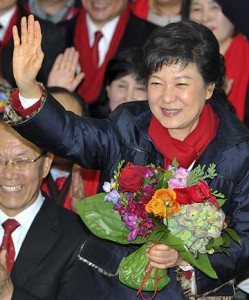
The election of Park Geun-hye as the 11th President of South Korea on December 19, 2012, represented a significant milestone in the history of the Republic of Korea. As the first woman to ascend to the nation’s highest office, Park’s victory was heralded by international observers as a potential turning point for gender equality in a country long defined by deeply entrenched patriarchal structures. Representing the conservative Saenuri Party—formerly the Grand National Party—Park secured the presidency with 51.6% of the vote, narrowly defeating her opponent, Moon Jae-in of the Democratic United Party. Her inauguration in February 2013 marked the beginning of an era where the "Glass Ceiling" of the Blue House was officially shattered, yet the cultural and systemic implications of her leadership remained a subject of intense debate.
Historical Context and the Legacy of the Park Lineage
Park Geun-hye’s path to the presidency was inextricably linked to her familial heritage. She is the daughter of Park Chung-hee, the military leader who ruled South Korea from 1961 until his assassination in 1979. Park Chung-hee’s legacy is polarized; he is credited with orchestrating the "Miracle on the Han River," which transformed South Korea from a war-torn agrarian society into a global industrial powerhouse, but he is also condemned for his authoritarian suppression of democratic dissent.
During her campaign, Park Geun-hye successfully navigated this complex legacy by appealing to older voters who remembered her father’s economic achievements while attempting to distance herself from his human rights record. The opposition Democratic United Party frequently challenged her candidacy, asserting that her rise to power was a product of political inheritance rather than a victory for grassroots female empowerment. Despite these criticisms, her presence in Cheong Wa Dae (the Blue House) provided a symbolic victory that many hoped would translate into substantive policy shifts regarding women’s rights.
The Socio-Economic Landscape for Women in South Korea
At the time of Park’s election, South Korea’s record on gender equality was among the lowest in the industrialized world. According to data from the Organisation for Economic Co-operation and Development (OECD), South Korea consistently reported the highest gender wage gap among member nations, with women earning approximately 36% to 39% less than their male counterparts. This disparity was compounded by a corporate culture that often penalized women for marriage and childbirth, leading to what sociologists term the "M-curve" in female labor participation, where women exit the workforce in their late 20s and early 30s and struggle to return to equivalent positions later in life.
Furthermore, female representation in the National Assembly remained low, and legislative hurdles regarding reproductive rights and workplace discrimination persisted. The 1953 criminal code, which largely banned abortion except in cases where the mother’s health was in peril or in instances of rape, remained in effect, serving as a point of contention for activists. While Park’s election suggested a new era, the structural barriers faced by South Korean women in education, employment, and the legal system remained formidable.
Cultural Response: Girl’s Day and the "Female President" Phenomenon
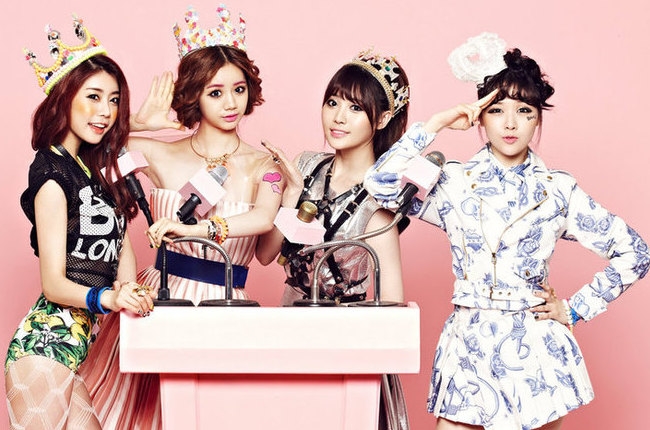
The entertainment industry, particularly the K-pop sector, was quick to capitalize on the political zeitgeist. In June 2013, the girl group Girl’s Day, managed by Dream T Entertainment, released a repackaged version of their first studio album featuring the lead single "Female President." The song was marketed as a "girl power" anthem, explicitly referencing the novelty of a woman leading the nation to encourage women to take more assertive roles in their personal lives.
The group, consisting of members Sojin, Yura, Minah, and Hyeri, had recently undergone a significant image transformation. Moving away from the "cute" concepts that defined their early career, Girl’s Day embraced a "sexy" aesthetic that was prevalent in the 2013 K-pop landscape. The release of "Female President" was highly anticipated, bolstered by the members’ increasing individual popularity, including Hyeri’s high-profile relationship with veteran singer Tony Ahn, which kept the group in the media spotlight.
Chronology of the "Female President" Release and Reception
- December 19, 2012: Park Geun-hye is elected as the first female president of South Korea.
- February 25, 2013: Park Geun-hye is officially inaugurated, sparking national dialogue on female leadership.
- March 2013: Girl’s Day achieves mainstream success with "Expectation," introducing the "suspenders dance" and a more mature image.
- June 24, 2013: Girl’s Day releases "Female President." The music video and lyrics draw immediate attention for their provocative nature and political title.
- July 2013: The song reaches the top ten on various Korean digital charts, though it receives mixed reviews from critics regarding its depth and message.
Analysis of Lyrical Content and Visual Symbolism
Despite the title’s political weight, critics and analysts noted a significant disconnect between the song’s branding and its lyrical content. The primary message of "Female President" suggests that because the nation has a female leader, women should feel empowered to take the initiative in romantic pursuits—specifically, being the first to confess feelings or initiate a kiss. The chorus asks, "The president of our country is now a woman / So what’s the problem? Why can’t a girl do it? / Why do you have to wait for the man to do it?"
This framing has been criticized for trivializing the actual challenges faced by women in South Korean society. While the song encourages personal agency, it limits that agency to the domestic and romantic spheres. Furthermore, the lyrics contain contradictions; while advocating for boldness, they also describe the female protagonist as feeling "dizzy," "like a baby," and "unable to open her eyes" in the presence of a man.
Visually, the music video employs standard K-pop tropes of the era, including heavy synchronization, high-fashion styling, and suggestive choreography. One notable sequence features an androgynous portrayal of Hyeri in a suit alongside a more traditionally feminine Minah. The video culminates in a scene where Minah pulls Hyeri toward her by her tie, stopping just short of a kiss. While this was seen as a bold creative choice, critics argued it served more as a visual spectacle for the male gaze rather than a genuine exploration of gender fluidity or empowerment.
Official Responses and Public Sentiment
The reaction to both the presidency and its cultural reflections was varied. Conservative supporters of Park Geun-hye viewed her leadership as a sign of national stability and progress. Conversely, progressive groups and feminist activists expressed concern that Park’s presidency was "tokenism," arguing that her policies did not sufficiently address systemic gender inequality.
In the music industry, "Female President" was part of a larger trend where "sexy concepts" were used by girl groups to gain market share in a highly competitive environment. Groups like Sistar, AOA, and Nine Muses were also utilizing more provocative imagery during this period. Industry analysts suggested that the "empowerment" narrative in "Female President" was a marketing strategy designed to give the group a unique "edge" or "concept" rather than a sincere political statement.
Broader Impact and Implications
The intersection of Park Geun-hye’s presidency and the release of "Female President" highlights the complexities of gender discourse in South Korea. While the symbolic value of a female head of state cannot be dismissed, the cultural output surrounding the event revealed a reluctance to engage with the substantive issues of the patriarchy. Instead of addressing the gender wage gap, workplace discrimination, or reproductive rights, popular media often redirected the narrative of empowerment back toward traditional relationship dynamics.
Ultimately, the Park Geun-hye era did not result in a radical restructuring of gender roles in South Korea. Her presidency was eventually cut short by impeachment in 2017 following a massive corruption scandal, an event that further complicated her legacy as a female pioneer. For the K-pop industry, "Female President" remains a case study in how political milestones are commodified. It demonstrated that while a song can adopt the language of revolution, its impact is often limited if it fails to challenge the underlying social norms that define its audience’s reality.
In the years following 2013, the South Korean feminist movement saw a resurgence through the "Escape the Corset" and "Me Too" movements, which sought to address the very issues that "Female President" largely ignored. These grassroots movements have arguably done more to shift the national consciousness on women’s rights than the symbolic victory of the 2012 election or the pop-culture anthems that followed in its wake.
Related News