South Korea Clarifies Overexposure Law Amid Global Misinterpretation and Historical Sensitivities
Article Editorial Team

The implementation of a revised Misdemeanor Punishment Act in South Korea has sparked a significant international debate, highlighting a complex intersection of legislative intent, historical trauma, and the power of digital-era sensationalism. On March 22, 2013, the South Korean cabinet, led by newly inaugurated President Park Geun-hye, approved a series of amendments to the nation’s minor offense laws. Among the 28 revised items was a clause concerning "overexposure," which stipulates that individuals who cause discomfort to others by excessively exposing their bodies in public places may be subject to a fine of 50,000 Korean Won (approximately $45 to $48 USD). While the government maintains the law is a standard measure to curb public indecency, its timing and phrasing have triggered a wave of criticism from domestic political opponents, celebrities, and international media outlets.
The Legislative Framework of the Misdemeanor Punishment Act
The Misdemeanor Punishment Act is a long-standing component of South Korea’s legal system, designed to regulate minor social disturbances that do not warrant criminal prosecution but disrupt public order. The 2013 revision was not a singular focus on clothing; rather, it was part of a broader administrative update to streamline fines and modernize definitions of various offenses. Other offenses addressed in the revision included persistent stalking, making prank emergency calls, and public smoking in restricted areas.
The specific clause regarding overexposure (Article 3, Section 1, Item 33) states that "those who expose their naked bodies or excessively reveal parts of their bodies that should be hidden, thereby causing feelings of shame or discomfort to others," are liable for the fine. According to the National Police Agency, the revision was intended to replace previous, more ambiguous language and to provide a clearer legal basis for penalizing behaviors such as public streaking or extreme indecency that were already technically illegal under older statutes.

Historical Context and the Shadow of the Yushin Era
The domestic outcry against the law cannot be understood without examining South Korea’s political history, specifically the 1970s under the administration of President Park Chung-hee, the father of President Park Geun-hye. During the "Yushin" era, the elder Park implemented the Minor Offenses Act of 1973, which gave police the authority to regulate personal appearance as a means of maintaining social discipline and "public morality."
During this period, police officers famously patrolled the streets with measuring sticks to ensure that women’s miniskirts did not end more than 20 centimeters above the knee. Men were also targeted; those with hair deemed too long were subjected to forced haircuts on the spot. These measures were symbols of a repressive military dictatorship that sought to control not only the political landscape but also the private lives and cultural expressions of its citizens.
Because President Park Geun-hye is the daughter of the late dictator, her critics have been quick to draw parallels between the two administrations. Opposition politicians, including members of the Democratic United Party, characterized the overexposure law as a return to "regressive" governance. They argued that the law’s vague terminology could allow for arbitrary enforcement, effectively granting police the power to judge fashion choices based on subjective standards of "discomfort."
Social Media Amplification and Celebrity Response
The controversy gained significant momentum through social media, where high-profile South Korean celebrities voiced their concerns. Lee Hyori, a prominent K-pop icon and fashion influencer known for her bold style, posted a message on Twitter (now X) questioning the law’s implications. Her post, which translated to "Is the overexposure fine for real? I’m dead," was widely shared and interpreted by fans as a sign that the government might be targeting the entertainment industry.
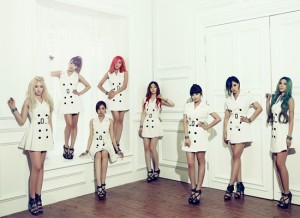
In the K-pop industry, visual concepts are a cornerstone of marketing and performance. Girl groups frequently utilize miniskirts, short shorts, and form-fitting outfits as part of their aesthetic. The suggestion that "overexposure" could lead to fines created a sense of alarm among agencies and fans who feared a censorship crackdown on the "Hallyu" (Korean Wave) cultural export that has become a vital part of South Korea’s soft power and economy.
The Role of International Media and Sensationalism
The story transitioned from a domestic political debate to a global viral sensation when Western media outlets began reporting on the law. Headlines from organizations such as the Daily Mail and CNN initially framed the story with varying degrees of sensationalism. Some headlines explicitly stated that South Korea had "banned miniskirts," leading to a widespread misconception that the country was adopting a conservative dress code akin to those found in theocratic or authoritarian regimes.
This framing led to a disconnect between the legal reality in Seoul and the perception of the law in London, New York, and beyond. International readers, unfamiliar with the nuances of South Korean law or the routine nature of the Misdemeanor Punishment Act revisions, reacted with derision. On social media platforms, South Korea was criticized for being "backward-thinking," despite the fact that many Western nations—including several states in the U.S. and various European countries—have similar laws regarding public indecency and "lewd and lascivious" behavior.
Official Clarifications and the Scope of Enforcement
In response to the mounting confusion, the Korean National Police Agency (KNPA) issued several clarifying statements. Inspector Ko Jun-ho of the KNPA explained that the law was never intended to regulate general fashion or the length of skirts. "The new amendment is about public nudity and indecent exposure. Any reports that we will be regulating what people are wearing are completely false," Ko stated.

The police clarified that the 50,000 KRW fine is actually a reduction or a formalization of penalties for acts that were previously punishable by higher fines or even short-term detention under more severe "indecent exposure" laws. The intent was to create a middle-ground penalty for minor offenses like "streaking" or public urination, which cause public nuisance but do not necessarily constitute a sex crime.
Furthermore, legal experts pointed out that for a fine to be issued, there must be a clear victim or a public consensus that the exposure was "excessive" to the point of causing legitimate "shame or discomfort." In a modern society like South Korea, where miniskirts and "hot pants" have been mainstream fashion for decades, the legal threshold for "discomfort" caused by a skirt length is effectively impossible to meet in a court of law.
Timeline of Events
- December 2012: Park Geun-hye is elected as South Korea’s first female president.
- Early March 2013: The Ministry of Government Legislation reviews updates to the Misdemeanor Punishment Act.
- March 22, 2013: The cabinet approves the revised act during a meeting presided over by President Park.
- March 23–25, 2013: Domestic celebrities and opposition politicians begin criticizing the "overexposure" clause on social media.
- March 26–28, 2013: International news outlets pick up the story, often using "miniskirt ban" headlines.
- March 29, 2013: The National Police Agency holds a press briefing to clarify that the law targets nudity, not fashion.
- April 2013: The law officially takes effect, with no reported cases of individuals being fined for wearing miniskirts.
Analysis of Implications
The "overexposure law" incident serves as a case study in the challenges of modern governance in the age of instant global communication. It highlights three critical areas of concern:
- Political Sensitivity and Legacy: The reaction to the law demonstrated that the South Korean public remains highly sensitive to any policy that echoes the authoritarian past. For President Park Geun-hye, the incident was an early lesson in the "Park Chung-hee shadow," where even routine administrative actions could be viewed through the lens of her father’s legacy.
- The Fragility of Journalistic Integrity: The rapid spread of the "miniskirt ban" myth illustrates how easily nuances can be lost when complex legal changes are translated for a global audience. The pressure for clicks often leads to the prioritization of sensational headlines over factual accuracy, which can unfairly damage a nation’s international reputation.
- Cultural Standards vs. Legal Codes: The debate forced a conversation about where a democratic government’s right to maintain "public order" ends and an individual’s right to self-expression begins. While the government argued the law was about "indecency," the public backlash reminded the administration that in a modern, liberal democracy, the state’s role in defining "decency" is increasingly limited.
In the months following the law’s implementation, the initial hysteria dissipated as it became clear that police were not, in fact, patrolling the streets with measuring sticks. The fashion industry in Seoul continued to thrive, and K-pop groups continued to perform in their customary attire without legal interference. However, the event remains a significant example of how historical memory and media narratives can transform a minor legislative update into a major national and international controversy. As of the current date, the law remains on the books as a tool for managing public nuisance, while the "miniskirt ban" remains a cautionary tale of the digital era’s penchant for misinformation.
Related News