The Cultural and Economic Evolution of the Dwenjang-nyeo Phenomenon in South Korea
Article Editorial Team

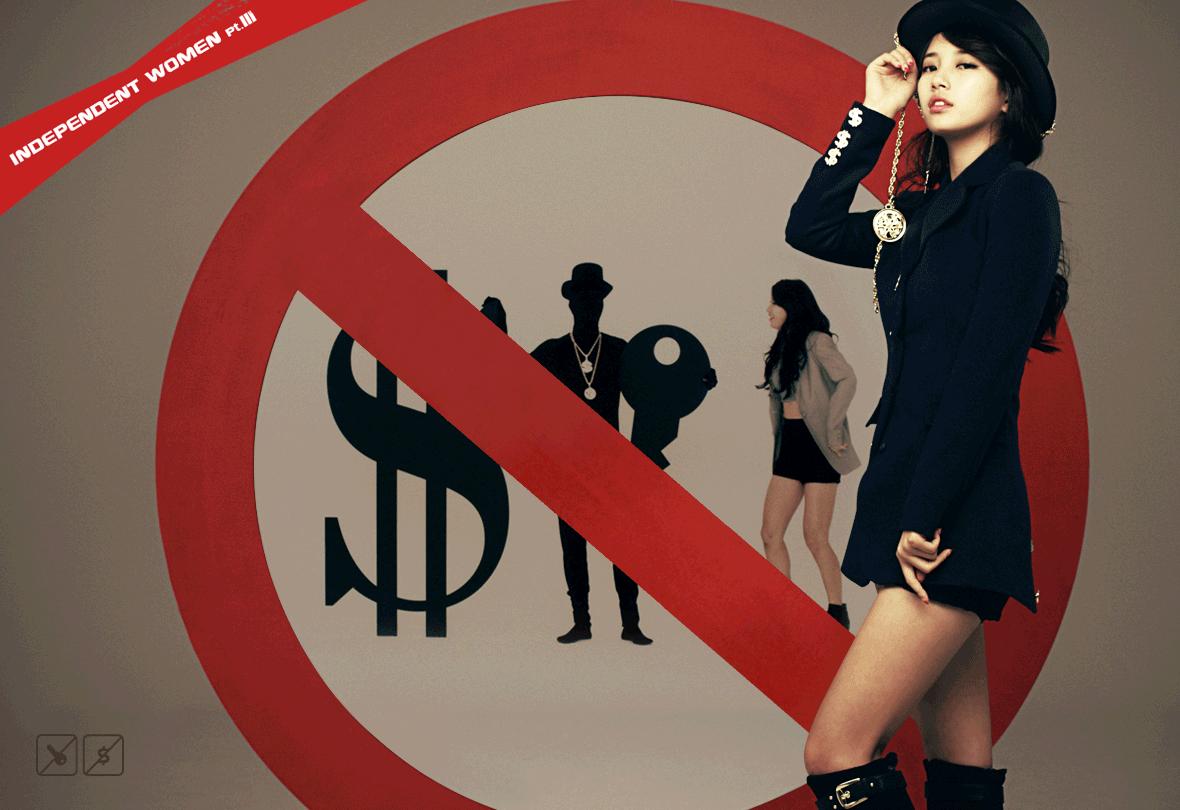
The global explosion of Psy’s "Gangnam Style" in 2012 introduced international audiences to more than just a catchy hook and a horse-riding dance; it provided a satirical window into the complex socio-economic landscape of modern South Korea. Central to the song’s critique is the figure of the dwenjang-nyeo (된장녀), or "Bean Paste Girl." This term, which has permeated Korean popular culture and social discourse for nearly two decades, describes a specific archetype of womanhood: one who purportedly prioritizes luxury consumption and Western-style status symbols over financial stability. To understand the dwenjang-nyeo is to understand the rapid transformation of South Korea from a war-torn agrarian society into a hyper-capitalist global powerhouse, and the friction that arises when traditional values of frugality clash with the realities of modern consumerism.
The Etymology of Consumption: From Stew to Starbucks
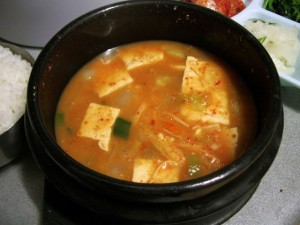
The term "Bean Paste Girl" is derived from dwenjang (된장), a fermented soybean paste that serves as the foundation for dwenjang jjigae, a humble and ubiquitous stew. In the Korean culinary hierarchy, dwenjang jjigae represents the ultimate "comfort food"—it is cheap, nutritious, and deeply associated with domesticity and the traditional home. Historically, a bowl of this stew at a local restaurant might cost between 3,500 and 5,000 KRW (approximately $3.00 to $4.50 USD).
The pejorative label emerged in the mid-2000s to describe women who were perceived to eat these inexpensive, traditional meals specifically so they could "hoard" their limited funds for luxury items. The most iconic symbol of this perceived vanity was the Starbucks coffee cup. In the early 2000s, a caffe latte at Starbucks in Seoul cost more than a full meal of dwenjang jjigae. Critics argued that these women were "living beyond their means," sacrificing nutritional substance for the social capital associated with carrying a green-and-white branded cup.
This paradox—the cheapness of the bean paste versus the expense of the designer handbag or the imported coffee—formed the basis of a societal backlash. The dwenjang-nyeo was characterized not as a wealthy socialite, but as a "wannabe" who utilized credit cards or parental support to maintain a veneer of affluence.
A Chronology of Economic Transformation and "Kwasobi"
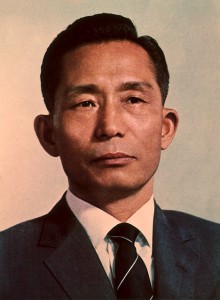
The roots of the dwenjang-nyeo phenomenon cannot be separated from South Korea’s "Miracle on the Han River." Following the devastation of the Korean War (1950–1953), South Korea was one of the poorest nations on earth, significantly lagging behind North Korea in industrial output. Under the authoritarian leadership of President Park Chung-hee in the 1960s and 70s, the nation underwent a period of "compressed modernization."
During this era, the government promoted a nationalistic ethos of frugality. Spending on non-essential or imported goods was labeled kwasobi (과소비), or "excessive consumption." Kwasobi was treated as nearly unpatriotic, as the state required citizens to save their earnings in domestic banks to provide the capital necessary for industrial expansion. This period established a rigid moral framework where financial restraint was equated with virtuous citizenship.
However, by the 1990s, the landscape shifted. South Korea joined the OECD in 1996, signaling its status as a developed nation. The 1997 Asian Financial Crisis (often referred to in Korea as the "IMF Crisis") momentarily halted this progress, but the subsequent recovery led to a massive surge in credit card use as the government encouraged domestic spending to stimulate the economy. This shift created a generational rift: the older generation, raised on the scarcity of the post-war years, viewed the burgeoning luxury market with suspicion, while the younger generation, raised in a globalized society, viewed luxury goods as essential tools for social mobility and self-expression.
Defining the Archetype: Societal Perceptions and Variations
The definition of a "Bean Paste Girl" is famously fluid, reflecting the varied anxieties of those who use the term. Sociologists have identified several distinct ways the archetype is framed in public discourse:
- The Frugal Luxury Seeker: This is the most common definition—a woman who eats cheap meals (dwenjang) to afford a singular high-end item, such as a Louis Vuitton or Chanel handbag.
- The Moocher: A more aggressive definition paints the woman as a financial parasite who relies on her parents or boyfriend to fund her lifestyle, refusing to contribute to the household while demanding expensive gifts.
- The "Pseudo-Westerner": This version focuses on the rejection of Korean traditions. The woman is criticized for her "un-Korean" preferences—favoring brunch, wine, and Western fashion over local customs—while allegedly lacking the intellectual or cultural depth to actually understand the Western cultures she emulates.
- The Economic Independent (A Feminist Reinterpretation): In recent years, some feminist scholars have attempted to reclaim the term. They argue that the dwenjang-nyeo is simply a woman who earns her own money and chooses to spend it on herself rather than saving it for a future husband or family. In this view, the criticism of her spending is an attempt by a patriarchal society to maintain control over women’s financial autonomy.
Data and Market Realities: South Korea as a Luxury Hub
Despite the derogatory nature of the "Bean Paste Girl" label, market data suggests that the desire for luxury goods is a widespread national trend, not limited to a specific demographic of young women. According to a 2022 report by Morgan Stanley, South Koreans are now the world’s biggest spenders on personal luxury goods per capita. The study found that South Korean spending on luxury brands grew by 24% in 2022 to reach $16.8 billion, or about $325 per person. This far exceeds the $280 spent per capita in the United States and $55 in China.
Furthermore, the coffee culture that once sparked the dwenjang-nyeo controversy has become a fundamental part of Korean life. Seoul currently boasts more Starbucks locations than any other city in the world, including New York and London. The "luxury" of a 6,000 KRW coffee has become a standard daily expense for office workers of all genders, suggesting that the initial outrage was less about the coffee itself and more about who was drinking it.
The Gendered Nature of Public Criticism
One of the most persistent critiques of the dwenjang-nyeo phenomenon is its inherent gender bias. While women are vilified for spending money on handbags and coffee, there is no widely used, equivalent term for men who spend disproportionate amounts on expensive cars, electronics, or luxury watches.

Sociologists suggest this disparity stems from South Korea’s abysmal record on gender equality. In the World Economic Forum’s Global Gender Gap Report, South Korea consistently ranks near the bottom among developed nations. The "Bean Paste Girl" slur serves as a mechanism for social policing; it punishes women for visible consumption while ignoring the systemic economic pressures that make luxury goods one of the few accessible ways to signal status in a hyper-competitive society.
In the mid-2010s, this gender tension escalated with the emergence of the term "Kimchi-nyeo" (Kimchi Girl), a more virulent and misogynistic evolution of the "Bean Paste Girl" label. This, in turn, led to the rise of "Megalia" and other feminist movements that utilized "mirroring" techniques to create derogatory terms for men, highlighting the deep-seated frustrations regarding gender roles in the country.
Expert Analysis and Societal Implications
Dr. Laura C. Nelson, an anthropologist and author of Measured Excess: Status, Gender, and Consumer Nationalism in South Korea, argues that these labels are part of a broader struggle to define what it means to be a "good" Korean in the 21st century. As the nation moved away from state-mandated frugality, the "correct" way to consume became a moving target.
"Consumption in South Korea has always been a political act," Nelson notes. "When women consume in ways that seem independent of family obligations or traditional modesty, it is viewed as a threat to the social order."
The "Bean Paste Girl" phenomenon also reflects the "Hell Joseon" sentiment—a term used by young Koreans to describe the harsh, competitive conditions of modern life. In a society where home ownership is increasingly unattainable and social mobility has stalled, "small luxuries" (so-hwak-haeng) like a designer wallet or a premium coffee become a form of psychological compensation.
Conclusion: The Lasting Impact of a Satirical Label
While the term dwenjang-nyeo has lost some of its initial bite as luxury consumption has become normalized across all sectors of Korean society, its legacy remains. It stands as a testament to a specific moment in South Korean history when the nation was grappling with its identity as a global consumer power.
Psy’s "Gangnam Style" may have turned the "Bean Paste Girl" into a global caricature, but the reality behind the satire is a poignant reflection of a society in flux. The tension between the humble bowl of dwenjang jjigae and the designer-clad woman in the coffee shop is not just a matter of vanity; it is a complex intersection of history, gender politics, and the enduring pressure to project success in an unforgiving economic climate. As South Korea continues to lead the world in luxury spending, the ghost of the "Bean Paste Girl" serves as a reminder of the high social cost of the nation’s rapid ascent.
Related News