South Korea’s Overexposure Law and the Global Misinterpretation of Public Indecency Regulations
Article Editorial Team

In March 2013, the South Korean government, under the newly inaugurated administration of President Park Geun-hye, implemented a revised ordinance concerning public indecency that ignited a firestorm of international controversy. Known formally as a revision to the Minor Offenses Act, the "overexposure law" was designed to penalize individuals for public nudity and extreme cases of indecent exposure. However, due to a combination of historical sensitivities, celebrity social media commentary, and sensationalized reporting by international media outlets, the legislation was widely—and inaccurately—labeled as a return to the restrictive dress codes of the 1970s, specifically targeting the miniskirts synonymous with modern K-pop culture.
The Legislative Framework of the Overexposure Law
The legal change was part of a broader update to the Minor Offenses Act, approved during the first cabinet meeting presided over by President Park Geun-hye. The specific clause in question, Article 3, Clause 1, Item 33, stipulated that individuals who cause discomfort to others by excessively exposing their bodies or "certain parts" in public places could be subject to a fine of 50,000 South Korean Won (KRW), approximately $45 to $50 USD at the time of enactment.
According to government spokespersons and the National Police Agency, the law was not a new creation but rather a technical update to existing regulations regarding public indecency. The primary goal was to provide a legal basis for issuing summary fines for behavior such as public urination, streaking, or extreme exposure that crossed the threshold of public decorum. Despite these administrative intentions, the timing of the law’s implementation—coming just weeks after the inauguration of the nation’s first female president—became a lightning rod for political and social debate.
Historical Context: The Shadow of the Yushin Era
The intensity of the public reaction in South Korea cannot be understood without referencing the country’s authoritarian past. President Park Geun-hye is the daughter of Park Chung-hee, the military dictator who ruled South Korea from 1961 until his assassination in 1979. During the 1970s, under the Yushin Constitution, the elder Park’s regime enforced strict "social purification" measures that regulated personal appearance as a matter of national discipline.

During this period, police officers were famously equipped with measuring sticks to ensure that women’s miniskirts were no more than 20 centimeters above the knee. Men were also targeted; those with hair deemed too long were subjected to forced haircuts on the street. These measures were symbols of state control over individual liberty and the suppression of the burgeoning youth culture. When the younger Park’s administration announced the overexposure law, opposition politicians and civil rights activists were quick to draw parallels, suggesting a "like father, like daughter" return to moral policing and government overreach.
Celebrity Reaction and the Viral Spread of Misinformation
The narrative of a "miniskirt ban" gained significant traction when prominent South Korean celebrities voiced their concerns on social media. Lee Hyori, a celebrated pop icon known for her bold fashion choices and advocacy, tweeted a message that translated to, "Is the overexposure fine for real? I’m so dead." Her comment, intended as a humorous critique of the law’s potential impact on her stage wardrobe, was taken literally by many of her millions of followers.
Other figures in the entertainment industry and the political opposition, such as members of the then-Democratic United Party, leveraged the law to criticize the Park administration’s perceived conservatism. Ki-sik Kim, a representative of the opposition, argued that the government should focus on economic issues rather than regulating the "length of citizens’ clothing." This domestic political maneuvering provided the groundwork for international media to pick up the story, often stripping away the nuance of the actual legal text in favor of more provocative headlines.
International Media and the Globalization of a Myth
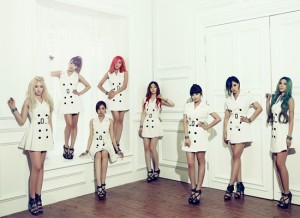
By late March 2013, the story had crossed the Pacific and the Atlantic, appearing in major outlets such as CNN, The Daily Mail, and various fashion and pop culture blogs. The headlines were frequently alarmist, suggesting that the "ladies of K-pop" would be forced to abandon their signature styles. The Daily Mail, for instance, ran a story titled "Miniskirts Banned in South Korea as Overexposure Law Comes into Effect," which erroneously conflated a fine for public indecency with a specific ban on a garment.
The narrative fit a convenient, if inaccurate, trope of a socially regressive East Asian state. For Western readers, the idea that a modern, high-tech nation like South Korea—famous for the "Gangnam Style" phenomenon—would suddenly ban miniskirts seemed both absurd and click-worthy. This led to a feedback loop where social media users globally expressed derision at South Korea’s "backward-thinking" policies, based entirely on a misunderstanding of the law’s scope.
Official Clarification and Police Response
In response to the mounting confusion and international scrutiny, the South Korean National Police Agency (NPA) issued several clarifying statements. Officials emphasized that the law was never intended to regulate fashion or the length of skirts. An NPA spokesperson clarified that "the regulation is about public nudity and indecent exposure, not what kind of clothes people wear in their daily lives."
The police further explained that the 50,000 KRW fine was actually a reduction in severity for certain offenses that previously would have required a more complex legal process. By making it a summary offense, the government argued it was simplifying the legal system rather than expanding the state’s power to monitor citizens’ wardrobes. Despite these clarifications, the "miniskirt ban" label proved difficult to shake, highlighting the challenge of correcting viral misinformation once it has been adopted by major media outlets.
Comparative Analysis: Indecency Laws in Global Context
When viewed objectively, South Korea’s overexposure law is not an outlier in international jurisprudence. Most developed nations, including the United States, the United Kingdom, and various European countries, maintain statutes regarding "indecent exposure" or "public lewdness." In the United States, for example, many municipal codes prohibit the exposure of "private parts" in public, with penalties ranging from fines to jail time.
The South Korean law was essentially a localized version of these standard public order acts. The primary difference was the cultural and political baggage attached to the concept of "exposure" in the South Korean context. While a public indecency law in France might be viewed as a mundane administrative update, in South Korea, it was viewed through the lens of a historical struggle for democracy and personal expression.
Socio-Political Implications and Journalistic Integrity
The incident serves as a significant case study in the dangers of "echo-chamber" journalism and the impact of celebrity influence on public policy discourse. The fact that a technical legal update was transformed into a global scandal regarding women’s rights and fashion indicates a breakdown in the verification process of many news organizations.

For South Korea, the controversy highlighted the ongoing tensions between the country’s rapid modernization and its conservative political roots. While the law did not result in police officers patrolling the streets with rulers, it did force a national conversation about the limits of government intervention in private life. It also underscored the unique position of K-pop as a global cultural export; anything perceived as a threat to the industry’s aesthetic—such as a ban on short skirts—is now viewed as a matter of international concern.
Chronology of the 2013 Overexposure Controversy
- February 25, 2013: Park Geun-hye is inaugurated as the 11th President of South Korea.
- March 11, 2013: The Cabinet approves a revision to the Minor Offenses Act during its first meeting.
- March 15-20, 2013: Social media reactions from celebrities like Lee Hyori go viral; opposition politicians criticize the law as "Yushin-style" regression.
- March 21-22, 2013: Major Western media outlets (CNN, Daily Mail) publish articles claiming South Korea is banning miniskirts.
- March 22, 2013: The National Police Agency issues official statements clarifying that the law targets public nudity and "indecent" behavior, not fashion.
- March 22, 2013: The law officially goes into effect.
- April 2013: Despite the law being in place, K-pop groups continue to perform in traditional stage attire without legal interference, effectively debunking the "ban" narrative.
Conclusion: The Persistence of the Narrative
Ultimately, the South Korean overexposure law of 2013 remains a landmark example of how domestic political sensitivities can be misinterpreted on the global stage. While the law was a standard piece of public order legislation, its proximity to the legacy of Park Chung-hee and the influential reach of K-pop stars created a perfect storm for misinformation.
The reality of South Korean life post-2013 showed no change in the prevalence of miniskirts or the fashion choices of its citizens. However, the event serves as a reminder that in the age of instant global communication, the nuance of law can easily be lost to the allure of a sensational headline. For journalists and consumers alike, the overexposure controversy emphasizes the necessity of looking beyond social media trends to understand the factual basis of government policy. The "sea of fire" rhetoric from the North may be the headline-grabber for security analysts, but for the general public, the perceived threat to personal expression remains an equally potent, if sometimes misunderstood, catalyst for global discourse.
Related News