MAMAMOO’s Upcoming US Tour Faces Scrutiny Over Varied Ticket Sales, Sparking Industry-Wide Debate on K-Pop Concert Strategy
Article Editorial Team

Concerns have recently emerged regarding ticket sales for the highly anticipated United States leg of K-Pop sensation MAMAMOO’s upcoming tour, particularly focusing on dates scheduled for Texas. This development has reignited a broader conversation within the K-Pop industry about the viability of large-scale tours in the US market for established groups and the strategies employed by their management agencies and promoters. While some dates on the tour appear to be performing robustly, the visible availability of tickets for specific venues has drawn significant online scrutiny, prompting fans and industry observers alike to question booking decisions, promotional efforts, and the evolving landscape of K-Pop’s global expansion.
The Genesis of the Debate: Texas Dates Under the Microscope
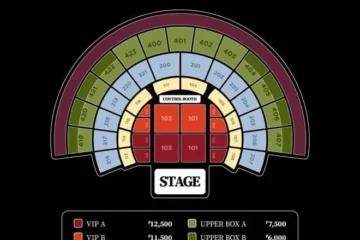
The initial alarm was raised on social media platforms in late May 2026, several months ahead of MAMAMOO’s scheduled performances. A netizen, identified as "H (희망) | 🏳️🌈✨️🏳️⚧️ 4WARD" on X (formerly Twitter) under the handle @sapphics_choice, shared screenshots depicting a significant number of available seats for the group’s two Texas shows. The visual representation of numerous "blue dots" on ticketing websites, indicating unsold tickets, quickly went viral within fan communities, sparking heartbreak among devoted "Moomoos" (MAMAMOO fans) who expressed disappointment at the sight. The tweet, posted on May 27, 2026, lamented, "It’s breaking my heart to see so many empty seats in the Texas stops 💔😭."
This observation was not isolated. It immediately connected with a pre-existing discourse surrounding the US tour sales of other prominent K-Pop groups. Earlier reports, including one from Koreaboo, had highlighted "low" concert ticket sales for various top girl groups, signaling a potential shift or challenge in the US market despite K-Pop’s overall surging popularity. The situation with MAMAMOO, a group widely respected for their vocal prowess, strong stage presence, and consistent discography, brought this debate into sharp focus once more.
MAMAMOO’s Enduring Legacy and the K-Pop Global Phenomenon

MAMAMOO, comprising members Solar, Moonbyul, Wheein, and Hwasa, debuted in 2014 under RBW Entertainment. They quickly carved out a niche for themselves with their retro-inspired sound, powerful vocals, and charismatic performances, earning a reputation as one of K-Pop’s most vocally skilled and consistent groups. Their discography boasts numerous hits, and their loyal fanbase, Moomoos, is known for its dedication and strong community spirit. Despite individual members pursuing successful solo careers and varied group activities in recent years, their collective strength and popularity remain undiminished globally.
The group’s decision to embark on a US tour underscores the continued expansion of K-Pop into Western markets. Over the past decade, K-Pop has transformed from a niche genre to a mainstream cultural force in the United States, driven by the phenomenal success of groups like BTS and BLACKPINK. This surge has led to an increasing number of K-Pop acts including US stops in their world tours, often booking larger arenas and even stadiums. The US, with its diverse population and robust concert infrastructure, represents a significant market for K-Pop agencies seeking to globalize their artists’ reach and revenue streams. However, this growth has also introduced new complexities, including intense competition, the sheer logistical challenge of touring across a vast country, and the need for highly targeted promotional strategies.
A Deeper Look at the Tour Logistics and Disparate Sales Figures
While the initial focus of concern centered on the Texas dates, a more comprehensive picture of the tour’s ticket sales emerged on Reddit. A post on the r/mamamoo subreddit, titled "MAMAMOO 2026 U.S. TOUR ARTIST PRESALE numbers as of May 25th @TouringAsiaPop (260526)," provided a broader overview of the presale performance across various cities. This data revealed a stark contrast: while the Texas shows (likely Dallas and Houston, given common K-Pop tour itineraries) exhibited significantly lower sales, other dates on the tour were reportedly selling well. This nuanced data suggested that the issue might not be a lack of overall demand for MAMAMOO, but rather a localized problem or a miscalculation in specific market penetration.
The Reddit discussion further fueled the debate, with many fans and observers pointing fingers at the tour organizers and RBW Entertainment. Comments highlighted anger towards "tour companies for not doing research at a time where concerts are struggling to sell tickets and doing two shows in one state." This sentiment underscores a critical point: while K-Pop’s popularity is undeniable, the US market is not monolithic. Fan demographics, disposable income, and the saturation of K-Pop events vary significantly by region. Booking two large venues in a single state, especially one as geographically vast and demographically complex as Texas, without sufficient localized market research and promotional groundwork, was seen by many as a strategic misstep.
Analysis of the Contributing Factors and Industry Perspectives

Several key factors appear to be contributing to the challenges faced by MAMAMOO’s Texas dates, and by extension, the broader K-Pop touring landscape in the US:
-
Venue Selection and Capacity: The most frequently cited criticism revolves around the choice of venues. Netizens questioned, "in what world is mamamoo selling out arenas," suggesting that the chosen arenas might be overly ambitious given the group’s specific touring history in the US. While MAMAMOO commands a dedicated fanbase, their collective US touring has been less frequent compared to some of their peers, and the market for K-Pop acts capable of consistently filling large arenas is still relatively narrow. Promoters often opt for larger venues to maximize revenue, but this strategy carries inherent risks if demand is not accurately projected. As one fan on X put it, "kpop companies booking arenas for their idols knowing damn well the demand is minimal what the hell is this? might aswell swap the arena with a smaller theatre venue." This highlights a potential disconnect between industry expectations and actual market realities.
-
Promotional Strategy and Execution: A significant portion of the criticism was directed at RBW Entertainment for what fans perceived as an "allergic" approach to tour promotion. "This happens because RBW is allergic to promote the tours," stated a fan on X. "Moos, I know it’s not your job but please spread the tour news as much as you can. RBW won’t do anything." This sentiment reflects a recurring frustration among K-Pop fans: the feeling that agencies often rely too heavily on the inherent popularity of their groups and the self-organizing power of fandoms, rather than investing in robust, localized marketing campaigns. For a market as diverse and competitive as the US, effective promotion requires more than just a general announcement; it demands targeted advertising, engagement with local media, and strategic partnerships. The absence of a recent collective US tour for MAMAMOO further amplifies the need for aggressive re-introduction and promotion.
-
Market Saturation and Economic Pressures: The K-Pop touring circuit in the US has become increasingly crowded. With numerous groups vying for fan attention and disposable income, even popular acts can struggle to sell out every date, especially if tours are announced in close succession or if ticket prices are perceived as high. The current global economic climate, marked by inflation and rising living costs, also means that concert tickets, particularly for multiple shows or premium seats, represent a significant discretionary expense for many fans. This broader trend was acknowledged by a netizen who stated, "it bewilders me why so many kpop companies think they can go years avoiding proper US promotions then randomly sell out an arena tour. setting artists up for failure." This points to a need for companies to adapt their strategies to a more mature and economically constrained market.
-
Logistical Overlap: Two Shows in One State: The decision to schedule two arena shows in Texas, a state known for its vast geographical size, also came under fire. While major cities like Dallas and Houston have substantial populations, dividing a potentially limited regional fanbase between two large venues within the same tour leg can dilute demand. This strategy might work for truly global mega-stars, but for even established K-Pop groups, it requires careful assessment of local fan density and purchasing power. Without proper market segmentation and promotional efforts for each specific city, such scheduling can lead to suboptimal sales in both locations.
Broader Implications for the K-Pop Touring Model

The situation surrounding MAMAMOO’s Texas dates serves as a microcosm for larger trends and challenges facing the K-Pop industry’s global expansion.
- Necessity of Granular Market Research: K-Pop agencies and tour promoters must move beyond broad assumptions of global popularity and conduct more granular market research. This includes understanding regional fan concentrations, economic demographics, and the competitive landscape of local concert markets. A one-size-fits-all approach to venue booking and scheduling may no longer be sustainable.
- Investment in Localized Promotion: Relying solely on global social media buzz or fan-driven promotion is insufficient for consistently filling large venues across diverse US cities. Agencies need to invest in dedicated, localized marketing campaigns that resonate with specific regional audiences, leveraging local media, influencers, and community engagement.
- Flexible Venue Strategies: The "arena or bust" mentality may need to be re-evaluated. A more flexible approach, perhaps starting with mid-sized venues and adding dates or upgrading to larger venues based on initial demand, could mitigate financial risks and ensure a more consistently sold-out experience for fans. This also allows for better organic build-up of hype and word-of-mouth.
- Artist Longevity and Fan Expectations: For groups like MAMAMOO, who have been active for a significant period, maintaining engagement with a diverse, global fanbase requires a nuanced understanding of their career trajectory and fan expectations. Long hiatuses from collective US touring necessitate a careful re-entry strategy.
- Sustainability of Expansion: While the K-Pop wave continues, these incidents suggest a potential "market correction" where the rapid expansion of touring capacity may be outpacing the organic growth of fan demand in certain segments or regions. The industry must find a sustainable balance to avoid artist burnout and financial losses.
Official Responses and Forward Outlook
As of the time of this report, neither RBW Entertainment nor the specific tour promoters involved have issued official statements directly addressing the ticket sales concerns for the Texas dates. This is typical in the concert industry, where companies often prefer to manage such situations internally rather than publicly comment on specific sales figures. However, industry observers suggest that tour organizers continuously monitor ticket sales data. Depending on the remaining time before the concerts, they may implement dynamic pricing adjustments (e.g., discounts or premium packages), intensify promotional pushes through various channels, or even consider adding fan engagement events to boost interest. Venue adjustments are rare once a tour is announced but not entirely unprecedented in extreme cases.
The overall sentiment among Moomoos, while concerned about specific dates, remains supportive of MAMAMOO. Many fans expressed their determination to spread awareness and encourage ticket purchases, highlighting the strong bond between the group and its dedicated followers. The varied performance across different tour stops also indicates that the challenge is localized rather than indicative of a widespread decline in MAMAMOO’s popularity.
In conclusion, the discourse surrounding MAMAMOO’s upcoming US tour ticket sales, particularly the Texas dates, underscores the complexities inherent in K-Pop’s global expansion. It highlights the critical need for K-Pop agencies and tour promoters to adopt more sophisticated, data-driven strategies for venue selection, localized promotion, and market analysis. As the K-Pop industry continues its impressive global ascent, learning from these challenges will be crucial for ensuring the sustained success and enthusiastic reception of its artists in diverse international markets. The balancing act between maximizing revenue, understanding regional demand, and effectively engaging a passionate global fanbase remains a defining characteristic of the modern K-Pop touring landscape.
Related News