The Complex Intersection of Black Culture and the Global K-Pop Industry A Dialogue on Representation Appropriation and Influence
Article Editorial Team
The global ascent of South Korean popular music, known as K-pop, has created a unique cultural crossroads where diverse backgrounds, histories, and identities converge. As the genre expands its reach far beyond the borders of East Asia, it increasingly relies on a global fandom characterized by a vast array of perspectives. Among the most vocal and influential segments of this audience are Black K-pop fans, whose relationship with the genre is often characterized by a complex duality: a deep appreciation for the artistry and a critical eye toward the industry’s handling of Black cultural elements. This discourse is not merely about entertainment; it is a profound examination of how cultural appropriation, historical ignorance, and systemic stereotypes manifest in a medium that owes its foundational sounds to African American musical traditions.
The Foundation of Influence: From R&B to Hip-Hop
To understand the current friction within the K-pop industry regarding cultural matters, one must first acknowledge the historical debt the genre owes to Black music. The evolution of modern K-pop can be traced back to the early 1990s, specifically with the debut of Seo Taiji and Boys, who integrated American rap and New Jack Swing into the Korean mainstream. Since then, the industry has systematically incorporated R&B, soul, funk, and hip-hop into its "idol" formula.
Contemporary artists frequently cite Black legends as their primary inspirations. For example, the impact of Michael Jackson is ubiquitous in the choreography and visual aesthetics of groups such as SHINee and soloists like Taemin. Furthermore, members of globally recognized groups, such as RM of BTS, have utilized their platforms to recommend Black artists like D’Angelo, Prince, and India Arie, signaling a level of genuine appreciation. This form of engagement—where an artist encourages their audience to explore the roots of the music they perform—is often cited by fans as a positive model of cultural exchange. However, the line between appreciation and appropriation remains thin and frequently contested.

Defining the Divide: Appropriation versus Appreciation
The central tension in the K-pop fandom often revolves around the definition of cultural appropriation. In a journalistic and sociological context, appropriation involves the adoption of elements from a marginalized culture by a dominant or outside group, often stripping those elements of their historical significance and using them as a "costume" or a "trend."
In the mid-2010s, several high-profile incidents brought this issue to the forefront. The girl group 4Minute’s release of "Crazy" and rapper Keith Ape’s "It G Ma" were criticized for utilizing hip-hop aesthetics as a gritty, "edgy" gimmick without acknowledging the social realities of the culture they were emulating. For many Black fans, these instances represent a "minstrelsy" approach, where the signifiers of Blackness—such as braided hair, specific slang, or aggressive posturing—are adopted to project a "tough" image, only to be discarded when the artist transitions back to a "pure" pop concept.

This "flavor of the month" approach to hip-hop suggests a lack of research and respect for the genre’s history. While South Korean educational systems may not prioritize the history of the American Civil Rights movement or the origins of hip-hop in the Bronx, the industry’s aggressive pursuit of the Western market necessitates a higher standard of cultural literacy. As agencies aim for global success, the refusal to conduct basic research into the historical significance of symbols—such as the Confederate flag or the use of blackface—is increasingly viewed not as simple ignorance, but as a systematic failure of corporate responsibility.
The "Kanye Defense" and Historical Ignorance
A recurring point of contention in fan circles is the use of "defensive references" to justify problematic behavior. A notable example is the "Kanye West defense." When K-pop idols have been seen wearing the Confederate flag—a symbol synonymous with slavery and white supremacy in the United States—some fans point to Kanye West’s use of the imagery as a shield against criticism.

However, cultural critics and Black fans argue that one individual’s controversial artistic choice does not grant a universal license for others to use a painful symbol as a fashion statement. This dynamic highlights a broader issue within the international K-pop community: the tendency of non-Black fans to latch onto a single dissenting voice within a marginalized group to invalidate the legitimate grievances of the majority. This "silencing" effect often leaves Black fans feeling isolated within a community that claims to be inclusive.
Chronology of Controversy and Agency Responses
The history of K-pop is punctuated by incidents that have forced a dialogue on race and representation. A brief chronology of these events illustrates a pattern of "trial and error" in the industry’s learning curve:
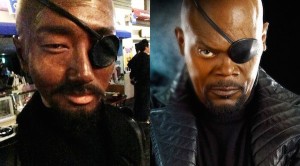
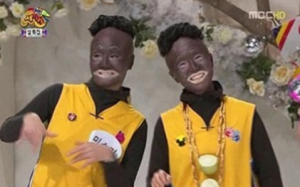
- The Blackface Incidents: Over the years, various idols, including members of Super Junior and other variety show performers, have appeared in blackface as a form of "comedy." These incidents, rooted in the history of 19th-century minstrel shows, are among the most offensive to Black fans, as they reduce an entire race to a caricature.
- The Use of Slurs: Several rappers within the K-pop and Korean hip-hop scenes, including Zico of Block B and San E, have faced backlash for using racial slurs in their lyrics. While some artists claimed they were unaware of the weight of these words, the impact on the global audience was immediate and damaging.
- The Confederate Flag and Religious Symbols: From Infinite H to other rookie groups, the use of the Confederate flag in music videos or stage outfits has repeatedly sparked international outcries. Similarly, the appropriation of sacred religious symbols from various cultures often occurs under the guise of "aesthetic" fashion.
In some instances, agencies have shown a willingness to listen. Seven Seasons, the agency for Block B, has historically been noted for responding to international fans who reached out to educate the label on why certain actions were offensive. This proactive engagement is often cited as a necessary step for the industry’s growth, proving that when fans move from "outrage" to "education," and labels move from "denial" to "dialogue," progress is possible.
The Erasure of the Black Fan Experience
Beyond the actions of the idols themselves, the internal dynamics of the K-pop fandom often marginalize Black participants. This erasure is particularly evident in fan-produced content, such as fan fiction or "reader-insert" stories. These narratives often assume a default physical description—such as "straight hair" or specific skin tones—that excludes Black fans.

Furthermore, the "lovey-dovey illusion" or the "boyfriend/girlfriend" marketing strategy used by K-pop labels often feels inaccessible to Black women. In a society that has historically prioritized Eurocentric or East Asian beauty standards, and where "dark skin" is often discussed in the context of colorism or "exoticism," Black fans frequently navigate the fandom with the awareness that they are not the intended "target" of the industry’s romanticized imagery. This creates a psychological barrier that, while perhaps protective against the more parasocial aspects of fandom, underscores a lack of true representation.
Economic and Cultural Implications for the Industry
The stakes for the K-pop industry are not merely social; they are economic. The United States is one of the largest consumers of K-pop, and the genre’s growth is heavily dependent on its ability to resonate with a diverse, international audience. If the industry continues to alienate Black fans—who are often the most knowledgeable and passionate supporters of the hip-hop and R&B elements within the music—it risks losing its "cool factor" and its claims to authenticity.

There is also the matter of "pre-resentment" within the hip-hop community. As Korean rappers enter the global stage, they are often met with an "impress us" attitude from Black audiences. This is not necessarily due to elitism, but rather a protective instinct over a culture that has been historically mocked and watered down by outside interests. For a Korean rapper to be accepted, they must prove that they are not just putting on a costume, but that they respect the craft and its pioneers, such as Tiger JK and Tasha (Yoon Mi-rae), who are respected for their authentic contributions to the Korean scene.
Conclusion: Toward a Kaleidoscope of Culture
The beauty of music lies in its ability to act as a "stained-glass window," where a multitude of colors and influences come together to create something transcendent. K-pop has the potential to be a leader in this global cultural exchange, but that potential can only be realized through mutual respect and education.
The grievances expressed by Black K-pop fans are not an attempt to "bully" or "cancel" their favorite artists. Rather, they are a call for the industry to acknowledge the roots of its success. Respecting the Black community means more than just sampling a beat or adopting a fashion trend; it means listening to the voices of Black fans when they express pain, and taking the initiative to ensure that "appreciation" does not devolve into "exploitation." As K-pop continues its journey as a global powerhouse, its longevity will depend on its ability to move beyond the superficial and embrace a truly inclusive and culturally literate global community.
Related News