
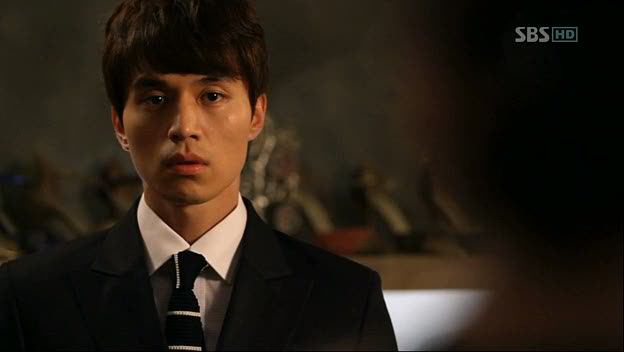
The archetype of the "chaebol heir" has become a staple of South Korean cultural exports, appearing in television dramas as a polished, often arrogant figure who navigates high-stakes boardroom battles while pursuing romance across class divides. In popular media such as "Secret Garden," "Scent of a Woman," and "What Happened in Bali," these characters represent a life of extreme wealth, familial duty, and corporate intrigue. However, behind the romanticized gloss of the "poor little rich boy" trope lies a complex and often controversial economic reality. The chaebol—large, family-owned conglomerates—are the engines that powered South Korea from the ruins of war to the heights of global industrial leadership. Yet, their monopolistic grip on the domestic market and their deep-seated political ties remain among the most divisive issues in contemporary South Korean society.
Defining the Chaebol: A Unique Corporate Structure
The word "chaebol" (재벌) translates literally to "wealth clan" or "rich faction." Unlike Western conglomerates, which are typically managed by professional boards and owned by diverse shareholders, chaebols are characterized by dynastic control. A single founding family usually maintains a controlling interest through a complex web of cross-shareholdings, where various subsidiaries own stakes in one another. This allows the founding family to exert absolute authority over the entire group, even if their direct equity in a specific subsidiary is relatively small.
These entities are not limited to a single industry. Instead, they are sprawling empires with interests that touch nearly every aspect of South Korean life. A citizen might live in an apartment built by Hyundai Engineering, use a Samsung smartphone, drive a Kia vehicle, shop at a Lotte Department Store, and fuel their car at an SK Innovation gas station. This omnipresence is a double-edged sword; while it ensures stability and a diverse economic base, it also creates a market environment where small and medium-sized enterprises (SMEs) struggle to compete against the sheer scale and resource-rich nature of these giants.
Historical Chronology: From Devastation to the Han River Miracle
The rise of the chaebol is inseparable from the history of the Republic of Korea following the 1953 armistice. To understand their current status, one must look at the specific economic policies enacted during the mid-20th century.
- Post-War Reconstruction (1953–1961): Following the Korean War, the nation was among the poorest in the world, with an infrastructure decimated by conflict. The economy was largely agrarian and dependent on foreign aid.
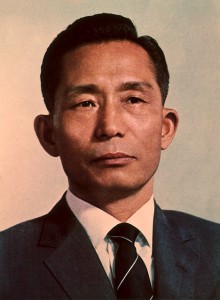
- The Park Chung-hee Era (1961–1979): General Park Chung-hee seized power in a coup and pivoted the nation toward an export-oriented industrialization strategy. The government hand-selected promising firms—the nascent chaebols—and provided them with massive low-interest loans, protection from foreign competition, and exclusive government contracts. In exchange, these companies were required to meet strict export quotas.
- Heavy and Chemical Industrialization (1970s): The government pushed chaebols into heavy industries such as shipbuilding, steel, and petrochemicals. This period saw the rapid expansion of Hyundai, Samsung, and Daewoo.
- Global Expansion (1980s–1990s): Chaebols began to dominate international markets, moving into high-tech electronics and automotive manufacturing. However, this growth was often fueled by excessive debt.
- The 1997 Asian Financial Crisis: The "IMF Crisis" served as a reckoning. Several major chaebols, most notably Daewoo, collapsed under the weight of their debts. The government was forced to implement reforms to increase transparency and reduce the debt-to-equity ratios of the surviving giants.
- The Modern Era (2000s–Present): Today, the chaebols have transitioned into the third and fourth generations of family leadership. While they remain global leaders in innovation, they face increasing pressure to reform their governance structures and reduce their influence over the domestic political landscape.
Supporting Data: The Scale of Economic Concentration
The economic weight of the chaebol is staggering when compared to the national economy. Recent data indicates that the top ten chaebols in South Korea account for approximately 80% of the country’s Gross Domestic Product (GDP). Samsung Group alone, the largest of the conglomerates, frequently accounts for 20% to 25% of the nation’s total exports.
This concentration of wealth is reflected in the stock market. The KOSPI (Korea Composite Stock Price Index) is heavily weighted toward chaebol subsidiaries. For instance, Samsung Electronics is often the single most influential stock on the exchange, meaning the health of the entire South Korean pension fund system and individual savings is inextricably linked to the performance of a handful of family-run businesses.
Furthermore, the "Korea Discount" is a term often used by international investors to describe the lower valuations of South Korean companies compared to their global peers. Analysts attribute this discount to the "chaebol risk"—the lack of transparency in corporate governance, the practice of diverting profits to family-held subsidiaries, and the legal issues that have historically plagued the families at the helm of these organizations.

The Nexus of Business and Politics
The relationship between the "Blue House" (the former South Korean presidential residence) and the chaebol has historically been one of mutual dependency. The government required the chaebols to drive national growth, while the chaebols required government protection and favorable legislation to maintain their monopolies.
This "cozy" relationship has led to numerous high-profile scandals. Former President Lee Myung-bak, for example, served as the CEO of Hyundai Engineering and Construction before entering politics, symbolizing the thin line between corporate leadership and civil governance. Other presidents, including Roh Tae-woo and Park Geun-hye, faced investigations and imprisonment related to bribery and influence-peddling involving chaebol leaders.
In the case of SK Group, the telecommunications giant saw a massive expansion in market share following a high-profile marriage between the founder’s son and the daughter of a sitting president. Such events have fueled public perception that the chaebols are "above the law," or that their contributions to the economy grant them a "get out of jail free" card when corporate malfeasance is discovered.
Official Responses and Public Sentiment
Public opinion regarding the chaebol is deeply polarized. Older generations, who lived through the "Miracle on the Han River," often view the conglomerates with a sense of pride and gratitude, seeing them as the primary reason South Korea escaped poverty. Conversely, the younger generation, facing a hyper-competitive job market and rising inequality, often views the chaebol system as a barrier to social mobility.

In response to this growing discontent, various administrations have attempted to implement "Economic Democratization" policies. These include:
- Restricting Cross-Shareholding: Laws designed to prevent families from controlling dozens of companies through circular ownership.
- Curbing Inter-Affiliate Trading: Measures to stop chaebols from awarding lucrative contracts only to their own subsidiaries, which stifles competition for independent SMEs.
- Stricter Legal Accountability: A recent trend toward prosecuting and sentencing chaebol executives for embezzlement or bribery, although presidential pardons for these figures remain common, often justified by the "need for economic stability."
Professor Robert Kelly of Pusan National University has noted that the chaebols act as "politics-corrupting, consumer-punishing, reverse-engineering oligopolists." This sentiment is echoed by domestic activists who argue that the chaebol’s dominance has led to a "dual economy," where those lucky enough to work for a conglomerate enjoy high wages and job security, while the rest of the workforce struggles in precarious positions with lower pay.
Broader Impact and Future Implications
As South Korea looks toward the future, the sustainability of the chaebol model is being questioned. The global economy is shifting toward agile startups and software-driven innovation—areas where the rigid, top-down hierarchy of a traditional chaebol may struggle to compete. While Samsung and LG have successfully pivoted into semiconductors and green energy, the broader system remains vulnerable to "founder risk," where the personal failings or succession disputes of the ruling family can destabilize a massive portion of the national economy.
The cultural obsession with chaebols in K-dramas serves as a fascinating mirror to this reality. The "smug heir" who eventually learns humility or defies his father’s corporate greed is a narrative catharsis for a public that feels both dependent on and oppressed by these massive entities.
In conclusion, the chaebol are both the architects of South Korea’s prosperity and the source of its greatest structural challenges. Their ability to adapt to demands for transparency and fair competition will determine whether they remain the pillars of the nation’s future or become relics of an era defined by state-sponsored monopolies. As the world continues to consume Korean culture, understanding the reality of the chaebol provides a necessary lens through which to view the nation’s complex journey from a war-torn peninsula to a global cultural and economic powerhouse.