Drake Ties Elton John for Second Most Weeks at No. 1 on Billboard 200 with Iceman
Article Editorial Team
Drake has achieved a significant milestone on the Billboard 200 chart, tying the legendary Elton John for the second-most weeks at the coveted No. 1 position. The Canadian superstar’s album, Iceman, has held the top spot for an additional week, bringing his career total to 39 weeks at No. 1. This accomplishment further solidifies Drake’s status as a dominant force in hip-hop and a trailblazer among Canadian artists on the music charts.
A Legacy of Chart Dominance
Drake’s consistent presence at the pinnacle of the Billboard 200 is a testament to his enduring popularity and the widespread appeal of his music. His 39 weeks at No. 1 represent a substantial period of musical influence, showcasing a remarkable ability to connect with a vast audience over an extended period. This latest achievement places him in esteemed company, drawing a parallel with the iconic Elton John, whose own chart-topping run spanned from 1972 to 1975.
The Billboard 200, which ranks the most popular albums of the week in the U.S. based on multi-metric consumption, has been the ultimate arbiter of album success for decades. For an artist to accumulate such a significant number of weeks at No. 1 requires not only critically acclaimed releases but also sustained fan engagement and commercial appeal across multiple album cycles.

The Chronology of Drake’s Chart Ascendancy
Drake’s journey to this milestone began in July 2010 with the release of his debut studio album, Thank Me Later. While this album reached No. 1 on the Billboard 200, it was the subsequent releases that truly cemented his chart dominance.
- 2010: Thank Me Later makes its debut, signaling Drake’s arrival as a major force.
- 2011: Take Care achieves widespread critical and commercial success, spending multiple weeks at No. 1 and becoming a landmark album in his discography.
- 2013: Nothing Was the Same continues his streak of chart-topping albums, further demonstrating his ability to maintain momentum.
- 2015: If You’re Reading This It’s Too Late, initially released as a mixtape, also claims the top spot, highlighting the blurred lines between traditional album releases and mixtape drops in the digital age.
- 2016: Views becomes a monumental success, spending a significant number of weeks at No. 1, a feat that propelled him higher on the all-time lists.
- 2017: More Life, another project positioned between an album and a playlist, also reaches No. 1, showcasing his evolving release strategies.
- 2018: Scorpion continues his unbroken record of No. 1 debuts and subsequent weeks atop the chart.
- 2019: Care Package and Dark Lane Demo Tapes (though not reaching No. 1, they showcase his consistent presence on the charts).
- 2020: Dark Lane Demo Tapes (as mentioned) and Certified Lover Boy continue his dominance.
- 2021: Certified Lover Boy achieves a No. 1 debut and sustained chart presence.
- 2022: Honestly, Nevermind and Her Loss (with 21 Savage) demonstrate his continued ability to chart at the top.
- 2024: Iceman becomes his latest album to hold the No. 1 position for an extended period, leading to this record-tying achievement.
The span of Drake’s No. 1 albums stretches across nearly 16 years, from July 2010 to the current chart week of June 6, 2026. This extensive period of chart success is remarkable, especially in an era where the music industry is characterized by rapid shifts in trends and listener preferences.
Elton John: A Historical Benchmark
Elton John’s 39 weeks at No. 1 were accumulated across a string of highly successful albums released between 1972 and 1975. His reign at the top during that period included albums such as Honky Château, Don’t Shoot Me I’m Only the Piano Player, Goodbye Yellow Brick Road, and Caribou. These records defined an era of pop music and cemented John’s status as a global superstar.
John’s initial surge to chart dominance was swift and impactful, establishing him as one of the most commercially successful artists of the 1970s. His induction into the Rock & Roll Hall of Fame in 1994 further underscores his lasting legacy and influence on the music landscape. The question of whether Drake will one day achieve similar critical and cultural reverence, beyond his chart achievements, remains a subject of ongoing discussion within the music community.

Other Notable Billboard 200 Stalwarts
The Billboard 200 chart has been a battleground for musical supremacy for over six decades, and several artists have left an indelible mark with their prolonged stays at No. 1.
-
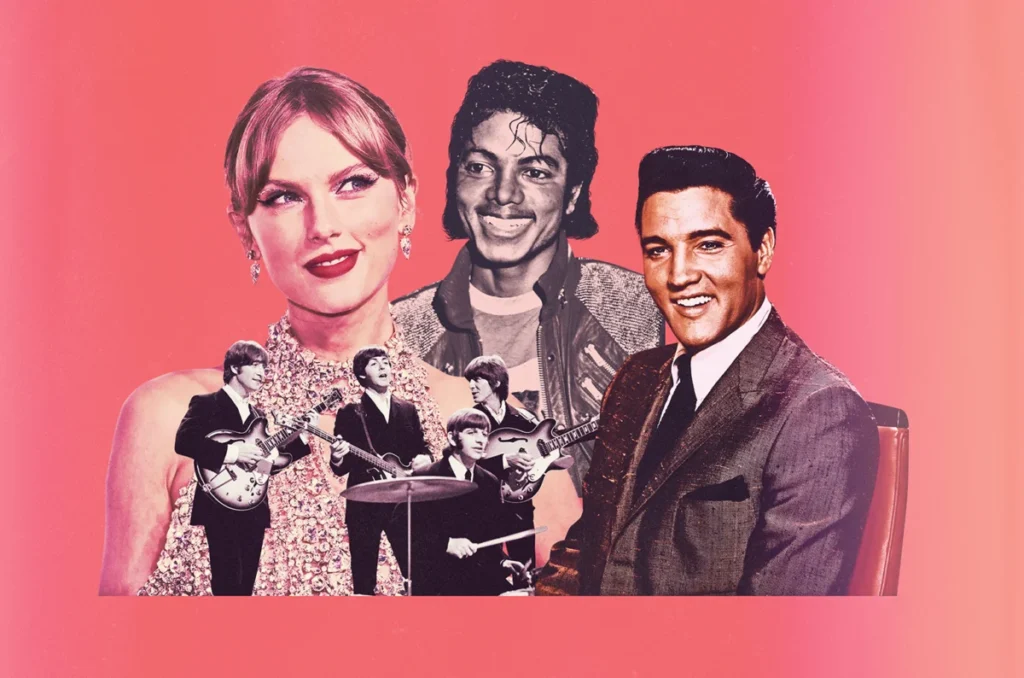
The Beatles: The legendary British band holds the record for the most weeks at No. 1 on the Billboard 200, with an astonishing 132 weeks across their storied career. Their prolific output and universal appeal in the 1960s and early 1970s set a benchmark that may never be surpassed. Albums like Sgt. Pepper’s Lonely Hearts Club Band, Abbey Road, and the White Album are just a few examples of their chart-topping prowess.
-
Elvis Presley: While Elvis Presley’s impact predates the formal establishment of many of Billboard’s flagship charts, his career is extensively documented on the Billboard 200. His debut album, Elvis Presley, entered the chart at No. 11 in March 1956, shortly after the chart’s inception. Although specific week counts for his early chart runs can be complex due to the chart’s evolution, Presley’s enduring popularity is reflected in his significant cumulative presence.
-
Taylor Swift: In the modern era, Taylor Swift has emerged as a formidable chart force. Her ability to consistently deliver commercially successful albums and achieve multiple weeks at No. 1 has placed her among the all-time greats. Her recent album releases have seen her racking up significant weeks at the top, demonstrating a powerful connection with contemporary audiences.

-
Michael Jackson: The "King of Pop" also boasts an impressive record on the Billboard 200. His seminal album Thriller, released in 1982, spent a remarkable 37 weeks at No. 1, a record at the time and a testament to its unprecedented cultural impact.
-
Bee Gees: The Bee Gees achieved a significant chart run with the Saturday Night Fever soundtrack, which logged 24 weeks at No. 1 in 1978. While Billboard classifies this as a multi-artist soundtrack album, the Bee Gees’ integral role in its success and their own album discography contribute to their considerable chart legacy.
Analyzing the Data and Implications
Drake’s sustained success on the Billboard 200 can be attributed to several factors. His prolific output, coupled with his ability to evolve his sound while staying true to his core identity, has kept him relevant across multiple musical trends. Furthermore, his strategic use of various release formats, including mixtapes and collaborative projects, has allowed him to maintain a consistent presence in the public consciousness.
The extended span of his No. 1 albums, nearly 16 years, is particularly noteworthy. In an industry where artists can experience meteoric rises and swift declines, Drake’s longevity speaks volumes about his artistic merit and business acumen. This sustained appeal suggests a deep connection with his fanbase, who continue to support his music album after album.

The comparison with Elton John is significant. While John’s chart-topping period was more concentrated, Drake’s achievements are spread over a longer, more dynamic period of music consumption. This highlights the different eras of music consumption and how artists can achieve dominance within their respective contexts.
The data also underscores the evolving nature of the music industry. Drake’s ability to navigate the transition from physical sales to streaming dominance, while consistently charting at No. 1, is a testament to his adaptability and understanding of the modern music landscape. His success provides a blueprint for contemporary artists seeking to build and sustain long-term careers in a rapidly changing environment.
Broader Impact and Future Outlook
Drake’s achievement not only solidifies his place in music history but also has broader implications for the hip-hop genre and Canadian artists. His continued success at the highest levels of the Billboard charts challenges traditional notions of genre dominance and showcases the global reach of hip-hop music.
As Drake continues to release new music and engage his fanbase, it is plausible that he may further ascend the Billboard 200 charts. The question of whether he will eventually surpass The Beatles’ record remains open, but his consistent performance suggests that he will continue to be a significant contender for years to come. His journey is a compelling narrative of artistic evolution, commercial success, and enduring influence in the ever-evolving world of popular music. The chart is a dynamic entity, and Drake’s current position is a testament to his remarkable and sustained impact on the global music scene.
Related News