The Evolution of the Bean Paste Girl: Decoding South Korea’s Complex Intersection of Consumerism Gender and Status
Article Editorial Team

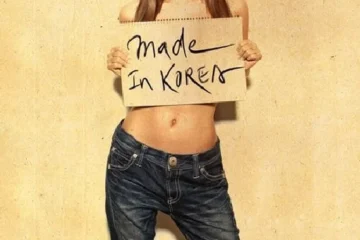
The term doenjang-nyeo, or "bean paste girl," emerged as a prominent fixture in South Korean social discourse during the mid-2000s, gaining international notoriety through the global success of Psy’s 2012 hit "Gangnam Style." While the song’s satirical lyrics mocked a specific lifestyle of leisure and conspicuous consumption in Seoul’s wealthiest district, the roots of the "bean paste girl" phenomenon are deeply embedded in the nation’s rapid economic transformation, shifting gender roles, and a long-standing tension between traditional frugality and modern materialism. To understand the "bean paste girl" is to understand the soul of contemporary South Korea—a society that transitioned from wartime poverty to global economic powerhouse in less than three generations.
The Etymology of a Cultural Moniker
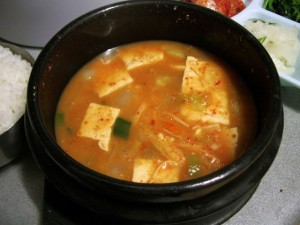
The term draws its name from doenjang, a fermented soybean paste that serves as the foundation for doenjang-jjigae, a humble, hearty, and inexpensive stew. For decades, this stew has been a staple of the Korean diet, synonymous with home cooking and financial modesty. A bowl of doenjang-jjigae in a typical neighborhood eatery traditionally costs between 3,500 and 5,000 KRW (approximately $3 to $4 USD).
The "bean paste girl" label is applied to women who are perceived to live beyond their means. The central irony of the term lies in the contrast between what these women eat and what they display. According to the most widely accepted definition, a doenjang-nyeo is a woman who eats the cheapest possible meal—the bean paste stew—specifically so she can save enough money to purchase a luxury item, such as a designer handbag or a premium cup of coffee from a Western chain like Starbucks. In the early 2000s, a Starbucks latte in Seoul often cost more than a full meal of doenjang-jjigae, making the green-and-white coffee cup a potent symbol of "excessive" Westernized consumption.
Socio-Economic Chronology: From Frugality to Kwasobi
The vitriol directed toward the "bean paste girl" cannot be understood without examining South Korea’s economic trajectory following the Korean War (1950–1953). In the aftermath of the conflict, South Korea was one of the poorest nations on earth, with a per capita GDP lower than many sub-Saharan African countries.
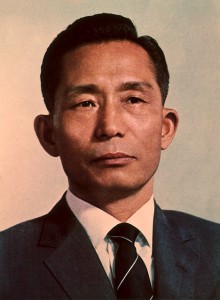
Under the leadership of President Park Chung-hee in the 1960s and 1970s, the nation underwent "The Miracle on the Han River." This era was defined by state-mandated austerity. The government launched national campaigns against kwasobi (excessive spending), exhorting citizens to save every won to fuel industrial growth. Frugality was not just a personal choice; it was a patriotic duty.
By the 1990s, however, the economic landscape had shifted. South Korea joined the OECD, and a new generation—born into relative affluence—began to embrace consumerism. The 1997 Asian Financial Crisis briefly reinstated a culture of austerity, but the subsequent recovery led to an explosion in the luxury goods market. The "bean paste girl" emerged in the wake of this transition, representing the collision between the old guard’s values of "belt-tightening" and the new generation’s desire for status through global brands.
The Psychology of the Status Symbol
In South Korean society, which is heavily influenced by Confucian values of hierarchy and "face" (social standing), luxury goods serve as vital markers of success. According to data from Morgan Stanley, South Koreans are currently the world’s biggest spenders on personal luxury goods per capita, spending an average of $325 per year—significantly higher than the $280 spent by Americans or the $50 spent by Chinese consumers.
For the doenjang-nyeo, the brand-name item is an equalizer. Even if she lives in a small studio apartment or stays with her parents to save money, a Chanel or Louis Vuitton bag signals to the world that she belongs to the upwardly mobile class. Analysts suggest this is a form of "conspicuous consumption" described by economist Thorstein Veblen, where the utility of the product is secondary to the status it confers.
Gendered Criticism and the "Bean Paste Boy"
A significant point of contention in the bean paste girl discourse is its inherent gender bias. While women are frequently vilified for spending money on handbags and coffee, men who spend equivalent or greater sums on electronics, cars, or expensive drinking sessions at "hostess bars" rarely face the same level of public scrutiny.
Sociologists argue that the term is a manifestation of deep-seated misogyny in a society where gender equality remains a challenge. South Korea consistently ranks low on the World Economic Forum’s Global Gender Gap Index. The "bean paste girl" trope often paints young women as shallow, manipulative, and fiscally irresponsible, ignoring the fact that many of these women are financially independent and spending their own hard-earned salaries.
While a male counterpart—the doenjang-nam—technically exists in the Korean lexicon, the term has never gained the same cultural traction. Men who engage in luxury consumption are often viewed as "successful" or "investing in their image," whereas women doing the same are labeled as "moochers" or "fakes."

Interpretations and Counter-Narratives
The definition of a "bean paste girl" varies depending on who is asked, leading to three distinct archetypes in the public consciousness:
- The Frugal Socialite: This is the most common definition. She is a woman of modest means who sacrifices basic necessities (eating cheap stew) to afford the outward appearance of wealth (the Starbucks coffee and the designer bag).
- The Moocher: A more derogatory version paints the doenjang-nyeo as someone who relies on her parents or boyfriend to fund her luxury lifestyle, spending her own money only on the barest essentials.
- The Wannabe Westerner: This critique focuses on the rejection of Korean traditions. She is seen as someone who values imported, Western brands over domestic products, viewing "Koreanness" as lowbrow or provincial.
Conversely, some feminist scholars have attempted to reclaim the term. They argue that the doenjang-nyeo is a "feminist icon" of sorts—a woman who prioritizes her own desires and aesthetic pleasures over traditional expectations of being a thrifty housewife. In this view, spending 6,000 KRW on a coffee is an act of autonomy in a society that has historically dictated how women should behave and spend.
Market Implications and the Global Stage
The "bean paste girl" phenomenon has had tangible effects on the South Korean market. Retailers and coffee chains have leaned into the trend, creating "luxury atmospheres" even in mid-priced establishments to cater to the desire for status. Seoul now has one of the highest densities of coffee shops in the world, with the "cafe culture" becoming a central pillar of social life.
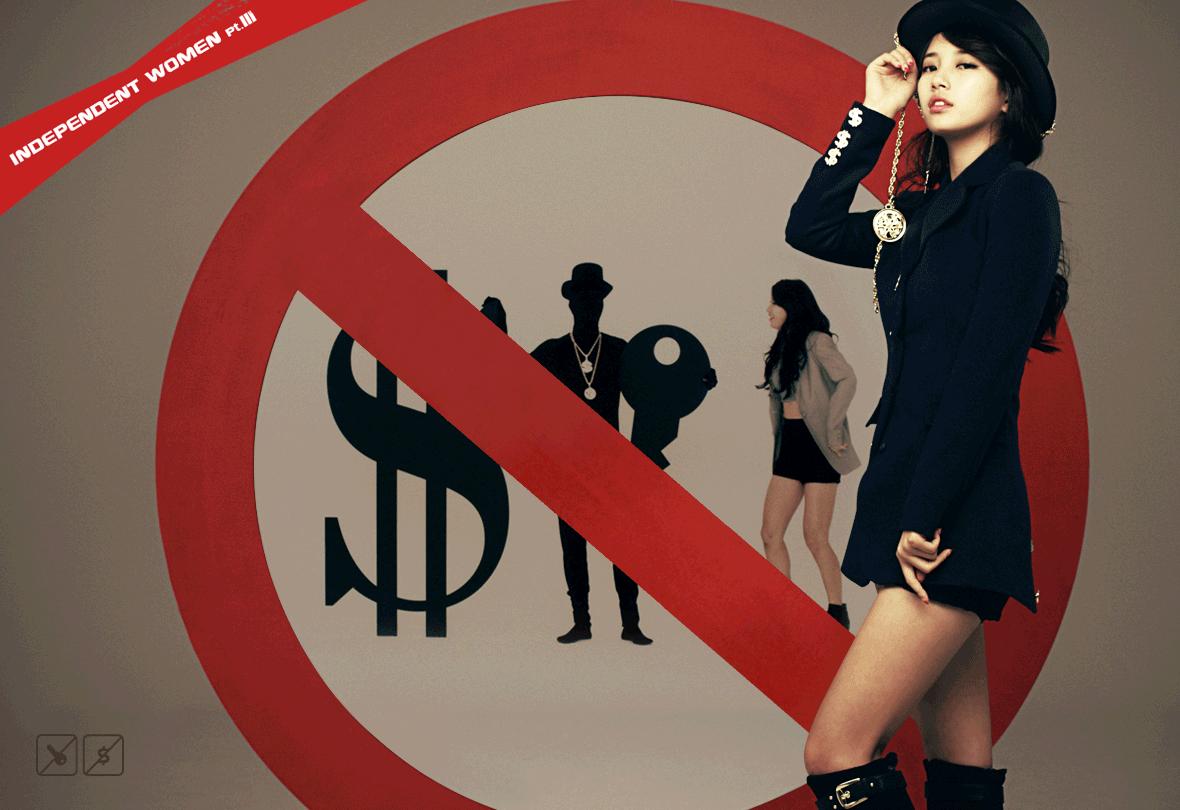
The international recognition of this trope via "Gangnam Style" also highlighted the "double life" of the Gangnam district. While the world saw the flashy lights and horse-dancing, Koreans saw a critique of a society obsessed with "looking the part." Psy’s lyrics—"A girl who looks warm and human during the day… A girl who covers herself up but is more sexy than a girl who exposes it all"—directly play into the dual nature of the doenjang-nyeo: the contrast between the private struggle for funds and the public display of wealth.
Analysis of Societal Impact
The persistence of the "bean paste girl" label reflects a society in the midst of an identity crisis. South Korea is caught between its past as a labor-intensive, frugal nation and its present as a high-tech, consumer-driven trendsetter. The term serves as a pressure valve for social anxieties regarding rising house prices, stagnant wages, and the widening wealth gap. When young people feel they can never afford a home, they often turn to "small luxuries" (like a $6 coffee or a $1,000 bag) as a form of "revenge spending."
As of 2024, while the specific term doenjang-nyeo has faded slightly from the daily vernacular, the sentiment behind it remains. It has evolved into newer terms like "flexing" or "YOLO" (You Only Live Once) culture, where the emphasis is on immediate gratification over long-term saving. However, the gendered nature of the critique continues to spark debate, prompting younger generations of Korean women to challenge the double standards of a society that demands they look perfect while simultaneously shaming them for the cost of that perfection.
In conclusion, the "bean paste girl" is more than a derogatory slang term; she is a symbol of South Korea’s rapid modernization. She represents the tensions of a nation navigating the transition from a "developing" mindset to a "developed" reality, where the price of a cup of coffee can become a battleground for gender politics, economic history, and social status. Whether viewed as a victim of consumerism or a pioneer of self-expression, the doenjang-nyeo remains a pivotal figure in the narrative of the Korean Dream.
Related News