For Your Viewing Pleasure: The Enduring Allure of the White T-Shirt in K-Pop Fashion
Article Editorial Team
The white t-shirt, an undisputed cornerstone of global fashion, continues its reign as an understated yet profoundly versatile style staple within the dynamic landscape of K-Pop. Far from being a mere basic, this seemingly simple garment is continually reinterpreted by K-Pop idols and actors, transforming from a casual foundation into a vehicle for individual expression and high fashion. The latest installment of "For Your Viewing Pleasure" highlights this phenomenon, showcasing how prominent figures across the K-Pop and K-drama spheres—from Monsta X’s Hyungwon and Shownu to actor Byeon Woo-seok, Park Ji-hoon, Le Sserafim’s Chaewon, Itzy’s Ryujin, and BTS’s Jungkook—masterfully integrate the white t-shirt into diverse ensembles, proving its timeless adaptability.
The Historical Trajectory of a Fashion Icon

To truly appreciate the white t-shirt’s current prominence in K-Pop, it is essential to understand its remarkable journey from utilitarian undergarment to cultural icon. Originating in the late 19th and early 20th centuries as part of military uniforms and workers’ attire, the t-shirt, then predominantly white, was designed for comfort and practicality. Its public debut as outerwear can largely be attributed to Hollywood. Figures like Marlon Brando in "A Streetcar Named Desire" (1951) and James Dean in "Rebel Without a Cause" (1955) famously elevated the white t-shirt from a humble underlayer to a symbol of rebellion, youth, and raw masculinity. This cinematic transformation cemented its place in popular culture, making it an accessible yet potent fashion statement.
Over subsequent decades, the white t-shirt transcended its rebellious connotations, becoming synonymous with casual chic, minimalist aesthetics, and effortless cool. Its universal appeal lies in its blank canvas quality, allowing wearers to project various identities depending on how it’s styled. From the sleek simplicity favored by designers in the 1990s to the oversized streetwear trends of the 2000s, the white t-shirt has consistently adapted, proving its resilience against fleeting fashion fads. In the context of contemporary fashion, particularly in South Korea, its inherent versatility makes it an invaluable asset for stylists navigating the rapid cycles of trends and the intricate demands of idol imagery.
The White T-Shirt in the K-Pop Aesthetic: A Canvas for Expression

South Korea’s entertainment industry, renowned for its meticulous styling and trend-setting influence, has embraced the white t-shirt as a foundational element capable of conveying a spectrum of moods and messages. In a landscape where visual presentation is paramount, the garment offers a strategic balance between relatability and aspirational style. It allows idols to appear approachable in "airport fashion" or behind-the-scenes content, yet equally sophisticated when paired with high-end accessories for magazine spreads or public appearances.
The examples highlighted in "For Your Viewing Pleasure" perfectly illustrate this dynamic range. Monsta X’s Hyungwon and Shownu exemplify the "casual yet classic" approach, pairing slouchy graphic t-shirts with ripped blue jeans. This styling choice taps into the enduring appeal of comfort-centric fashion, reflecting a broader trend towards relaxed silhouettes and accessible streetwear. For fans, seeing idols in such relatable attire fosters a sense of connection, blurring the lines between celebrity glamour and everyday life. The addition of subtle graphics adds a layer of personality without overpowering the inherent simplicity of the white tee, showcasing how minor details can significantly alter a look’s overall vibe.
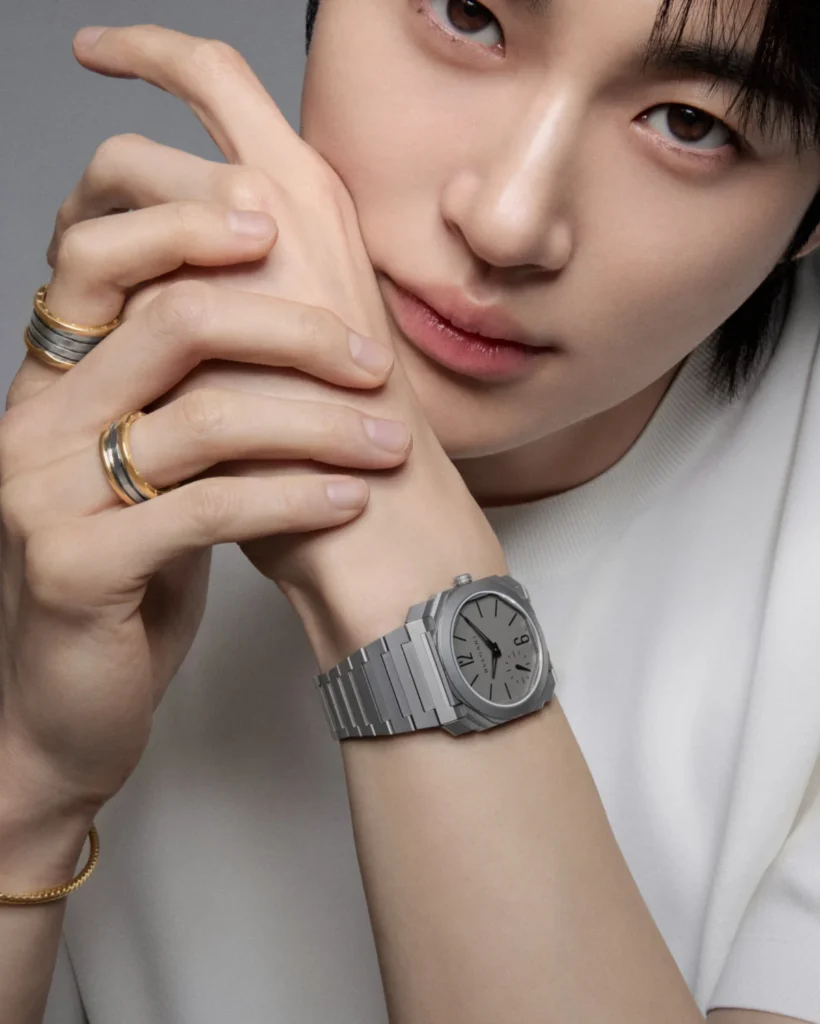
Conversely, actor Byeon Woo-seok elevates his white t-shirt with a sleek silver watch and chunky rings from Bulgari. This interpretation underscores the garment’s capacity for luxury integration. Here, the white t-shirt acts as a neutral backdrop, allowing high-end accessories to take center stage. This strategy is common in celebrity endorsements, where luxury brands leverage the universal appeal of a simple item to highlight their opulent offerings. The juxtaposition of a casual tee with designer jewelry creates an accessible entry point into luxury, making the overall aesthetic both aspirational and attainable for a wider audience. This blending of high and low fashion is a hallmark of modern styling, particularly in the influencer-driven landscape of K-Pop.

Evolving Silhouettes and Gender Fluidity
The stylistic interpretations extend beyond traditional masculine presentations. Park Ji-hoon’s choice of a flowy shirt offers a softer, more fluid silhouette, challenging conventional gendered fashion norms. This reflects a growing trend in K-Pop towards more ambiguous or gender-neutral aesthetics, where garments are chosen for their artistic merit and visual impact rather than strict adherence to traditional categories. A flowy white shirt can evoke a sense of ethereal beauty, romanticism, or artistic sensibility, providing a distinct visual narrative that contrasts with more structured or overtly masculine styles. This approach broadens the appeal of K-Pop fashion, resonating with a global audience increasingly receptive to diverse forms of expression.
For female idols, the white t-shirt takes on equally diverse forms, often aligning with contemporary youth culture and Y2K-inspired trends. Le Sserafim’s Chaewon and Itzy’s Ryujin are showcased in cute crop tops paired with baggy trousers, a quintessential look that blends comfort with a playful, modern femininity. The cropped silhouette, popular since the late 20th century and experiencing a significant resurgence, highlights the midriff, adding a touch of youthful energy and confidence. Paired with baggy trousers, this creates a balanced silhouette that is both relaxed and stylish, perfectly suited for dance practices, casual outings, or stage performances that prioritize freedom of movement without sacrificing aesthetic appeal. This combination has become a staple for many girl groups, reflecting a broader shift towards body positivity and comfortable yet chic fashion.

The Avant-Garde Statement: BTS’s Jungkook
A special mention is deserved for BTS’s Jungkook and his sequinned all-white ensemble. This look dramatically departs from the understated simplicity typically associated with a white t-shirt, pushing it into the realm of high fashion and performance artistry. Here, the "t-shirt" likely retains its basic silhouette but is reimagined with intricate embellishments, transforming it into a dazzling statement piece. This exemplifies K-Pop’s unique ability to merge everyday garments with theatrical extravagance, especially for stage performances or high-concept photoshoots. The sequins elevate the basic white into something spectacular, symbolizing the transformative power of K-Pop styling and its penchant for pushing boundaries. This approach not only showcases an idol’s individual charisma but also reinforces the industry’s reputation for innovative and visually captivating fashion.
The Role of Industry and Influence: Data and Implications

The consistent presence and diverse interpretations of the white t-shirt in K-Pop are not accidental; they are a testament to strategic styling, brand partnerships, and the powerful influence of the Hallyu wave. K-Pop stylists, acting as crucial intermediaries, continually recontextualize classic pieces, ensuring idols remain at the forefront of fashion trends while maintaining a distinctive personal brand. The ability to take a universally recognized item like a white t-shirt and infuse it with fresh appeal demonstrates a deep understanding of fashion psychology and market trends.
Supporting data from various fashion publications (Cosmopolitan, Harper’s Bazaar, Singles) and entertainment agencies (BVLGARI, JYP Entertainment, HYBE, Starship Entertainment) indicates the widespread adoption and endorsement of these styles. These images, disseminated globally through official channels and fan communities, contribute significantly to K-Pop’s fashion influence. When idols wear specific brands or styles, even simple ones, it generates immediate interest and often translates into sales, highlighting the immense economic power of K-Pop endorsements. The "Jungkook effect" or "Chaewon effect" can lead to items selling out rapidly, underscoring the direct impact of idol fashion on consumer behavior.
The implications of this trend are multi-faceted. Firstly, it democratizes fashion, making aspirational celebrity styles more accessible by integrating everyday items. Fans can emulate parts of their favorite idol’s look without necessarily purchasing high-end designer pieces, fostering a more inclusive fashion dialogue. Secondly, it reinforces K-Pop’s role as a global trendsetter. What starts as a styling choice for a magazine shoot in Seoul can quickly become a global fashion statement, influencing street style and mainstream trends worldwide. The white t-shirt, in its K-Pop incarnation, becomes a symbol of this global cultural exchange.

Inferred Industry Perspectives
While direct statements from stylists or designers on this specific topic are not readily available in the provided context, we can infer their perspectives. A K-Pop stylist might articulate, "The white t-shirt is our ultimate blank canvas. It allows us to highlight an idol’s natural beauty and personality, whether we’re going for minimalist chic or an extravagant performance look. It’s a reliable foundation that we can build endless stories upon." Fashion editors would likely concur, observing, "Its enduring appeal lies in its adaptability. It’s a testament to good design that a single garment can transition from a casual street style moment to a high-fashion editorial, especially when paired with the right accessories and attitude. K-Pop idols excel at demonstrating this versatility." Brand managers, particularly those in luxury, might remark, "When an idol pairs a simple white tee with our latest collection piece, it creates an aspirational yet approachable image. It shows that luxury can seamlessly integrate into any style, making our products more relatable to a younger, trend-conscious demographic."
Broader Impact and Future Implications

The continuous reinterpretation of the white t-shirt within K-Pop signifies more than just a passing fashion trend; it speaks to the industry’s strategic brilliance and its profound impact on global culture. By embracing and elevating a universally recognized item, K-Pop amplifies its message of individual expression, creativity, and the seamless fusion of diverse styles. This approach contributes to the industry’s sustainable fashion narrative, promoting the longevity of classic pieces over fleeting trends, even amidst the rapid pace of fashion cycles.
Looking ahead, the white t-shirt is poised to remain a constant in K-Pop fashion, evolving alongside new trends and idol generations. Its fundamental simplicity ensures its relevance, while its inherent versatility guarantees that it will continue to be a playground for stylists and idols to experiment with new aesthetics, pushing boundaries while remaining grounded in timeless appeal. From crisp, minimalist shirts to playful cropped corsets, each interpretation, while seemingly simple, contributes to a rich tapestry of visual storytelling that defines K-Pop’s unique place in the global fashion lexicon. The white t-shirt, therefore, is not just a garment; it is a recurring motif, a symbol of K-Pop’s enduring influence and its capacity to transform the ordinary into the extraordinary.
Related News