Sexual Objectification Of AI?—Major Korean Broadcaster Stirs Up Heated Debate
Article Editorial Team

The rapid integration of artificial intelligence into the media landscape has reached a new and controversial milestone in South Korea, sparking an intense national dialogue regarding the ethics of digital representation and the future of human employment. In late July 2026, a series of viral screenshots purportedly showing a major national broadcaster replacing its human weather forecasters with an AI-generated model ignited a firestorm across social media platforms and online communities. While the initial reports contained factual inaccuracies regarding the specific broadcaster involved, the incident has exposed deep-seated anxieties concerning the sexual objectification of digital entities and the precarious nature of professional roles in the age of automation.
The controversy began when images of an AI-generated figure, identified as Kim Sia, began circulating on platforms such as Instiz and X (formerly Twitter). The screenshots depicted a hyper-realistic digital woman standing in front of a standard meteorological map, performing the duties typically reserved for human weather presenters. Initial captions and social media discourse suggested that SBS (Seoul Broadcasting System), one of South Korea’s "Big Three" national networks, had officially pivoted to AI-driven weather reporting. This sparked an immediate backlash, not only from those concerned about the displacement of human workers but also from critics who pointed to the specific aesthetic choices made in the design of the AI model.

The Aesthetic of Controversy: Objectification in the Digital Realm
At the heart of the public outcry was the visual presentation of Kim Sia. In the South Korean broadcasting industry, weather forecasters—often referred to as "weather casters"—have historically occupied a unique cultural space. While they are required to maintain a high degree of professionalism and technical accuracy, they have also frequently been subject to intense public scrutiny regarding their appearance. The introduction of Kim Sia appeared to many as an exacerbation of this trend.
Unlike the professional, often conservative attire typically worn by human broadcasters on national news programs, the AI model was depicted in a highly stylized, body-hugging short dress. Critics argued that the design of Kim Sia leaned heavily into the "uncanny valley" of idealized beauty, prioritizing a specific, sexualized aesthetic over the functional requirements of a news presenter. The debate quickly shifted from technological innovation to the ethics of "digital puppetry," with netizens questioning why an AI, which could theoretically take any form, was designed to adhere to such narrow and provocative beauty standards.
Sociologists and media critics have noted that the creation of AI models like Kim Sia reflects a broader trend in the South Korean "virtual human" industry. These entities are often designed to be "perfect" versions of humans, free from physical flaws and capable of maintaining a specific image indefinitely. However, when applied to a professional news setting, this perfection can manifest as objectification. The concern is that by utilizing AI models that emphasize physical attractiveness and provocative fashion, media outlets may be reinforcing harmful stereotypes and further commodifying the female form under the guise of technological progress.

Clarifying the Source: K-Weather and the SBS Misconception
As the debate reached a fever pitch, investigative efforts by netizens and subsequent media reports clarified the origins of the footage. On July 27, 2026, it was confirmed that the screenshots of Kim Sia did not originate from a national SBS broadcast. Instead, the AI model is a product of K-Weather, a private weather and air quality service provider in South Korea. K-Weather had been utilizing the AI presenter on its specialized YouTube channel and digital platforms as part of a pilot program to streamline content production.
The misattribution to SBS likely stemmed from the high production value of the AI segments, which mimicked the visual language of professional terrestrial broadcasting. While the clarification provided some relief to those who feared that national broadcasters had already abandoned human staff, it did little to quell the broader concerns regarding the direction of the industry. The fact that a private entity like K-Weather is successfully deploying such models suggests that the technology is no longer a futuristic concept but a present-day reality that is rapidly scaling.
The Economic Impact: AI vs. Human Professionals
Beyond the aesthetic and ethical concerns, the Kim Sia incident has amplified fears regarding job security in the media sector. South Korea is currently a global leader in AI adoption, and the broadcasting industry has been a primary testing ground for automated presenters. In recent years, networks such as MBN have introduced AI versions of their primary news anchors, such as the digital twin of Kim Joo-ha, to handle late-night updates and breaking news cycles.
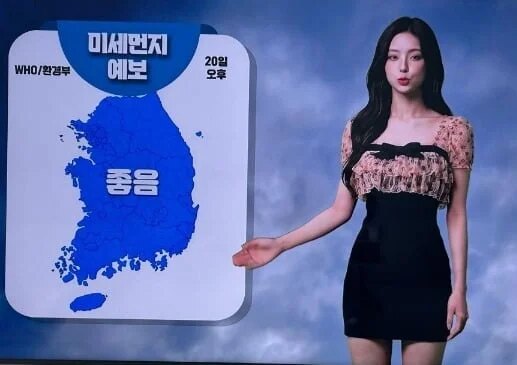
The economic incentives for using AI are significant. A digital presenter like Kim Sia requires no salary, does not experience fatigue, and can produce content 24 hours a day in multiple languages. For a service provider like K-Weather, which manages vast amounts of data that must be updated frequently, the cost-efficiency of AI is undeniable. However, this efficiency comes at the cost of human entry-level positions. Weather reporting has traditionally been a stepping stone for aspiring broadcasters and journalists; the replacement of these roles with AI models threatens to sever a critical professional pipeline.
Data from the Korea Labor Institute suggests that "routine-cognitive" tasks, which include certain types of scripted broadcasting and data-heavy reporting, are at the highest risk of automation. The Kim Sia controversy serves as a visible flashpoint for these underlying economic tensions, highlighting a future where the human element of news delivery becomes a luxury rather than a standard.
Chronology of the Controversy
To understand the scale of the reaction, it is necessary to look at the timeline of the event’s progression:
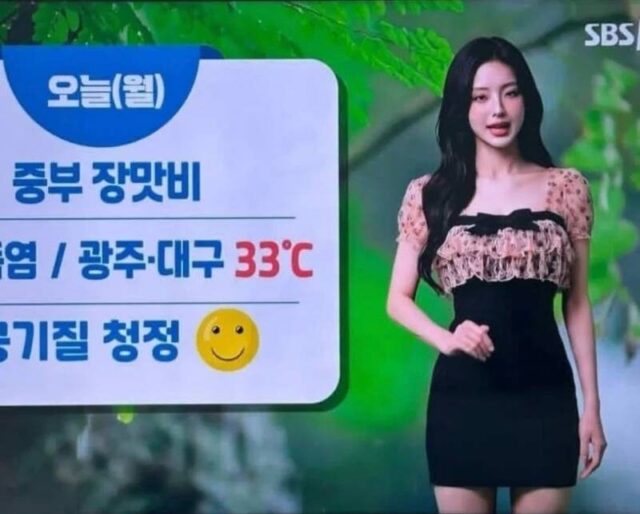
- July 22–25, 2026: Screenshots of Kim Sia begin appearing on niche tech forums and K-pop community boards, with users speculating on her "eerie" realism.
- July 26, 2026: The images go viral on mainstream social media. A false narrative emerges, claiming SBS has fired its weather department in favor of the AI model. Public debate ignites over the model’s "inappropriate" clothing.
- July 27, 2026: Fact-checking outlets and industry insiders trace the footage back to K-Weather’s YouTube channel. It is revealed that the model has been in use for several weeks without prior controversy.
- July 28, 2026: Major news outlets report on the debate, framing it as a conflict between technological efficiency and social ethics. The conversation shifts toward the need for regulatory frameworks governing the "visual personality" of AI.
Official Responses and Expert Analysis
While SBS did not issue a formal press release regarding the rumors—standard practice for the network when dealing with social media misinformation—insiders at various broadcasting stations have expressed a mix of curiosity and caution. A representative from a competing network, speaking on the condition of anonymity, noted that while AI is being "closely monitored" for efficiency, the "human touch and the trust established between a known personality and the audience" remain difficult to replicate.
Tech ethics experts argue that the Kim Sia case highlights a regulatory vacuum. Dr. Lee Min-ho, a researcher specializing in digital ethics, stated, "The issue isn’t just that an AI is doing the job; it’s how that AI is programmed to look and behave. When we create digital humans, we are making conscious choices about gender, race, and body type. If these choices lean toward sexualization, we are essentially automating and magnifying the biases of the real world."
Furthermore, the psychological impact on the audience cannot be ignored. The "Uncanny Valley" effect—the sense of unease felt when a non-human entity looks almost, but not quite, human—is exacerbated when the entity is placed in a position of authority, such as a news presenter. The provocative styling of Kim Sia reportedly increased this sense of unease among viewers, who felt the attire was "out of sync" with the gravity of news reporting.

Broader Implications for the Future of Media
The Kim Sia incident is a harbinger of the complex challenges facing the global media industry. As AI models become indistinguishable from humans in high-definition broadcasts, the lines between reality and simulation will continue to blur. South Korea’s experience serves as a case study for other nations grappling with the integration of "virtual humans."
One potential outcome of this debate is the call for standardized "AI Ethics in Design" guidelines. Such regulations would require developers to consider the social impact of an AI’s appearance, particularly when the AI is used in public-facing professional roles. There is also a growing movement advocating for "AI Disclosure" labels, ensuring that viewers are always aware when they are interacting with a digital construct rather than a human being.
In conclusion, while the rumors of a total AI takeover at SBS were premature, the heated debate sparked by Kim Sia’s appearance reveals a society at a crossroads. The intersection of sexual objectification and technological displacement presents a dual challenge that requires more than just technical solutions. It demands a cultural consensus on how much of our human identity we are willing to mirror—or distort—in the machines we build to represent us. As the technology continues to evolve, the conversation surrounding Kim Sia will likely be remembered as a pivotal moment when the public demanded accountability for the digital faces of the future.
Related News