A Shockwave Through K-Pop: Mark’s Departure from NCT and SM Entertainment Ignites Fan Concerns Over Group’s Future and Industry Contract Norms
Article Editorial Team
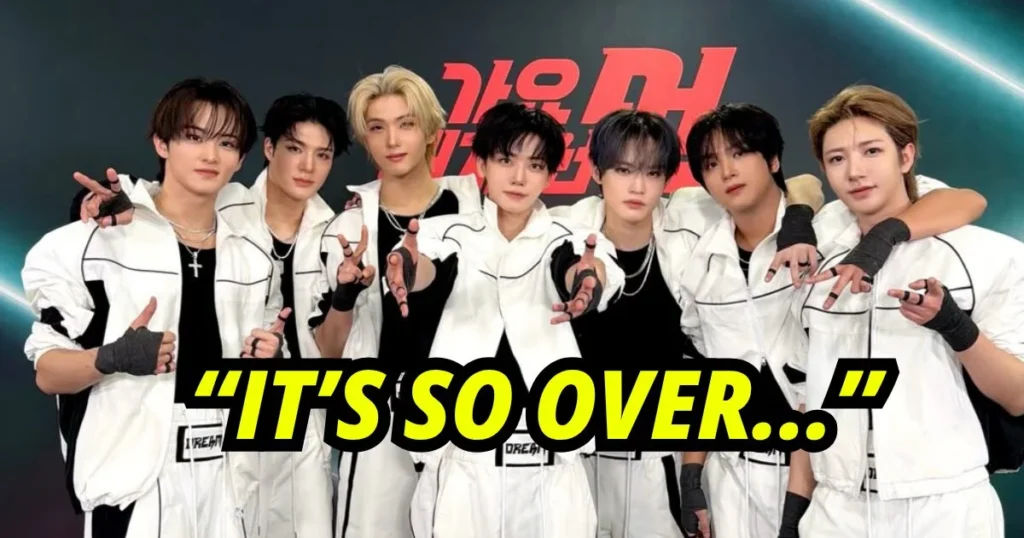
The K-Pop landscape was rattled on April 3, 2026, with the official announcement that Mark, a prominent and multifaceted member of the globally recognized group NCT, would be departing from both the collective and its long-standing agency, SM Entertainment. This significant development sent immediate shockwaves through the fandom, known as NCTzens, and beyond, sparking widespread uncertainty regarding the future trajectory of the experimental K-Pop ensemble and igniting crucial conversations about artist contracts and industry stability. Mark’s exit, after a decade of dedication to SM Entertainment, marks a pivotal moment, raising questions about the longevity of K-Pop careers within established systems and the evolving dynamics between idols and their management.
The Official Announcement and Mark’s Personal Farewell
The news of Mark’s departure arrived abruptly, confirmed by SM Entertainment, though details surrounding the exact terms of his separation were not immediately made public. The agency’s statement, while brief, acknowledged his contributions and wished him well in his future endeavors, a standard practice in such announcements. However, it was Mark’s personal address to his fans that truly resonated, offering a poignant glimpse into his decision. Shared across his personal social media channels, his letters conveyed a mix of gratitude, reflection, and hopeful anticipation. He expressed profound thanks to NCTzens for their unwavering support throughout his journey, acknowledging the deep bond forged over ten years. While the specific reasons for his departure were not explicitly detailed, his messages hinted at a desire for new challenges and personal growth, assuring fans that his passion for music and performance would continue. This direct communication from Mark himself, rather than solely through official company channels, provided a much-needed sense of closure and personal connection for his devoted fanbase, even amidst their profound sadness. The emotional weight of his words underscored the personal sacrifices and immense dedication required of idols, further amplifying the sentiment of loss felt by many.
The Preceding Whisper: The Curious Case of "Insider Information"
Adding a layer of intrigue and concern to Mark’s departure was the eerie accuracy of a previously circulated, now-deleted "insider information" post. This viral leak, which had gained significant traction in fan communities prior to the official announcement, explicitly named Mark as a member slated to leave NCT and SM Entertainment. The post further alleged that another prominent member, Ten of WayV, was also on a similar trajectory. The veracity of the information regarding Mark, now unequivocally confirmed, has lent an unsettling credibility to the remaining claims, fueling intense speculation and anxiety among fans about potential future departures.
The phenomenon of "insider information" or "leaks" is not uncommon in the highly secretive K-Pop industry, often emerging from anonymous sources on various online platforms. While many such claims prove to be baseless rumors, instances where they align with later official announcements can profoundly impact fan trust and increase overall apprehension. In this particular case, the accuracy concerning Mark has transformed what might have been dismissed as mere fan chatter into a source of legitimate concern, placing the spotlight squarely on the future of other NCT members whose names were purportedly mentioned in the same leak. This precedent has created a climate of hyper-vigilance within the fandom, with every new rumor or subtle shift in content being scrutinized for further hints of impending change.
A Decade of Dedication: Contractual Norms and Mark’s Tenure
Mark’s ten-year tenure with SM Entertainment stands as a testament to his unwavering commitment and a common benchmark for idol contracts within the industry. Historically, K-Pop idol contracts have often been structured around an initial seven-year period, a duration frequently subject to extensions or renegotiations as artists approach the end of their terms. SM Entertainment, one of the "Big 3" K-Pop agencies, has a well-documented history with various contractual models, some of which have sparked controversy in the past regarding their length and restrictive clauses. Over the years, following legal reforms and public scrutiny, contract practices have evolved, yet the underlying principle of long-term commitment remains.
For a prominent idol like Mark, who debuted under SM Entertainment and became a central figure across multiple NCT units—NCT U, NCT 127, and NCT Dream—reaching the ten-year mark signals a critical juncture. It represents not just the expiration of an initial agreement but a moment for deep reflection on career trajectory, personal aspirations, and the demands of idol life. The decision to depart after a decade suggests a considered choice, potentially driven by a desire for greater creative autonomy, a shift in career focus, or a reevaluation of the rigorous demands of the K-Pop group system. His decision, therefore, isn’t merely a contract expiration but a statement on the evolving landscape of K-Pop careers, where artists are increasingly asserting control over their professional futures post-initial contract.
NCT’s Unique Architecture and the Impact of Departures
NCT, or Neo Culture Technology, was launched by SM Entertainment with an innovative, albeit complex, concept: an "unlimited" group with various sub-units based in different cities around the world, allowing for a flexible lineup and continuous expansion. Mark, known for his exceptional talent in rapping, singing, and performing, was a linchpin in this experimental structure, participating in some of NCT’s most popular and successful units. His versatility and central role made him a defining face of the group.
The departure of such a foundational member inevitably raises questions about the long-term viability and artistic direction of NCT’s units. While the "unlimited" concept theoretically allows for member fluidity, the emotional and artistic impact of losing a beloved and integral figure like Mark is undeniable. Each unit in which Mark participated—NCT 127, known for its powerful performances, and NCT Dream, celebrated for its youthful energy and growth narrative—will undoubtedly feel his absence. The challenge for SM Entertainment now lies in reconfiguring these units, maintaining their distinct identities, and reassuring fans that the group’s overall vision can continue to thrive without one of its key pillars. This incident prompts a re-evaluation of how an "unlimited" concept manages the finite reality of individual artist contracts and career paths, potentially forcing the agency to adapt its long-term strategy for the collective.
The Looming Contractual Cliff: Fan Anxiety Over Future Expirations

In the wake of Mark’s confirmed departure, a particular post detailing alleged contract expiration dates for numerous other NCT members has resurfaced and gained intense scrutiny. This list, which has been circulating within fan communities, paints a concerning picture of a series of potential contractual crossroads approaching in the near future. The dates listed are as follows:
- April 2026: Ten, Mark (now confirmed)
- July 2026: Yuta, Winwin, Haechan
- August 2026: Renjun, Jeno, Jaemin, Chenle, Jisung
- January 2026: Johnny
- October 2026: Jaehyun, Doyoung (with an additional note citing "military service period 1 year, 6 months" for extension considerations)
The immediate implication of this list, now validated by Mark’s departure in April 2026, is a heightened sense of dread among NCTzens. The proximity of Ten’s alleged expiration date, also in April 2026, has intensified fears, particularly given the prior "insider information" that linked him with Mark. Following closely are the critical dates in July and August, which encompass a large number of members from various units, including core members of NCT 127 (Yuta, Haechan, Johnny, Jaehyun, Doyoung) and the entirety of NCT Dream (Renjun, Jeno, Jaemin, Chenle, Jisung).
A significant point of contention for fans is the inclusion of "military service period" for members like Jaehyun and Doyoung. In South Korea, mandatory military enlistment for male citizens can pause active careers for approximately 18-21 months. While this period is legally mandated, its impact on idol contracts is often perceived by fans as an effective extension of their binding agreement with the agency, delaying their opportunity for contract renegotiation or departure. This factor adds another layer of complexity and perceived unfairness to an already anxious situation, as it means idols might be tied to their agencies for even longer than the initial contract duration, pushing their decision points further into the future. The sheer volume of members whose contracts are purportedly ending within a single year has led many to believe that Mark’s departure is merely the first domino in a potentially larger series of changes for NCT.
A Chorus of Concern: Fan Reactions and Industry Criticism
The emotional toll on NCTzens has been palpable, with social media platforms becoming a hub for expressions of grief, anger, and profound uncertainty. The initial shock quickly gave way to a wave of collective anxiety, best encapsulated by the trending sentiments observed online:
- One fan, @yammaxxing, tweeted in disbelief, "I just started laughing in disbelief it’s so over," reflecting a feeling of resignation and the perceived unraveling of the group’s future.
- Another user, @CapitalBelle, voiced a more analytical fear, stating, "I think there’s a good chance at least 5 more people on this list leave by the end of this year," highlighting the statistical probability given the number of impending contract expirations.
- The sentiment of impending desolation was echoed by @ungodlyhwa, who dramatically predicted, "by the end of next year ncity might be a ghost town," illustrating the deep fear of a mass exodus.
- Beyond the immediate emotional reactions, significant criticism was leveled directly at SM Entertainment. @mooncloud03 passionately declared, "sm is actually demonic for the 10 year plus extended contracts for military enlistment… your downfall is soon @SMTOWNGLOBAL," directly accusing the agency of exploitative practices regarding contract lengths and military service extensions. This particular criticism reflects a broader, long-standing discourse within the K-Pop community about the power imbalance between agencies and idols.
These reactions collectively underscore the profound connection fans feel to their idols and groups. The possibility of losing multiple members, especially after investing years of emotional and financial support, evokes not just sadness but a sense of betrayal and powerlessness. The criticism directed at SM Entertainment is indicative of a growing demand from fans for greater transparency, fairer contract terms, and more artist-centric approaches within the K-Pop industry. This public outcry serves as a powerful signal to agencies that their management practices are under constant scrutiny and directly impact fan morale and, consequently, the artists’ success.
Broader Implications for NCT and the K-Pop Industry

Mark’s departure, coupled with the circulating contract expiration list, presents a multifaceted challenge for SM Entertainment and NCT. Artistically, NCT will need to redefine its sound and visual identity in the absence of a key figure. The dynamic of units like NCT 127 and NCT Dream, where Mark played a crucial role, will undoubtedly shift, requiring creative adjustments in future releases and performances. The agency faces the daunting task of maintaining group cohesion and fan engagement amidst potential further changes, which could impact album sales, concert attendance, and overall brand value.
From an industry perspective, this event highlights several evolving trends. There is a discernible pattern of idols, particularly those who have achieved significant fame and experience, opting to leave their debut agencies after their initial contracts expire. This often stems from a desire for greater artistic freedom, better financial terms, or the pursuit of solo careers under new management or independent labels. This shift reflects a maturing industry where individual idols are increasingly recognized as powerful brands in their own right, capable of navigating their careers outside the traditional agency system.
Furthermore, the public discourse around contract lengths and military service extensions will likely intensify. As more idols reach these contractual milestones, agencies may face increased pressure to offer more flexible, artist-friendly terms to retain their talent. The transparency of contract negotiations and the welfare of artists are becoming increasingly important factors for fans, who are often the strongest advocates for fair treatment within the industry.
Conclusion: An Industry at a Crossroads
Mark’s departure from NCT and SM Entertainment on April 3, 2026, is more than just the exit of a single idol; it is a seismic event that has exposed underlying tensions and uncertainties within the K-Pop industry. It has brought to the forefront critical discussions about artist contracts, the unique challenges of groups like NCT with their flexible lineups, and the emotional impact of such changes on a deeply invested fanbase. The accuracy of prior "insider information" has further amplified concerns, leading to widespread speculation about the fate of numerous other NCT members whose contracts are allegedly nearing their end.
As SM Entertainment navigates this challenging period, the eyes of the K-Pop world will be watching closely. The decisions made regarding the remaining members and their contracts, and the strategies employed to maintain NCT’s vitality, will not only shape the future of one of K-Pop’s most innovative groups but also set precedents for artist-agency relationships across the entire industry. The era of unwavering, decade-long commitments is being re-examined, signaling a potential shift towards greater artist autonomy and a more dynamic, albeit uncertain, future for K-Pop idols. The coming months will be crucial in determining whether this marks a temporary tremor or a fundamental reshaping of the K-Pop landscape.
Related News