Aespa’s Startling Chart Performance Amid Boycott Becomes A Hot Topic
Article Editorial Team

The Strategic Launch of the Lemonade Era
The announcement of "WDA (Whole Different Animal)" was met with unprecedented fervor. For aespa, the track represented a pivot toward a more mature and experimental sound following the massive success of their previous projects. For G-Dragon, the collaboration served as a high-profile appearance during a period of renewed activity under his agency, Galaxy Corporation. The pairing was viewed by industry insiders as a strategic masterstroke, intended to bridge the gap between veteran K-pop enthusiasts and the younger "Gen Z" demographic that aespa commands.
The production credits further heightened expectations. The track was co-produced by Dem Jointz, a Grammy-winning producer known for his work with global icons like Kanye West and Rihanna, as well as his distinctive "incoming" tag on various SM Entertainment hits. The combination of aespa’s futuristic "metaverse" aesthetic, G-Dragon’s avant-garde lyricism, and Dem Jointz’s complex production promised a "whole different animal" indeed.
Statistical Analysis: A Tale of Two Charts
The primary source of the current debate lies in the track’s performance on domestic and international streaming platforms. In South Korea, the Melon chart remains the definitive barometer of public popularity. "WDA" debuted at position #63 on the Melon Top 100. While a top-100 debut is a feat for most artists, for acts of aespa and G-Dragon’s caliber, the entry was viewed by some as underwhelming.

However, the song exhibited "climbing" behavior—a phenomenon where a track gains momentum through word-of-mouth and repeated listens. On its second day, "WDA" ascended to #23. Despite this jump, the track has since faced volatility in its ranking, leading to concerns regarding its longevity compared to aespa’s previous chart-toppers like "Next Level" or "Drama."
On the global stage, the data presents a different narrative. On Spotify, "WDA" recorded a robust debut with 1,463,218 filtered streams on its first day. This figure grew to 1,598,665 streams by the second day, indicating strong international interest. These numbers are particularly noteworthy given that the track was released amidst a competitive window featuring several major global releases. Supporters argue that the Spotify data proves aespa’s growing footprint in Western markets, where experimental production is often more readily embraced than in the ballad-leaning domestic Korean market.
The G-Dragon Factor: Expectations vs. Performance
The collaboration has placed G-Dragon’s recent chart history under intense scrutiny. Critics have pointed to a sharp decline in debut rankings when comparing "WDA" to his solo efforts. Historically, G-Dragon’s releases have dominated the top of the charts almost instantly. For example, his solo track "Power" debuted at #2, and "Too Bad" secured a #1 spot.
Social media discourse has been particularly harsh, with some users pointing to the #61 daily rank of "WDA" as a sign of a "declining" Midas touch. This comparison, however, is viewed by many as an "apples-to-oranges" fallacy. Analysts suggest that "WDA" is fundamentally an aespa song featuring G-Dragon, rather than a G-Dragon solo project, and its performance should be viewed through the lens of a group’s pre-release experimental track rather than a mainstream solo comeback.

Production and Lyricism: The Experimental Divide
A significant portion of the mixed reaction stems from the song’s sonic architecture. Dem Jointz is known for "maximalist" production, characterized by layered textures, unconventional beat switches, and aggressive synth work. While this style aligns with aespa’s "Savage" and "Girls" era, it stands in stark contrast to the more melodic and hook-heavy trends currently dominating the K-pop landscape.
Furthermore, G-Dragon’s lyrical contribution has been a point of contention. Some listeners have slammed the lyrics as being out of touch with current sensibilities, while others defend them as classic G-Dragon—abstract, self-referential, and intentionally jarring. The clash between aespa’s polished, high-concept delivery and G-Dragon’s raw, idiosyncratic style has resulted in a track that many find difficult to categorize, leading to the "mixed reactions" reported across music forums.
Fandom Dynamics and the "Boycott" Factor
The chart performance of "WDA" cannot be fully understood without acknowledging the internal friction within aespa’s domestic fandom, the MYs. Leading up to the release, several large-scale fan bases in South Korea announced a partial boycott of the single. The reasons cited were multifaceted, ranging from dissatisfaction with SM Entertainment’s management of the group’s schedule to specific objections regarding the choice of collaboration.
"Did that with K-Mys boycotting, experimental sounding song, right after hate train, AI accusations," one fan noted on social media, highlighting the "uphill battle" the song faced. The fact that the song managed to reach #23 on Melon despite a lack of unified fandom support is seen by many as a testament to the group’s raw "GP" (General Public) pull.
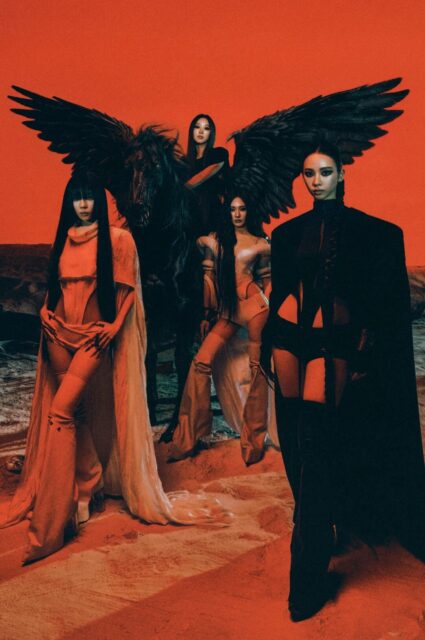
Additionally, technical hurdles on the release day—including a reported one-minute delay in the music video’s upload and a lack of aggressive promotional "payola" (sponsored streaming placement)—have been cited as factors that prevented a higher debut. The "15-hour tracking" window for the first day also meant the song did not have a full 24 hours to accumulate data for its initial chart entry.
Broader Industry Implications
The "WDA" release serves as a case study for the current state of the K-pop industry in 2026. It highlights a growing tension between "chart-friendly" music and "brand-defining" music. For SM Entertainment, the goal of Lemonade appears to be the further solidification of aespa as a group that pushes boundaries, even at the risk of immediate digital dominance.
Furthermore, the collaboration signals a shift in how veteran idols interact with the new generation. Rather than a safe, radio-friendly pop song, G-Dragon and aespa chose a path that prioritized artistic statement over commercial safety. This move may pave the way for more "high-risk, high-reward" collaborations in the future, where the objective is to create a cultural talking point rather than a temporary number-one hit.
Looking Ahead to the Lemonade Album
As the dust settles on the initial release of "WDA (Whole Different Animal)," the focus now shifts to the full release of aespa’s second album, Lemonade. Historically, pre-release singles serve to set the tone and build anticipation, and in that regard, "WDA" has been undeniably successful in capturing the industry’s attention.

The song’s performance on global charts like Spotify suggests that aespa’s international trajectory remains on an upward swing, regardless of domestic chart fluctuations. As the group prepares for the next phase of their promotional cycle, the lessons learned from the "WDA" release—particularly regarding the balance of experimentalism and fan expectations—will likely influence the rollout of the album’s title track.
In conclusion, while "WDA (Whole Different Animal)" may not have achieved the "Perfect All-Kill" that some anticipated, its impact is far-reaching. It has sparked vital conversations about the evolution of G-Dragon’s career, the sonic identity of aespa, and the power of fandoms in the digital age. Whether the track will be remembered as a misunderstood masterpiece or a missed opportunity remains to be seen, but for now, it remains one of the most discussed musical events of the year. The "Whole Different Animal" has indeed arrived, and its roar is being heard, even if it isn’t singing the tune everyone expected.
Related News