Bang Chan Becomes Most Credited K-Pop Idol Under KOMCA Amid Mixed Reactions to Recent Statements on Musical Success
Article Editorial Team

The landscape of the South Korean music industry reached a significant milestone in August and September 2026 as Bang Chan, the leader of the globally renowned group Stray Kids, officially became the most credited K-pop idol under the Korea Music Copyright Association (KOMCA). This achievement marks a shift in the historical rankings of self-producing idols, placing the JYP Entertainment artist at the pinnacle of a list that includes some of the most influential figures in Hallyu history. However, the celebration of this record has been overshadowed by a complex public discourse following the artist’s own reflections on his career, which have sparked a divide between dedicated supporters and online critics.
The Significance of KOMCA and the Rise of Bang Chan
The Korea Music Copyright Association (KOMCA) serves as the primary collective management organization for musical works in South Korea. Established in 1964, it manages the broadcasting, recording, and performing rights of its members, ensuring that songwriters, composers, and arrangers receive appropriate royalties. For K-pop idols, the number of KOMCA credits is often viewed as a metric of artistic autonomy and creative contribution, distinguishing "self-producing" groups from those who rely primarily on external production teams.

For several years, the record for the most credits held by an idol was maintained by Ravi, a former member of the group VIXX, who had amassed a prolific catalog across group activities and solo ventures. Bang Chan’s ascent to the top spot is the result of a relentless creative output that began even before Stray Kids’ official debut in 2018. As the primary producer of the group’s internal production trio, 3RACHA—consisting of himself and fellow members Changbin and Han—Bang Chan has been instrumental in crafting the "noise music" genre and experimental sounds that defined the group’s global identity.
By August 2026, Bang Chan’s total credit count surpassed the previous record, solidifying his status as a central figure in modern music production. His portfolio includes work on lyrics, composition, and arrangement for the vast majority of Stray Kids’ discography, as well as contributions to other artists and special projects.
Chronology of the Achievement and Fan Advocacy
The transition of the record occurred quietly in late summer 2026. While fans, known as STAYs, were quick to track the updates on the KOMCA database, they noted a perceived lack of acknowledgement from JYP Entertainment and its subsidiary, Division 1, which manages Stray Kids. In the K-pop industry, major milestones—such as record-breaking sales or significant industry awards—are typically met with official press releases or congratulatory social media posts from the managing agency.

The absence of such a gesture led to an organized push by fans on social media platforms. Supporters argued that becoming the most credited idol in the history of the association was a landmark achievement that deserved corporate recognition. This advocacy intensified in early September, as fans utilized hashtags and direct mentions to urge JYP Entertainment to highlight Bang Chan’s contribution to the company’s success.
September 8: Statements on Fan Communication Platforms
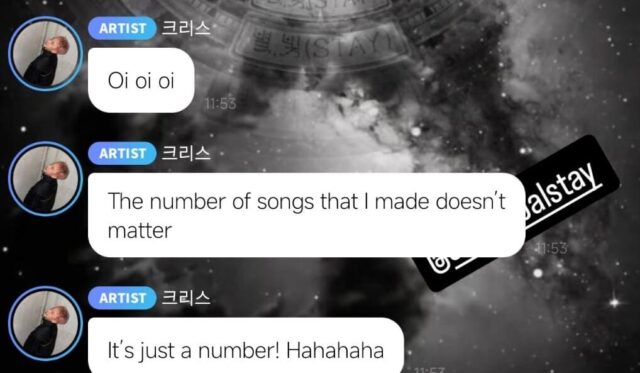
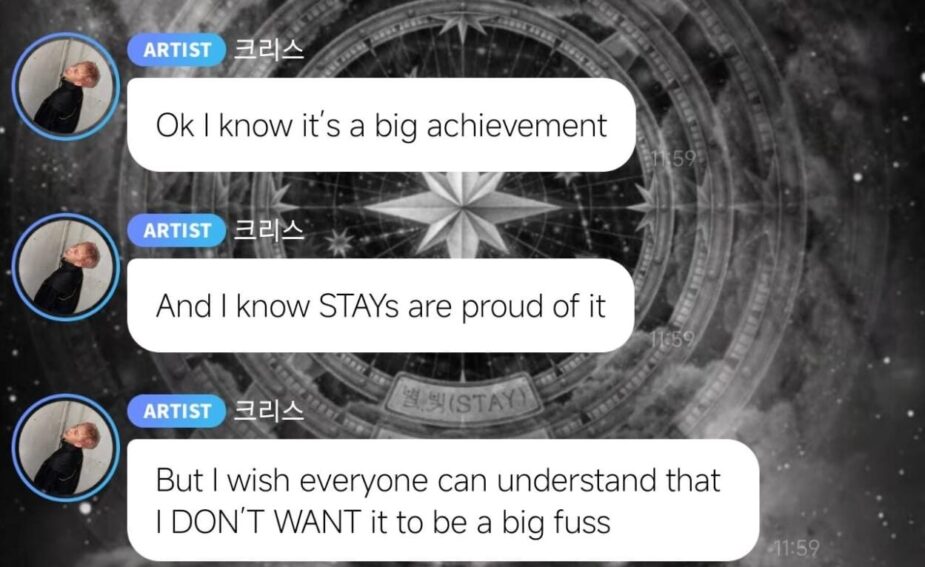
On September 8, 2026, Bang Chan addressed the growing discourse directly through a series of messages on a popular fan-to-artist communication platform. In a departure from the typical celebratory tone expected of such a milestone, the artist expressed a sense of humility that bordered on self-deprecation.
Bang Chan acknowledged that he was aware of the fans’ efforts to have his achievement recognized but requested that they not make a "big deal" out of the situation. Most notably, he shared candid thoughts regarding the nature of his credits. He stated that while he had participated in the creation of many songs, he felt a lack of "big hits" in his repertoire. He further suggested that he needed to work harder to produce better music, indicating that he did not feel the quantity of his work necessarily equated to the level of public impact he aspired to achieve.

These statements were intended to manage fan expectations and deflect the pressure of public accolades, but they instead became the catalyst for a broader debate regarding the definition of success in the modern music industry.
Public Reaction and the "Hit Song" Debate
The artist’s comments were quickly disseminated across social media, where they met with a bifurcated response.
Critical Perspectives and Online Backlash
On platforms such as X (formerly Twitter), some users and "anti-fans" interpreted Bang Chan’s humility as a form of "guilt-tripping" or "emotional manipulation." Critics argued that by expressing insecurity despite his massive success, the idol was inadvertently putting pressure on his fans to provide even more validation or to stream his music more aggressively to secure the "hits" he felt he lacked.

Some detractors took the opportunity to mock the group’s recent performance, specifically referencing their latest comeback, "This & That." Despite Stray Kids consistently topping the Billboard 200 and selling millions of physical albums, critics often point to their domestic digital chart performance in South Korea as a metric of "failure" compared to the viral longevity of certain girl group tracks. This discourse labeled the group’s output as "flopping" in the domestic market, a narrative that Bang Chan’s own comments appeared to unintentionally fuel.
Fan Support and Management Scrutiny
Conversely, the majority of the Stray Kids’ fandom reacted with concern for the artist’s mental well-being and frustration with JYP Entertainment. Many fans argued that Bang Chan’s lack of confidence was a symptom of a management style that fails to properly celebrate its artists’ individual merits.
Supporters pointed out that Stray Kids has achieved unprecedented global success, including multiple number-one albums on the Billboard 200, headlining major international festivals like Lollapalooza, and maintaining a massive touring footprint. They argued that the definition of a "hit" has shifted in the streaming era; while a song might not dominate the domestic Melon Top 10, global reach and high physical sales are equally valid indicators of a "hit." The sentiment among fans was that if the leader of one of the world’s biggest groups does not feel successful, there may be an internal disconnect between the artists and the corporate structure supporting them.
Data Analysis: The Reality of Stray Kids’ Success
To analyze the validity of the "no hits" claim, one must look at the data surrounding Stray Kids’ career up to late 2026.
- Global Charting: Stray Kids has consistently entered the Billboard Hot 100 with tracks like "LALALALA" and "Chk Chk Boom." In the context of K-pop, any entry into the Hot 100 is considered a significant "hit" due to the difficulty of penetrating the U.S. radio and streaming market.
- Physical Sales: The group’s albums, such as 5-STAR and ROCK-STAR, have recorded sales exceeding 5 million copies. In terms of revenue and industry health, these are massive successes.
- Digital Footprint: While domestic charting in South Korea remains a challenge for many boy groups compared to their female counterparts, Stray Kids’ Spotify numbers remain among the highest for K-pop acts, with several songs surpassing hundreds of millions of streams.
The perceived "lack of hits" mentioned by Bang Chan likely refers to the "National Hit" status—songs that are known by the general South Korean public regardless of fandom affiliation. This is a high bar that few groups, regardless of their international fame, achieve in the current fragmented media landscape.
Implications for the Industry and Self-Producing Idols
The situation involving Bang Chan highlights the unique pressures faced by self-producing idols. Unlike artists who simply perform songs provided by their labels, idols like Bang Chan bear the creative responsibility for their group’s direction. When a song is criticized or fails to meet certain chart expectations, the producer-idol often takes the critique personally.

This event also underscores the evolving relationship between K-pop agencies and their global fandoms. In 2026, fans are more literate in industry mechanics—tracking copyright credits, chart data, and marketing strategies. They expect a level of transparency and proactive promotion that often clashes with traditional corporate communication styles.
Furthermore, the "Bang Chan KOMCA record" serves as a case study in the psychological toll of the industry. The drive for "better" music and "bigger" hits, even when one is at the top of their field, suggests an environment of perpetual competition that can lead to burnout or diminished self-worth among even the most successful creators.
Conclusion and Future Outlook
As of the current reporting, JYP Entertainment has not issued a formal statement regarding the KOMCA record or the subsequent fan discourse. Stray Kids continues to promote their latest work, "This & That," which has shown strong international performance despite the online debates.
Bang Chan remains the most credited idol in the K-pop industry, a title that will likely remain his for the foreseeable future given his active role in the group’s upcoming projects. Whether this milestone will eventually be celebrated officially remains to be seen, but it has undeniably sparked a necessary conversation about the metrics of success, the burden of production, and the complex dynamics of idol-fan communication in the modern era. For now, the "most credited" title stands as a testament to a decade of labor, regardless of how the artist himself perceives the "hits" within that catalog.
Related News