BLACKPINK Lisa’s Documentary Scene Ignites Heated Debate Over Khmer Cultural Representation
Article Editorial Team

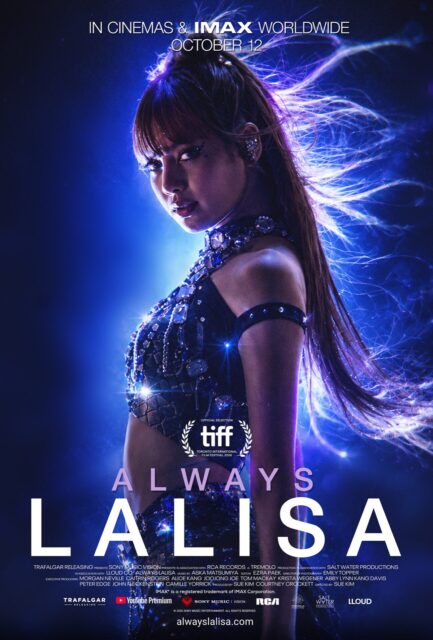
A scene from BLACKPINK member Lisa’s recently unveiled documentary has sparked significant controversy across social media platforms, drawing sharp criticism from a segment of fans and cultural advocates who accuse the global idol of performing traditional Khmer dance movements without proper attribution. The contentious clip, which surfaced as part of the documentary’s initial glimpses, has ignited a passionate discussion about cultural appreciation versus appropriation, the nuances of Southeast Asian dance traditions, and the responsibilities of international celebrities in representing diverse cultural heritages.
The controversy began to unfold in early September 2026, when previews and snippets from Lisa’s highly anticipated new documentary started circulating online. Among these, a particular sequence featuring Lisa engaging in a stylized dance performance quickly caught the attention of Cambodian netizens. Viewers identified specific gestures and postures reminiscent of classical Khmer dance, a sacred and historically significant art form in Cambodia. The core of the grievance centered on the perceived lack of explicit credit or acknowledgment of the dance’s Cambodian origins within the documentary’s context or accompanying promotional materials.
The Sacred Art of Khmer Traditional Dance
To fully grasp the depth of the current debate, it is essential to understand the profound cultural significance of Khmer traditional dance. In Cambodia, classical dance, particularly the Apsara dance, is not merely an art form but a living embodiment of the nation’s history, spirituality, and identity. Rooted in ancient Hindu and Buddhist mythologies, these dances were historically performed in royal courts and temples, serving as a conduit for spiritual devotion and historical narratives. The intricate hand gestures, graceful body movements, and elaborate costumes are codified elements passed down through generations, representing a continuous link to the Angkorian era.

The Royal Ballet of Cambodia, which preserves and performs these ancient dances, was inscribed on the UNESCO Representative List of the Intangible Cultural Heritage of Humanity in 2008. This international recognition underscores the fragility and preciousness of Khmer dance, making any perceived misrepresentation or uncredited use particularly sensitive. For many Cambodians, the dance is a source of immense national pride and a testament to their enduring cultural resilience, especially after the devastating impact of the Khmer Rouge regime which nearly eradicated many artists and cultural practices. Therefore, the issue of proper attribution is not merely academic; it is deeply tied to historical memory and national dignity.
Chronology of the Online Outcry
The digital storm gathered momentum swiftly. On September 12, 2026, a user identified as Janelle (@janelli_sm) on X (formerly Twitter) posted a direct comparison of Lisa’s documentary scene with authentic Khmer dance, explicitly stating, "For everyone wondering why Cambodians are upset: Lisa used traditional Khmer dance moves without giving proper credit. Khmer dance is a sacred part of our history and heritage, and culture should be respected and credited properly. #KhmerCulture #RespectKhmerCulture." This tweet quickly went viral, catalyzing a broader discussion.
The conversation rapidly spilled over onto TikTok, where content creators amplified the message. Users like @ismehengs uploaded videos detailing their frustration, emphasizing the need to "Appreciate the culture, but always respect and credit its origin." Another TikTok user, @jarahlvr1, posted a pointed message, "I wanna say ‘Famous around the world, but blind to history.’ 🇰🇭," reflecting a sentiment of perceived historical oversight. Similarly, @naii.zq used the platform to declare, "defend my country 🇰🇭🇰🇭 #lalisa #cambodia #fyp," showcasing the nationalistic undertones of the debate. On X, tweets directly accused Lisa of "copying" Cambodian culture, with users like Evanie (@WeiYingdhp) and Jkaajiang (@jkaajiang) posting screenshots and videos to support their claims, asserting the importance of not staying silent when their history is seemingly "rewritten."
Accusations and the Demand for Attribution

The primary accusation against Lisa and her documentary’s production team is the alleged appropriation of Khmer cultural elements without due credit. Critics argue that when a globally recognized figure like Lisa, who commands an immense international following, incorporates distinctive cultural movements, it carries a significant responsibility. The concern is that without clear acknowledgment, the dance form could be mistakenly attributed to another culture or simply seen as a generic performance, thereby diluting its true origins and historical context. This is particularly salient given Lisa’s Thai nationality, which introduces a layer of complexity due to the historical and cultural exchanges between Thailand and Cambodia, sometimes leading to disputes over the origins of shared cultural elements.
For many Cambodian advocates, the issue extends beyond simple appreciation. They contend that cultural exchange should be a two-way street, involving respect, research, and explicit recognition of source cultures. They believe that merely performing a dance, however beautifully, without proper context, risks reducing a profound cultural heritage to a mere aesthetic for entertainment, potentially erasing its lineage and the generations of artists who preserved it.
The Defense and Counter-Arguments
Amidst the growing wave of criticism, a counter-narrative emerged, defending Lisa’s actions and offering alternative interpretations of the dance scene. Some supporters argued that Lisa’s performance was an act of cultural appreciation, bringing global attention to a beautiful art form that might otherwise remain lesser-known to a wider audience. Evanie (@WeiYingdhp), who initially posted a critical tweet, later also shared a supportive message: "Thank you Lisa!! For supporting khmer dance khmer dance is really beautiful 🥰 #cambodia #khmerdance." This highlights the internal divisions even within the Cambodian community regarding how to interpret Lisa’s performance.
More robustly, a significant portion of Lisa’s fanbase and some cultural observers contended that the dance performed by Lisa was not, in fact, Khmer traditional dance, but rather a classical Thai dance form, specifically referencing the Srivijaya dance. The Srivijaya Empire, a thalassocratic Indonesian empire, exerted significant cultural and political influence across Southeast Asia, including parts of present-day Thailand and Cambodia, from the 7th to the 13th centuries. Thai classical dances, while sharing some aesthetic similarities with Khmer dances due to centuries of regional interaction and cultural exchange, have distinct characteristics and historical lineages.

TikTok user @aoppalalu, a prominent defender, accused critics of "gaslighting" and "distortion," stating, "They even claimed Lisa’s dance practice attire was a copy, and when she performed the Srivijaya dance, they somehow twisted it to link back to their Apsara." This user and others emphasized that the specific movements and attire in Lisa’s scene aligned more closely with Thai classical dance traditions, specifically mentioning the "Rabam Srivijaya" (Srivijaya Dance) as a possible source. They also alleged that some of the critical posts might be based on "AI clips" or manipulated content designed to discredit the idol, though concrete evidence for widespread AI manipulation was not widely presented.
Another TikTok user, @chanisofsiam, broadened the defense by highlighting the interconnectedness of Southeast Asian cultures: "There are still so many cultures in this world that you’ve never even seen or heard of… Just because your culture has survived doesn’t mean you’re always the original. The world is bigger than you think, so don’t assume your culture is the center of everything." This argument suggests a need for a more nuanced understanding of shared cultural heritage in the region, where artistic influences have historically flowed across borders.
Broader Implications for K-Pop and Global Cultural Representation
This incident is not an isolated one in the K-pop industry, which has faced increasing scrutiny over issues of cultural appropriation as it expands its global footprint. From hairstyles to musical elements and fashion, K-pop artists and their agencies are under constant pressure to navigate the complexities of cultural borrowing responsibly. The Lisa documentary controversy underscores the unique challenges when dealing with traditional art forms that carry deep historical and spiritual weight.
The lack of an immediate official statement from Lisa’s agency (whether YG Entertainment or her new independent venture, LLOUD, depending on the documentary’s production timeline) has also been noted by observers. In an era where swift and transparent communication is often expected from public figures, silence can sometimes exacerbate public discontent. An official clarification regarding the dance’s specific origin or an acknowledgment of the cultural sensitivity involved could potentially de-escalate the situation.
This debate also highlights the power of digital activism. Social media platforms like X and TikTok have become crucial arenas for cultural advocacy, enabling marginalized communities to voice their concerns directly to a global audience and hold powerful figures accountable. The collective action of Cambodian netizens demonstrates the growing expectation for global celebrities to engage with diverse cultures respectfully and with informed awareness.
Looking ahead, this controversy may influence how K-pop artists and their production teams approach cultural elements in future projects. It serves as a potent reminder of the importance of thorough cultural research, consultation with cultural experts from the source communities, and clear attribution when incorporating traditional art forms. For Lisa, a Thai idol with immense popularity in Southeast Asia, navigating such cultural sensitivities will be crucial for maintaining her broad appeal and fostering positive cross-cultural understanding. The incident, therefore, becomes a case study in the ongoing global dialogue about cultural heritage, artistic freedom, and the ethical responsibilities that come with international fame. The heated debate continues to underscore the delicate balance between celebrating global culture and respecting its intricate origins.
Related News