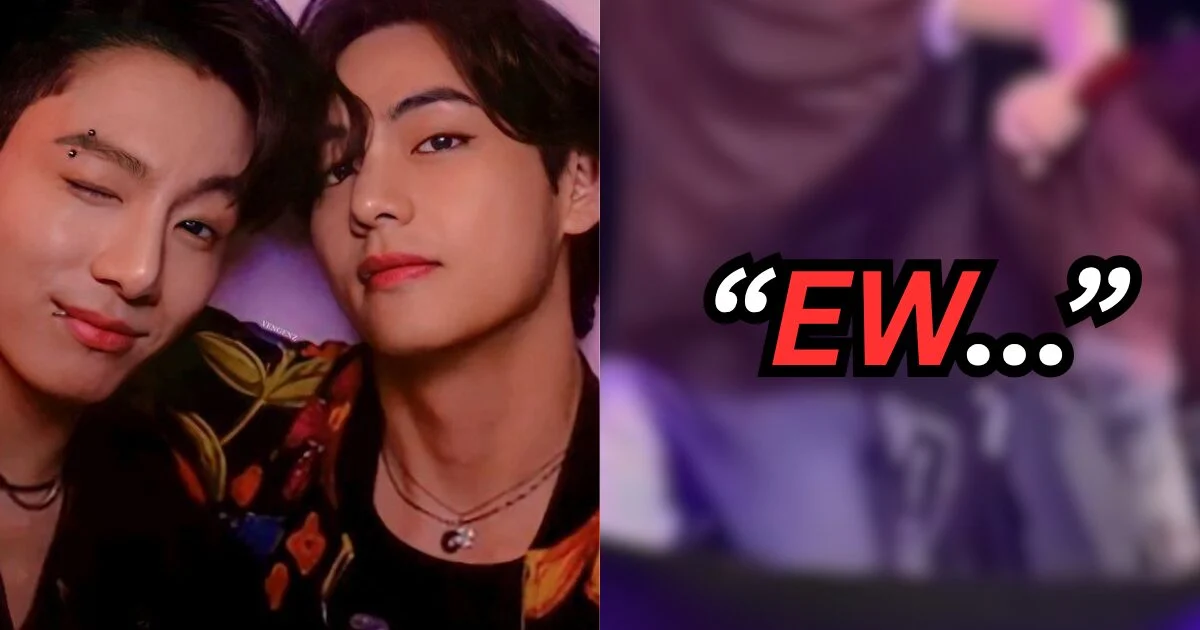
The global K-pop landscape has been set ablaze following a controversial "fan service" moment involving BTS members Jungkook and V during their highly publicized ARIRANG World Tour. While the group has long been celebrated for their close-knit brotherhood and playful stage presence, a recent impromptu interaction between the two youngest members has drawn sharp criticism from segments of the international community. The incident, which occurred during an unchoreographed segment of their live performance, has sparked a wider conversation regarding the boundaries of fan service, the ethics of "queerbaiting," and the evolving expectations placed upon veteran idols as they navigate the latter stages of their careers.
The Incident: A Break in Choreography
The controversy centers on a viral video clip captured during one of the group’s recent stops on the ARIRANG World Tour. During a transition between high-energy dance numbers, the members often engage in freestyle interactions with the audience and each other. In this specific instance, V (Kim Taehyung) approached Jungkook (Jeon Jungkook) in a manner that many spectators deemed provocative.
According to eyewitness accounts and high-definition fan-captured footage, V mimicked the action of mounting a horse behind Jungkook. To further the pantomime, V proceeded to gesture as if he were striking a whip. Jungkook, leaning into the improvisational moment, bent forward and began to gallop in place, simulating the movements of a horse. While the live audience’s immediate reaction was a mixture of cheers and laughter, the digital afterlife of the clip has been significantly more polarized.
As the footage migrated from the concert arena to social media platforms like X (formerly Twitter), TikTok, and Instagram, the narrative shifted. What was intended as a lighthearted, albeit risqué, moment of "skinship"—a common K-pop term for platonic physical affection—was quickly recontextualized by critics as an "unsavory" and "NSFW" (Not Safe For Work) display that crossed the line of professional decorum.
Chronology of the Controversy
To understand the weight of the current backlash, it is essential to look at the timeline of events leading up to and following the viral moment:
- August 12, 2026: BTS kicks off the ARIRANG World Tour, marking their continued dominance in the global music industry following their collective return from various solo endeavors and mandatory obligations.
- August 28, 2026: The specific concert where the "horse-riding" incident took place is held. Initial fan reactions on the ground are largely positive, with "Taekook" (a popular fan-given portmanteau for the duo) trending briefly.
- August 29, 2026: High-quality clips of the interaction begin to circulate outside the core fandom. Critics and social commentators begin to weigh in, accusing the members of "queerbaiting" to maintain engagement.
- August 30, 2026: The backlash reaches a fever pitch. International news outlets and K-pop dedicated forums pick up the story, highlighting the "NSFW" nature of the gestures.
- Present: The debate continues to evolve, intersecting with other recent criticisms faced by the group regarding lyrical content and cultural sensitivity.
Accusations of Queerbaiting and "Gay4Pay"
The most significant criticism leveled against Jungkook and V involves the concept of "queerbaiting." This term refers to a marketing technique where creators or performers hint at, but do not actually depict, same-sex romance or attraction to attract a queer audience or capitalize on "shipping" culture.
In the context of K-pop, "shipping"—the act of fans imagining romantic relationships between group members—is a pervasive and often encouraged part of the fan experience. However, as BTS has matured into a global phenomenon with a diverse, adult audience, the tolerance for these manufactured moments appears to be waning among certain demographics.
Social media users have been vocal about their displeasure. One critic on X noted, "Two straight men pushing 40 still queerbaiting like please aren’t y’all tired by now?" This sentiment reflects a growing exhaustion with what some perceive as a calculated business strategy rather than genuine friendship. Another user employed the term "gay4pay," a derogatory phrase suggesting that the performers are only engaging in homoerotic behavior for financial gain or to maintain their "it-boy" status in the industry.
The Age Factor and Changing Demographics
A recurring theme in the criticism is the age of the members. By 2026, the members of BTS are no longer the "boys" they were at their 2013 debut. Having spent over a decade in the spotlight, Jungkook and V are now seasoned veterans in their late 20s and early 30s.

Critics argue that the "fan service" tactics that worked during their rookie years—such as exaggerated physical affection or "aegyo" (acting cute)—now feel forced or "cringe-worthy" when performed by grown men. There is an increasing demand for "mature" artistry, where the performers’ off-stage and on-stage personas reflect their actual age and life experiences. The "horse and whip" routine, in this light, was seen by many as a regression into juvenile or overly sexualized tropes that do not align with the group’s current prestige.
Broader Implications for BTS and HYBE
This incident does not exist in a vacuum. BTS has recently faced a string of controversies that have tested the loyalty of their "ARMY" fanbase and the PR capabilities of their parent company, HYBE.
Just days prior to the "fan service" backlash, the group was under fire for a surprise song choice during the same tour. The track in question was accused of containing lyrics that were insensitive toward women, leading to a wave of accusations regarding misogyny and a lack of social awareness. When combined with the current "queerbaiting" allegations, a picture emerges of a group struggling to balance their traditional K-pop roots with the demands of a more socially conscious, globalized audience.
Industry analysts suggest that these controversies may signal a "tipping point" for how veteran K-pop groups manage their image. "As K-pop becomes a permanent fixture in the Western market, the old rules of idol-fan interaction are being rewritten," says music critic Lee Jung-ho. "What was once dismissed as ‘just a joke’ or ‘just for the fans’ is now being analyzed through the lens of gender politics, sexual identity, and professional ethics."
The Fanbase Response: A House Divided
As expected, the BTS ARMY is not a monolith in its response. A large portion of the fandom has rushed to the defense of Jungkook and V, arguing that the interaction was nothing more than two best friends having fun on stage. They contend that the "NSFW" labels are an exaggeration by "anti-fans" and that the members’ comfort with each other should be celebrated, not scrutinized.

"They have been like this for 13 years," one fan wrote in a viral post. "To call it queerbaiting now is to ignore their entire history of friendship. It was a silly moment during a three-hour concert. Why are we over-analyzing it?"
Conversely, a growing segment of "Solo" fans (those who support only one member) and "Mantantis" (fans who are critical of the group’s management) have used the incident to call for better creative direction. They argue that HYBE should protect the members’ dignity by discouraging "cheap" fan service and focusing on their musical and performance excellence.
Conclusion and Future Outlook
As of the time of reporting, neither HYBE nor the members themselves have issued an official statement regarding the "horse-riding" incident. Historically, the agency has opted for a "no comment" approach to minor stage controversies, allowing the news cycle to move forward. However, the cumulative effect of recent criticisms may eventually necessitate a shift in strategy.
The ARIRANG World Tour is scheduled to continue through the end of the year, with upcoming stops in Europe and North America. Whether Jungkook and V will adjust their stage interactions in response to the "queerbaiting" labels remains to be seen. What is clear, however, is that the era of unquestioned fan service is coming to an end. As BTS continues to break records and redefine what it means to be a global pop star, they must also navigate the increasingly complex expectations of an audience that demands both entertainment and authenticity.
The debate surrounding the "NSFW" fan service serves as a potent reminder that in the digital age, a five-second clip can overshadow a two-hour performance, and that for the world’s biggest group, every movement is subject to the scrutiny of millions. Whether this is a minor hurdle or a sign of a deeper brand identity crisis is a question that only time—and perhaps the group’s next artistic move—will answer.