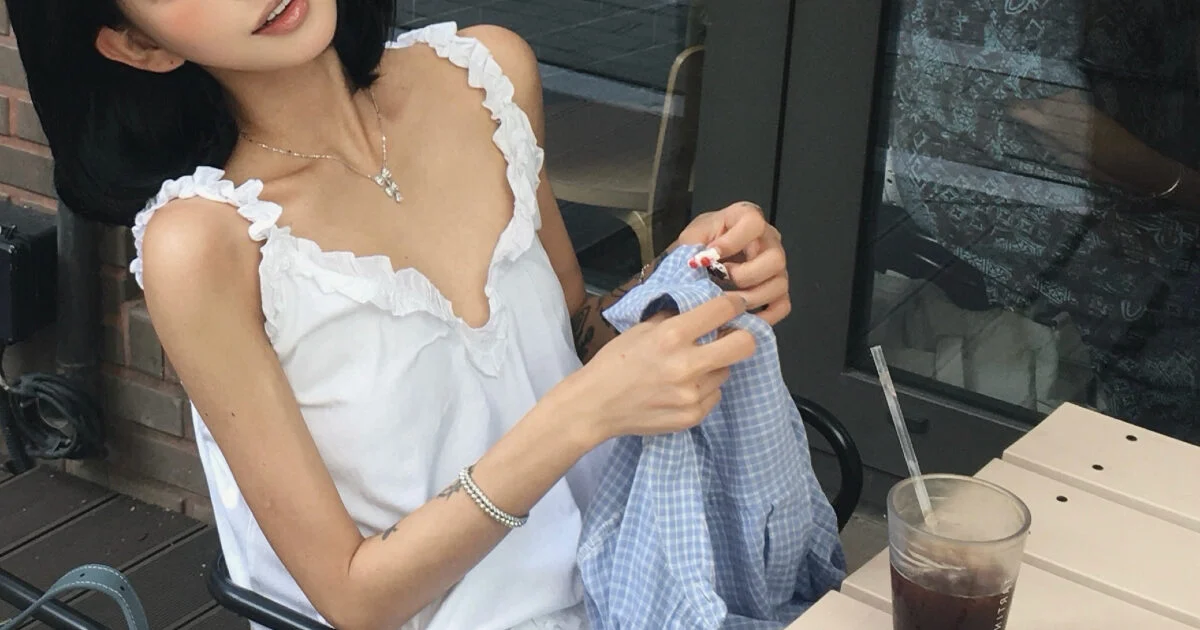
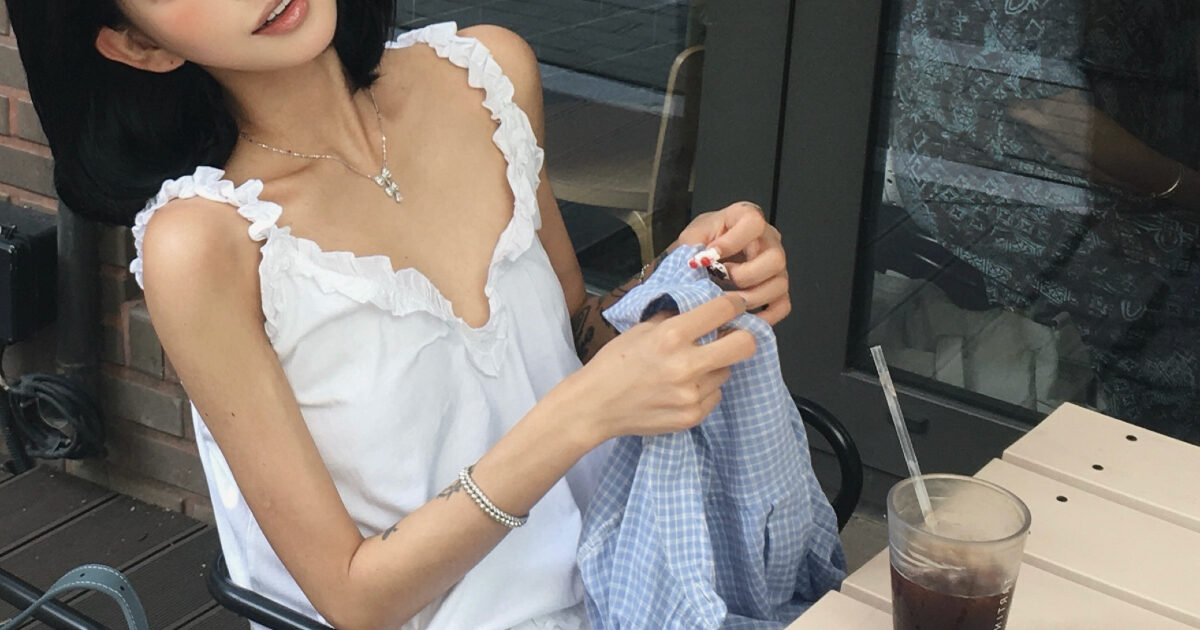
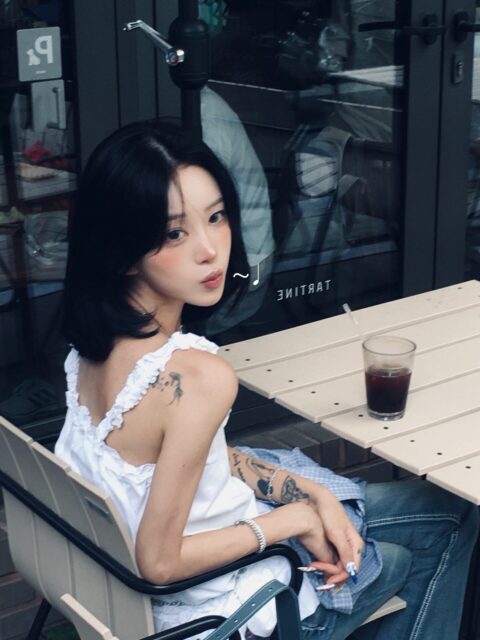
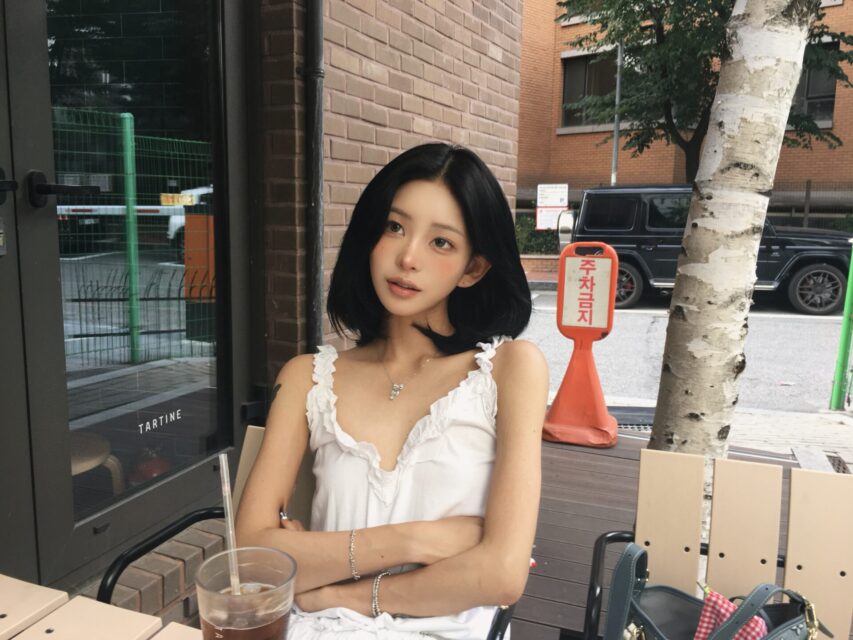
The prominent South Korean influencer and public figure Choi Jun Hee has once again captured public attention by providing a candid look into her recent cosmetic surgery procedures, specifically focusing on her recovery from an incision double eyelid surgery. On August 15, Choi utilized her social media platforms to share a series of photographs documenting her current appearance, accompanied by the minimalist caption, "It was summer." The images depict Choi in a white sleeveless top featuring intricate frill details on the shoulders and chest, a look that highlights her evolving aesthetic and her apparent comfort with her physical transformation. This update follows a more detailed video shared on August 14, titled "Day 3 after incision double eyelid surgery and honest thoughts on plastic surgery," in which she addressed her followers directly about the motivations behind her choices and the societal discourse surrounding cosmetic enhancements.
The Chronology of the Cosmetic Update and Immediate Recovery
The sequence of Choi’s updates began on August 14, when she released a video documenting the third day of her postoperative recovery. In this visual diary, Choi noted that the swelling associated with the incision double eyelid surgery—a procedure designed to create a permanent crease in the eyelid through surgical cutting—was significantly less pronounced than she had initially anticipated. By the following day, August 15, the influencer moved from the clinical documentation of her recovery to a more curated presentation of her appearance, signaling a rapid return to her active public life.
Choi expressed a high level of satisfaction with the initial results, noting that the public’s response to her transparency had been largely positive. "Many people view my double eyelid surgery positively, which makes me feel good," she stated during her video update. Her decision to share the recovery process in real-time reflects a broader trend among younger South Korean public figures who are increasingly eschewing the traditional secrecy surrounding cosmetic work in favor of a more authentic and "raw" relationship with their audience.
A Philosophy of Personal Agency and the "Artificial Queen" Narrative
One of the most striking aspects of Choi’s update was her unapologetic stance on cosmetic surgery. In a culture where the "natural beauty" ideal often clashes with the reality of high plastic surgery rates, Choi’s commentary offered a blunt subversion of traditional expectations. She acknowledged the existence of media scrutiny and malicious commentary but remained firm in her conviction to prioritize her own happiness.
"When it comes to plastic surgery, many articles come out, but as long as it’s not those malicious sarcastic articles like today’s, it’s okay," Choi remarked. She went on to deliver a statement that resonated deeply with her followers: "We only live once, and I want to live as the coolest version of Choi Jun Hee."
Furthermore, Choi addressed the inevitable comparisons to her late mother, the legendary actress Choi Jin Sil. She noted that while many people observe a physical resemblance between them, she views their beauty through different lenses. She described her mother as a "perfect beauty" and a "true woman," while self-identifying as a "crafted, artificial queen." This self-designation as an "artificial queen" is a significant rhetorical choice, suggesting that Choi finds empowerment in the ability to mold her own identity rather than being bound by genetic legacy or the pressure to replicate her mother’s iconic image.
Historical Context: The Legacy of the Choi Family
To understand the weight of Choi Jun Hee’s public statements, one must consider her background as the daughter of two of South Korea’s most famous individuals. Born in 2003, she is the daughter of the late Choi Jin Sil, often referred to as "The Nation’s Actress," and the late professional baseball player Choi Sung Min. The tragic history of her family has placed Choi Jun Hee and her brother, Choi Hwan Hee (now a musician known as Z.Flat), under an intense and often unforgiving public spotlight from a very young age.
Choi Jin Sil was a cultural icon in the 1990s and early 2000s, representing the pinnacle of the South Korean entertainment industry. Her death in 2008, followed by the deaths of her brother and her ex-husband, left a profound mark on the Korean public consciousness. Consequently, the public has watched Choi Jun Hee grow up with a mixture of sympathy, curiosity, and, at times, harsh judgment. Her journey through adolescence and into adulthood has been marked by a public battle with Lupus, which led to significant weight fluctuations, and her subsequent transformation through fitness and cosmetic procedures.
Supporting Data: The Landscape of Cosmetic Surgery in South Korea
Choi Jun Hee’s open discussion of her surgery occurs within the context of a nation often cited as the plastic surgery capital of the world. According to data from the International Society of Aesthetic Plastic Surgery (ISAPS), South Korea consistently ranks among the highest globally for the number of procedures performed per capita.
The "double eyelid surgery" (blepharoplasty) is one of the most common procedures in the country. Statistical trends suggest that the procedure is increasingly viewed not as a radical transformation, but as a standard grooming practice or a "rite of passage" for young adults. Choi alluded to this normalization in her video, questioning the persistence of negative sentiment: "These days, why would anyone leave hateful comments just because someone had plastic surgery? Everyone is doing it."
Industry analysts suggest that the shift toward transparency, as seen in Choi’s case, is driven by the rise of social media influencers. For influencers, "authenticity" is a form of social capital. By admitting to surgeries and sharing the "ugly" parts of recovery, they build a sense of trust and relatability with their audience that a facade of "natural perfection" can no longer provide.
Personal Milestones and Recent Developments
Beyond her aesthetic updates, Choi Jun Hee has been making headlines for her personal life and career as a digital creator. Recently, she shared news of a wedding-themed photo shoot and ceremony with her partner, who is 11 years her senior. While the ceremony was widely reported, Choi clarified that it was part of a long-term commitment and a celebration of their relationship rather than a traditional legal proceeding, reflecting the more fluid ways in which Gen Z public figures navigate partnership and public milestones.
Her transition into a full-time influencer has allowed her to reclaim her narrative. After losing approximately 44 kilograms (97 pounds) following her recovery from Lupus-related weight gain, she became a source of inspiration for many followers struggling with health and body image issues. Her current focus on cosmetic surgery is presented as the next chapter in her journey of self-actualization.
Public and Media Reaction: A Divided Reception
The reaction to Choi’s recent surgery has been a microcosm of the broader South Korean debate on beauty standards. On one hand, a large segment of the netizen community has praised her for her honesty and her "cool" attitude toward self-improvement. Supporters argue that as an adult, she has the autonomy to make decisions about her body and that her transparency helps demystify a process that many people undergo.
On the other hand, she remains a target for "malicious sarcastic articles," as she mentioned in her video. Critics often point to her young age and the perceived obsession with physical appearance as a negative influence on her younger followers. Some observers also express concern that the pressure to live up to her mother’s legacy continues to manifest in a drive for physical "perfection," even if that perfection is admittedly "artificial."

Analysis of Implications: The "Crafted" Identity
Choi Jun Hee’s embrace of the "crafted" aesthetic signals a significant cultural pivot. In previous decades, the goal of plastic surgery was often to achieve a look that appeared "natural" or "un-operated." However, the "artificial queen" aesthetic leans into the visible signs of cosmetic enhancement as a badge of status, agency, and modernity.
This shift has broader implications for the South Korean entertainment and influencer industries. It suggests that the "Nation’s Daughter" archetype—characterized by innocence and natural grace—is being replaced by a more complex, self-aware, and self-constructed persona. For Choi, who has spent her life being defined by her family’s tragedy and her mother’s fame, the act of surgically altering her face and publicly owning that choice may be a radical act of self-definition.
Conclusion: Living as the "Coolest Version"
As Choi Jun Hee continues to recover and share her life with her audience, she remains a polarizing but undeniably influential figure. Her commitment to living as the "coolest version" of herself suggests a move away from seeking public approval and toward a more internal metric of satisfaction. By documenting her journey—from the struggles of chronic illness to the choices of elective surgery—she provides a candid look at the pressures and possibilities facing a young woman in the digital age.
The influencer’s story is not merely one of cosmetic surgery; it is a narrative of resilience and the ongoing construction of an identity in the wake of immense public and personal history. As she continues her work as an influencer and engages with her fan base, the public will likely continue to watch her evolution with a mixture of fascination and scrutiny, reflecting the complex relationship between South Korean society and its most visible citizens.