Coachella 2026 Headliners Dominate Billboard Charts Following Festival Performances
Article Editorial Team
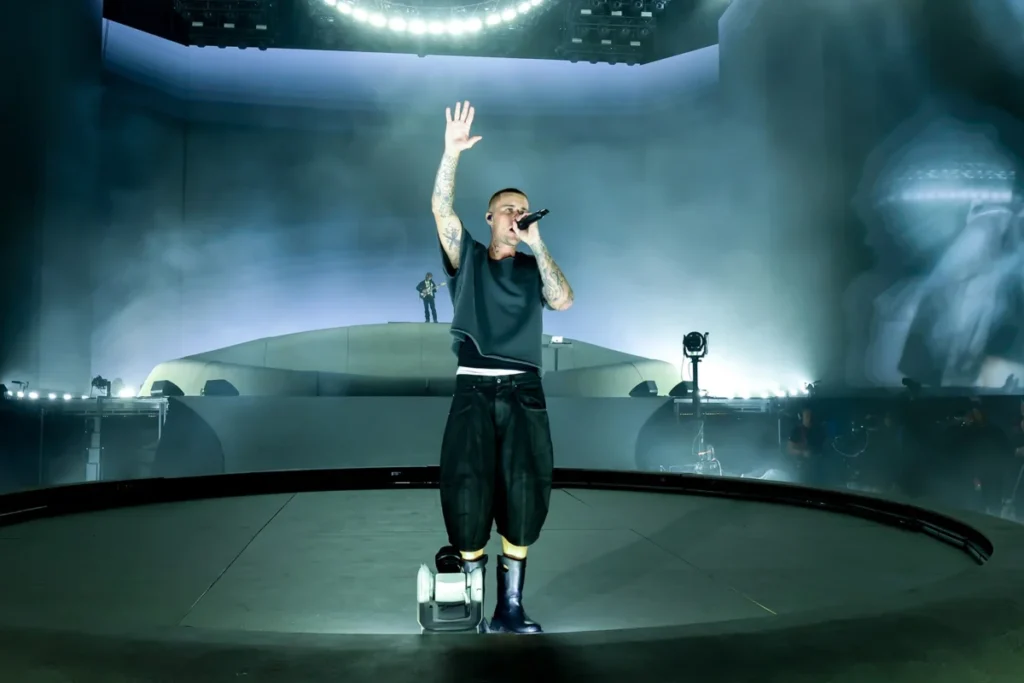
The aftermath of the highly anticipated Coachella Valley Music and Arts Festival in 2026 has sent reverberations through the music industry, with its three headliners – Sabrina Carpenter, Justin Bieber, and Karol G – collectively dominating the latest Billboard 200 albums chart. The April 25th dated chart, which reflects consumption data for the week ending April 16th, showcases a significant surge in album units for these artists, a direct consequence of their electrifying performances on the festival’s opening weekend (April 10-12). This surge not only highlights the immense draw of the festival but also underscores the enduring popularity and commercial power of these global superstars.
A Chart Takeover Fueled by Festival Stardom
Justin Bieber emerges as a dominant force on the Billboard 200, achieving a career-high of seven albums simultaneously charting. This impressive feat includes five re-entries and one debut, with his album "SWAG" making a strong top 10 return. All seven of Bieber’s charted albums experienced individual gains of at least 100% in equivalent album units compared to the preceding week, a testament to the powerful promotional impact of his Coachella performance. Sabrina Carpenter also sees considerable success, with two of her albums appearing on the chart, one of which secured a top 10 position. Karol G, the third headliner, marks her re-entry onto the list with her album "Tropicoqueta."
The Coachella Valley Music and Arts Festival, renowned for its eclectic lineups and its status as a cultural touchstone, once again proved its ability to amplify artists’ commercial reach. The festival, held in Indio, California, attracts hundreds of thousands of attendees and generates widespread global attention through its carefully curated performances and high-profile guest appearances. This year, the headlining slots were strategically assigned to artists who represent diverse genres and fan bases, ensuring a broad appeal and maximum impact on music consumption trends.
Justin Bieber’s Chart Dominance: A Deep Dive
Justin Bieber’s resurgence on the Billboard 200 is particularly noteworthy. His album "SWAG" has climbed to number 7, accumulating 43,000 equivalent album units during the tracking week. This represents a remarkable 160% increase from the previous week. The primary driver behind this surge appears to be streaming activity. "SWAG"’s tracks generated 42,000 streaming equivalent album (SEA) units, an increase of 158%, translating to over 41.48 million on-demand official streams. This figure encompasses streams from both the original "SWAG" release and its deluxe "SWAG II" reissue, which featured additional tracks. The aggregation of all album versions for charting purposes is a standard practice by Luminate, the chart’s data provider.
Beyond "SWAG," five other Bieber albums have re-entered the Billboard 200, showcasing the breadth of his discography’s appeal. "Purpose" re-entered at number 32 with 22,000 units (a 173% increase), "Believe" at number 34 with 21,000 units (up 241%), "My World 2.0" at number 38 with 20,000 units (up 268%), "Justice" at number 110 with 13,000 units (up 100%), and "My World" at number 147 with 12,000 units (an astonishing 563% increase).
A significant debut on the chart is Bieber’s 2013 album "Journals," which enters at number 111 with nearly 13,000 units earned, marking a 192% increase. This re-entry is particularly interesting due to the album’s complex release history. "Journals" was initially released exclusively for purchase on the iTunes Store on December 23, 2013. At that time, sales from the iTunes Store were not reported to Luminate (then known as Nielsen SoundScan), preventing the album from debuting on the Billboard 200. The album later became available on all digital download and streaming services, as well as on physical formats like CD and vinyl. This week, however, marks the first instance where "Journals" has garnered sufficient activity within a single tracking period to qualify for charting on the Billboard 200.
The presence of seven Bieber albums on the Billboard 200 simultaneously sets a new personal record for the artist. Previously, his highest concurrent charting entries stood at four, a feat he last achieved in January 2012. This resurgence highlights the sustained engagement of his fanbase and the power of a major live performance to reignite interest in his entire catalog.
Sabrina Carpenter and Karol G: Chart Impact and Genre Representation
Sabrina Carpenter’s performance also had a significant impact on the Billboard 200. Her former number one album, "Man’s Best Friend," has re-entered the top 10, climbing to number 10 with 40,000 equivalent album units, a 44% increase. Similar to Bieber’s success, Carpenter’s album saw its gains primarily driven by streaming. "Man’s Best Friend" earned 34,000 SEA units, a 60% jump, equating to 34.39 million on-demand official streams of its songs. Her previous album, "Short n’ Sweet," also experienced a notable boost, jumping to number 17 with nearly 31,000 units, an increase of 23%.
Karol G, a formidable force in the Latin music scene, also benefited from her Coachella appearance. Her album "Tropicoqueta" re-entered the Billboard 200 at number 116, with nearly 13,000 units earned, representing a 51% increase. Her inclusion as a headliner alongside Bieber and Carpenter underscores the festival’s commitment to showcasing diverse musical talents and its role in bridging genre divides and reaching wider audiences.
The Coachella Effect: A Proven Formula for Chart Success
The Coachella Valley Music and Arts Festival has a well-documented history of boosting the chart performance of its performing artists. The festival’s strategic placement of headliners and its extensive media coverage, including live YouTube streams, create a potent environment for increased music consumption. The artists’ headlining sets on April 10th, 11th, and 12th were not only experienced live by tens of thousands but were also accessible to millions globally through streaming platforms. The fact that these artists repeated their headlining performances the following weekend (April 17th, 18th, and 19th) suggests that the chart gains seen on the April 25th dated list are likely to be sustained, or even amplified, on the subsequent week’s charts, dated May 1st.
The Billboard 200 chart itself is a comprehensive measure of album popularity in the United States, calculated by Luminate. It employs a multi-metric consumption model that includes album sales, track equivalent albums (TEA), and streaming equivalent albums (SEA). One equivalent album unit is equivalent to one album sale, 10 individual tracks sold from an album, or 2,500 ad-supported or 1,000 paid/subscription on-demand official audio and video streams generated from an album’s songs. The data for the April 25, 2026-dated chart was compiled by Luminate and was officially posted on Billboard’s website on April 21st.
Broader Implications and Industry Analysis
The sustained success of "Journals" on the Billboard 200 is a compelling case study in the evolving landscape of music consumption and chart eligibility. The album’s journey from an exclusive digital release with limited reporting to widespread availability and eventual chart success highlights the impact of digital distribution and the evolving methodologies of chart compilers. It also speaks to the enduring appeal of artists who cultivate a dedicated fanbase that actively seeks out their entire discography, regardless of release date or format.
The collective chart dominance of Bieber, Carpenter, and Karol G serves as a powerful indicator of current music trends and the significant influence of major music festivals. It demonstrates the effectiveness of live performances as a catalyst for album sales and streaming, especially for artists with established catalogs. Furthermore, the presence of artists from different genres and backgrounds on the headlining stage and subsequently on the charts reinforces the festival’s role in promoting musical diversity and cultural exchange. The "Coachella effect" continues to be a significant factor in the music industry, demonstrating the festival’s unparalleled ability to translate live performance into tangible commercial success. As the music industry continues to adapt to new technologies and consumption habits, events like Coachella remain crucial platforms for artists to connect with their audiences and solidify their presence on the global music stage.
Related News