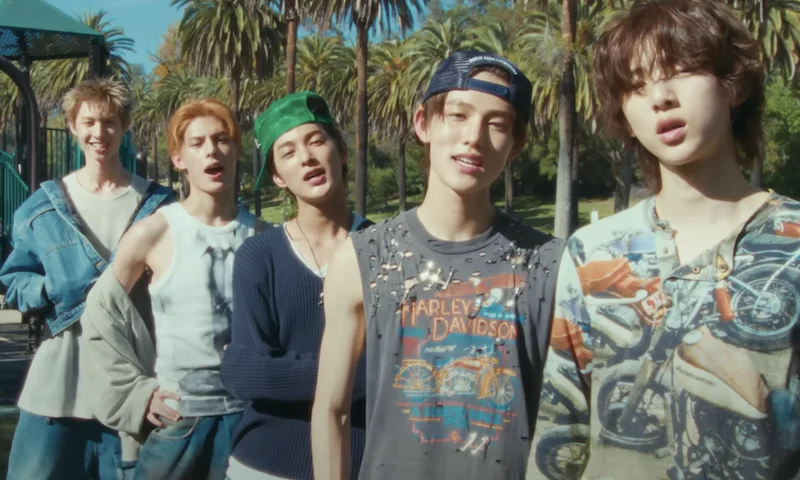
BigHit Music’s latest boy group, Cortis, has officially entered the K-pop arena with a bold declaration of intent. The group’s name, an acronym for "Color Outside the Lines," encapsulates their ambitious goal to introduce novel concepts and sounds to the highly competitive South Korean music industry. Marketed as a "creator crew," Cortis arrives with a pre-debut track record that immediately sets them apart, showcasing a remarkable depth of involvement in the creative process behind some of the genre’s most prominent acts. Leader Martin, a key architect of their sonic identity, has already contributed significantly to the discographies of established groups. His compositional credits include TXT’s "Deja Vu," a track that resonated widely with fans for its intricate melody and evocative lyrics. Furthermore, Martin was instrumental in crafting Illit’s breakout hit "Magnetic," a song that garnered international attention for its catchy hook and refreshing soundscape. He also lent his talents to Enhypen’s "Outside," further solidifying his reputation as a versatile and talented producer. Beyond songwriting, member James has also made a significant mark, notably co-choreographing the impactful "Deja Vu" for TXT and contributing to a number of Illit’s singles. This early demonstration of their multifaceted talents in songwriting, choreography, and even videography has fueled considerable anticipation for Cortis’s official debut.
The Genesis of Cortis: A Strategic Move by BigHit Music
The formation of Cortis represents a strategic expansion for BigHit Music, a label renowned for nurturing artists with strong creative identities. While specific details regarding the group’s formation timeline remain proprietary, industry insiders suggest that the concept of a "creator crew" has been in development for several years. This approach allows for greater artistic autonomy and a more organic development of the group’s unique sound and visual identity. The selection process for Cortis likely emphasized not only raw talent but also a predisposition towards collaboration and self-expression. The decision to debut a group with such a strong emphasis on self-production aligns with a broader industry trend, where artists are increasingly expected to contribute to their own creative output. This not only fosters a deeper connection with their music but also provides fans with a more authentic and multifaceted portrayal of the artists.
Early Creative Footprints: Laying the Groundwork for Success
The established creative achievements of Martin and James prior to Cortis’s official debut serve as compelling evidence of their potential. Martin’s involvement in TXT’s "Deja Vu" highlights his ability to contribute to the nuanced emotional landscape of a song, while his work on Illit’s "Magnetic" demonstrates a knack for creating infectious, chart-topping melodies. These achievements are not mere footnotes but foundational elements that inform the expectations surrounding Cortis. The success of these tracks, which have collectively garnered millions of streams and positive critical reception, underscores the caliber of talent that BigHit Music has cultivated. The strategic decision to leverage these pre-debut successes in marketing Cortis as a "creator crew" effectively communicates the group’s inherent capabilities and artistic vision to a global audience.
Debut Rollout: A Multifaceted Exploration of Sound and Vision
Cortis’s debut has been meticulously crafted to showcase their diverse creative capabilities, featuring a comprehensive rollout of music videos and conceptual performance films. The group’s singles, "Go!" and "Fashion," immediately signal an intention to push sonic boundaries within the K-pop landscape. These tracks draw heavily from trap subgenres, a departure from the more conventional sounds often associated with idol music. While these explorations introduce novel elements to K-pop, the influences are discernible to seasoned listeners of hip-hop and electronic music. Tracks like "Go!" echo the stylistic choices of contemporary artists such as Travis Scott and Playboi Carti, characterized by aggressive beats, autotune vocal effects, and repetitive, anthemic choruses. This deliberate incorporation of popular contemporary sounds suggests a strategic effort to appeal to a broad audience while still maintaining a distinct edge.
The lead single, "What You Want," offers a contrasting yet equally deliberate sonic palette. It harks back to the early 2000s, weaving in elements of pop-punk, Britpop, and grunge. Lyrical references to iconic bands like Nirvana further emphasize this retro influence, creating a nostalgic yet fresh listening experience. This eclectic approach to genre fusion demonstrates Cortis’s willingness to experiment and draw inspiration from a wide spectrum of musical history.

Navigating Influences: The Quest for a Distinct Identity
As a group of young artists still in the nascent stages of their careers, Cortis’s tendency to emulate artists they admire is a natural progression. BigHit Music’s extensive network and resources have facilitated collaborations with influential figures in the music scene, including sessions with artists like Teezo Touchdown, AG Club, and Cochise. These experiences undoubtedly contribute to the members’ musical development and exposure to diverse creative processes. However, the critical question remains: when will Cortis forge a truly distinctive musical identity that transcends emulation? Industry analysts suggest that this evolution often occurs with maturity and accumulated experience. The current phase of Cortis’s career appears to be one of exploration and absorption, laying the groundwork for a more defined artistic voice in the future.
Vocal Presentation: Balancing Innovation with Clarity
A point of constructive criticism emerging from Cortis’s debut material centers on the extensive use of vocal effects. While these effects contribute to the sonic texture and thematic consistency of certain tracks, they also tend to obscure the individual vocal colors of the members. In the crucial debut phase, where establishing a connection with fans and showcasing individual talents is paramount, this sonic masking presents a challenge. Fans and critics alike are eager to discern the unique vocal qualities of each member, a fundamental aspect of an idol group’s appeal. The balance between innovative production and the clear presentation of individual vocal talent will be a key area to watch as Cortis progresses.
The "Creator Crew" Advantage: Passion and Palpable Energy
Despite the nuances in their sonic approach, Cortis manages to imbue their debut with a palpable sense of freshness, largely attributable to the infectious energy they bring to their work. This energy is most vividly expressed through their music videos and live performances. The advantage of a self-producing group, as Cortis exemplifies, lies not solely in the perceived superiority of their music but in the undeniable passion that radiates from their artistic direction. This dedication to their creative vision is evident in every aspect of their rollout, making them a compelling and engaging group to follow.
Visual Storytelling: Music Videos as Artistic Statements
Cortis’s commitment to their "creator crew" ethos is further underscored by their co-direction and co-choreography of multiple music videos for each single. This dual-release strategy, featuring an official MV and a conceptual performance film, allows for a comprehensive exploration of their artistic vision.
The official MV for "Go!" adopts a deliberately unpolished, "homemade" aesthetic, evoking the playful exuberance of friends creating content together. Handheld camera work and low angles contribute to an informal, candid feel. The members are portrayed as uninhibited and lighthearted, with visual gags like warped faces in a 360-degree camera shot and humorous zooms on leader Martin’s image during specific lyrical cues, such as "Martin! Play that beat!" This approach successfully conveys a sense of spontaneity and youthful camaraderie.
In contrast, the MV for "What You Want" begins with a similar high-energy, somewhat chaotic tone. The narrative unfolds after an inciting incident where members James and Seonghyeon engage in playful roughhousing following a car breakdown in a desert setting. The video then transitions into a more surreal and dreamlike narrative. Member Keonho is presented with a symbolic choice between swallowing a "1" or "8" billiard ball. The visual journey escalates into increasingly bizarre and nightmarish scenarios, including Juhoon being stung by a scorpion and Seonghyeon being enveloped by a giant animated butterfly. The MV concludes with Keonho awakening on a subway platform, once again confronted with the symbolic choice. This narrative structure, replete with dream states and recurring motifs, effectively mirrors the confusion and introspection associated with self-discovery and defining personal desires. However, the MV skillfully avoids succumbing to angst, instead juxtaposing humorous and surreal imagery with the anthemic chants and ad-libs of the song.

The MV for "Fashion" is a testament to Cortis’s ability to visually translate the sonic energy of their tracks. Its hard synth beats and propulsive rhythm are mirrored by a slick, professional visual presentation. Utilizing CGI animation, slow-motion sequences, and sophisticated color grading, the video exudes a high-budget appeal. The song’s lyrical content, which playfully boasts about acquiring fashionable attire from affordable markets, is juxtaposed with visually stunning scenes of the members atop a snowy mountain in New Zealand. This seemingly contradictory element effectively amplifies the song’s message of possessing an invaluable vision, regardless of material circumstances. The "Fashion" MV also serves as a poignant metaphor for Cortis’s current position as a new group from a major company. Despite their humble beginnings as trainees, they are now equipped with significant resources, including opportunities for international songwriting camps in Los Angeles and substantial promotional investments, enabling them to pursue ambitious artistic endeavors.
Performance Films: Showcasing Choreographic Prowess
While the official music videos offer diverse narrative and visual explorations, the conceptual performance films arguably provide the most compelling displays of Cortis’s raw talent. The one-take performance film for "Go!" captures the members executing their choreography amidst urban streetscapes. The unconventional "killing point" choreography, characterized by angular movements that punctuate each repetition of the word "Go!", has garnered significant attention and gone viral. As a collective, their synchronization is remarkably precise, and their movements are sharp and impactful. The visual direction of the film incorporates clever blocking and spatial awareness, exemplified by a scene where James observes his reflection in a full-length mirror held by moving individuals, and Martin emerges from beneath an outdoor cafe table as they depart.
The performance film for "What You Want" is equally visually striking, presented as a single, continuous shot. The members, clad in pastel outfits, are set against a backdrop of a clear blue sky and a white sand desert. Some sequences feature choreography performed atop small treadmills, yet the members masterfully integrate these machines into their movements, fluidly hopping on and off them as if to break free from the monotony of everyday life. This visual metaphor effectively underscores the song’s underlying themes.
Implications and Future Trajectory
Cortis’s debut rollout strategy, with its diverse range of visual content, effectively validates their "creator crew" designation. Their proficiency in songwriting, performance, choreography, and music video production is infused with a youthful exuberance rooted in a genuine love for music. This passion translates into a confident stage presence and an engaging viewing experience for the audience. The raw, vibrant energy that defines their debut sets a high bar, fueling expectations that Cortis possesses the potential to evolve into a truly exceptional force within the K-pop industry. Their initial success suggests that BigHit Music’s investment in cultivating artists with strong creative agency is a sound strategy, potentially paving the way for future groups to embrace similar self-expressive approaches. The industry will be closely observing how Cortis navigates the challenges of maintaining their unique creative identity while adapting to the evolving demands of the global music market. Their journey from "creator crew" to established artists will undoubtedly be a significant narrative to follow in the coming years.