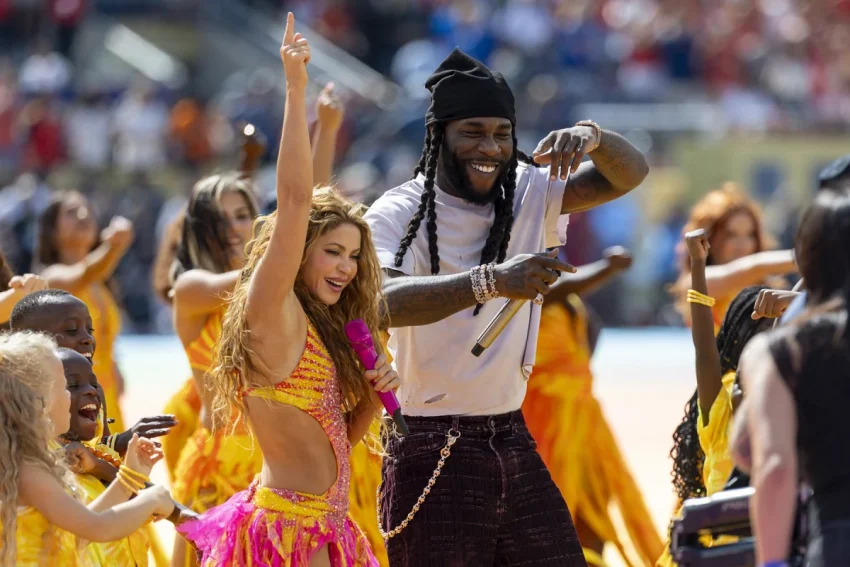
The echoes of the World Cup final are still reverberating through the music industry, with Shakira and Burna Boy’s anthem "Dai Dai" experiencing a significant surge in streaming numbers, even after the tournament’s conclusion. The track, which served as the official theme song for the global sporting event, recorded its highest single-day streaming volume on Monday, July 20th, demonstrating the enduring power of a well-placed halftime performance and the lingering cultural impact of the World Cup.
The song garnered nearly 2.2 million official on-demand U.S. streams on Monday, a notable increase from the 1.4 million streams it achieved the day before the final match. This represents an 84% jump compared to the streams logged on the day of the opening ceremonies in June, where Shakira and Burna Boy first debuted the track. These figures, provided by Luminate, underscore the song’s sustained popularity and its ability to capture new listeners even after the tournament’s competitive climax. The World Cup, which ran through June and July, culminated in a dramatic final on Sunday, July 19th, at MetLife Stadium in New Jersey, where Spain emerged victorious over Argentina with a 1-0 scoreline.
The halftime show itself, a first for the World Cup, appears to have been a pivotal moment for "Dai Dai." While the specific audience numbers for the halftime show were not immediately available, the subsequent streaming surge suggests a substantial viewership that translated into renewed interest in the song. This phenomenon highlights the evolving role of live performances in driving music consumption, particularly in the digital age.
Beyond the headline act, other artists who performed during the halftime festivities also saw significant streaming gains. Justin Bieber’s "Everything Hallelujah" experienced a remarkable 161% increase, reaching 268,000 streams on the day following the performance, a substantial leap from its pre-Cup figures. Similarly, BTS’s global hit "Dynamite" saw a 74% rise, accumulating 312,000 streams. These increases illustrate the widespread impact of high-profile events on song visibility and listener engagement across diverse artists and genres.
However, "Dai Dai" stands out as a major musical beneficiary of the tournament. The song has not only dominated streaming platforms but has also climbed the ranks on major music charts. It has entered the top 20 on both Spotify’s and Apple Music’s real-time charts, indicating its widespread adoption by music consumers globally. Furthermore, "Dai Dai" reached a new peak of No. 42 on the Billboard Hot 100 chart for the week dated July 18th. While it narrowly missed the top 40, the strong post-tournament streaming numbers suggest a high probability of it breaking into the top tier in the upcoming chart week. The tracking week for the Billboard charts typically begins on Fridays, meaning the final days of the tournament fell within the current tracking period, while the immediate aftermath will heavily influence the next. The continued momentum points towards "Dai Dai" solidifying its status as a lasting hit.
The World Cup’s influence on music trends has been a recurring theme. Notably, Oasis’s "Wonderwall" experienced a significant resurgence, propelled by its adoption as an unofficial anthem by the English team. This led to a No. 27 re-entry on the Billboard Hot 100, showcasing how sports fandom can directly translate into music chart success. The phenomenon of sports teams adopting songs as their rallying cries is a well-established trend, but the scale of "Wonderwall’s" resurgence, amplified by streaming data, underscores the interconnectedness of culture and commerce in the modern music landscape.
The trajectory of "Dai Dai" following the World Cup final is a testament to its broad appeal and the strategic placement of its performance. The song’s blend of Latin rhythms and Afrobeats influences, delivered by two globally recognized artists, created a potent combination that resonated with a diverse audience. The World Cup, with its massive global viewership, provided an unparalleled platform for such a track to achieve widespread recognition and sustained popularity. As the dust settles on the tournament, the musical legacy of "Dai Dai" is clearly still being written, with potential for further chart achievements and continued streaming success.
The Beatles’ "Hey Jude" Sees a Resurgence Driven by Football Fandom
In a remarkable demonstration of how sports can ignite musical interest across generations, The Beatles’ timeless classic "Hey Jude" has experienced a significant uplift in streaming numbers, thanks to its adoption by fans of the English football team and, specifically, midfielder Jude Bellingham. The 1968 hit, which previously topped the Billboard Hot 100, has found new life as a stadium singalong and a symbol of national pride during the recent World Cup.
While the English team ultimately fell short of lifting the World Cup trophy, their third-place finish, spearheaded by standout performances from young stars like Jude Bellingham, created a wave of national enthusiasm. Bellingham, who tied for the third-highest goal tally in the tournament with seven goals, became a focal point of fan admiration. His performances were often met with fervent support, including in-stadium renditions of "Hey Jude," a clear nod to his name. Videos of Bellingham’s emotional reactions to these serenades have circulated widely online, garnering millions of views and further amplifying the song’s connection to the tournament’s narrative.
This fan-driven phenomenon translated directly into increased streaming activity for The Beatles’ iconic track. During the final full week of the World Cup, "Hey Jude" saw a substantial surge in listenership. According to Luminate, the song accumulated just under 1.5 million official on-demand U.S. streams for the week ending July 9th. In the subsequent week, streams grew by an impressive 53%, reaching 2.3 million. This surge made "Hey Jude" the second most-played song by The Beatles in the U.S. for that week, trailing only the perennial favorite "Here Comes the Sun." This resurgence highlights the enduring power of classic hits and their ability to connect with new audiences through cultural moments.
The English team’s journey through the tournament, though ending in a semifinal loss to their eventual conquerors, was marked by a strong performance and a palpable sense of hope. Their third-place playoff match against France, a thrilling 6-4 victory on Saturday, July 15th, provided a moment of redemption. However, the semifinal defeat on Wednesday, July 15th, marked a significant turning point. Despite the disappointment, the team’s overall performance, and Bellingham’s individual brilliance, captured the nation’s attention and fostered a shared sense of camaraderie.
The adoption of "Hey Jude" as an unofficial anthem for Jude Bellingham is particularly noteworthy. The song’s anthemic chorus and universally recognized singalong outro have made it a natural fit for stadium chants. The emotional weight of the song, coupled with the passion of football supporters, created a powerful synergy. The visual documentation of fans singing the song and Bellingham’s heartfelt responses served as potent social media content, further disseminating the trend and encouraging more listeners to engage with the track.
This trend is reminiscent of other instances where sporting events have revitalized interest in specific songs. The earlier mention of Oasis’s "Wonderwall" demonstrates a similar pattern, where team affiliation and a catchy, singable melody can lead to a significant uptick in music consumption. The case of "Hey Jude" further emphasizes the cyclical nature of music popularity, where older tracks can be recontextualized and reintroduced to contemporary audiences through unexpected cultural touchpoints. The Beatles, a band whose music has transcended decades, continue to prove their enduring relevance, with "Hey Jude" now adding another chapter to its storied legacy, this time intertwined with the passion of global football.

Lil Baby’s "Dead Fresh" Signals a Resurgence with Pharrell’s Production
Atlanta rap superstar Lil Baby appears to be back on a commercial trajectory with the release of his new single, "Dead Fresh." The track, produced by the legendary Pharrell Williams, marks a significant moment for the artist, whose previous LPs, while commercially successful, saw diminishing returns compared to the breakout impact of his 2020 album My Turn. "Dead Fresh" not only signifies a potential return to solo chart dominance for Lil Baby but also highlights a potent artistic collaboration.
The single premiered on June 23rd during the Louis Vuitton menswear spring/summer 2027 show in Paris, an event hosted by Williams himself. This collaboration marks the first official pairing between Pharrell Williams, a multi-faceted artist known for his innovative production and songwriting, and Lil Baby, a dominant force in contemporary hip-hop. The immediate positive reception to the song snippet was so strong that an unofficial version, mistakenly credited to a non-existent artist named Mtiles and titled "Fresh Baby," rapidly ascended to the top of the U.S. Shazam Charts. This rapid virality even before the official release underscored the anticipation surrounding the track and its producers.
"Dead Fresh" was accompanied by a visually striking music video directed by Kid Art, which leans into themes of luxury, sport, and high fashion. The video prominently features golf, high-end sports cars, and contemporary fashion, aligning with the affluent lifestyle often associated with successful artists and the artistic sensibilities of both Lil Baby and Pharrell. This integrated approach to music and visual storytelling is crucial in today’s media landscape, where music videos serve as significant promotional tools and cultural touchstones.
Upon its official release on July 17th, "Dead Fresh" made a strong debut on streaming platforms. The song logged 1.98 million official on-demand U.S. streams on its first day. The momentum continued over the following three days, with daily streams holding steady at approximately 1.3 million. In its initial four days of availability, the single accumulated an impressive 6.46 million on-demand U.S. streams. These figures indicate a robust listener engagement and suggest that "Dead Fresh" is resonating strongly with Lil Baby’s fanbase and attracting new listeners.
The song’s presence has extended beyond traditional streaming metrics, making a significant impact on social media platforms. "Dead Fresh" is currently featured in over 377,000 TikTok posts and over 12,000 Instagram Reels. The official music video has also garnered substantial attention, surpassing 857,000 views on YouTube in less than a week. As of this writing, "Dead Fresh" has climbed to the top of the all-genre U.S. Apple Music Top Songs chart, further solidifying its status as a breakout hit.
The collaboration with Pharrell Williams is particularly significant. Williams has a distinguished track record of producing hits for some of the biggest names in music, including Daft Punk, Justin Timberlake, and Gwen Stefani. His involvement with Lil Baby suggests a strategic effort to elevate the rapper’s sound and commercial appeal. The production on "Dead Fresh" likely incorporates Pharrell’s signature innovative beats and melodic sensibilities, creating a fresh yet familiar sound that appeals to a broad audience.
The implications of "Dead Fresh’s" success are considerable for Lil Baby’s career. After the immense success of My Turn, which cemented his status as a leading voice in hip-hop, subsequent projects faced the challenge of recapturing that initial spark. This new single, with its strong streaming numbers and chart performance, indicates that Lil Baby is capable of generating significant commercial impact with well-crafted singles. The potential for "Dead Fresh" to become a Song of the Summer contender for 2026, as suggested by the article’s author, highlights its broad appeal and enduring potential. This resurgence could pave the way for future successful projects and further solidify Lil Baby’s position in the music industry. The partnership with Pharrell Williams has clearly paid dividends, creating a track that is both critically acclaimed and commercially successful.
Saucy Santana’s "Quiet on the Creek" Leverages Viral Meme for Chart Potential
Saucy Santana, the flamboyant rapper and internet personality, is experiencing a significant surge in popularity and streaming numbers with his latest single, "Quiet on the Creek." The track has effectively transformed a viral TikTok meme into a potential chart comeback, demonstrating the power of social media virality in driving music success. This phenomenon marks a notable moment for Santana, who previously saw considerable success with his 2020 Latto-assisted track "Booty."
"Booty" achieved a peak position of No. 23 on the Billboard Rap Songs chart and earned an MTV Video Music Award nomination, establishing Santana as a notable figure in the hip-hop landscape. Now, with "Quiet on the Creek," he appears poised to recapture that momentum. The single’s origins lie in a resurfaced clip from an old TikTok live session where Santana recounted a childhood fishing memory, uttering the now-iconic phrase, "And I used to go fishing when I was a lil gworl/ You gotta be real quiet on the creek."
This seemingly simple anecdote spawned a massive meme trend across social media platforms. Users gravitated towards various aspects of the clip: some found humor in Santana, a gay man, referring to himself as a "little girl"; others speculated about deeper meanings behind the "quiet on the creek" phrase; and a significant portion of users found comedic value in his delivery, evolving the phrase’s meaning to signify "keeping it lowkey." This multifaceted appeal of the meme has fueled the song’s widespread adoption.
The official "Quiet on the Creek" sound has become a ubiquitous fixture on TikTok, playing in over 1.5 million videos just ten days after Santana first teased the song. The track’s presence has also extended to other major social media platforms, appearing in over 30,000 Instagram Reels. The official YouTube audio for the song has garnered over 715,000 views in less than a week, indicating a rapid and widespread engagement with the track.
This organic social media buzz has translated into substantial streaming figures. According to Luminate, "Quiet on the Creek" debuted with 496,000 official on-demand U.S. streams on July 17th. The song maintained strong daily streams, remaining above 400,000 for the subsequent three days. In its first four days of release, the single amassed 1.77 million official on-demand U.S. streams, marking it as Santana’s best-performing single in several years. This performance underscores the effectiveness of leveraging internet culture to drive music consumption.
The meme’s reach has also attracted the attention of several high-profile celebrities, who have incorporated the sound into their own TikTok content. Notable figures such as Lizzo, Ice Spice, Plaqueboymax, and Serena Page from Love Island USA have used the "Quiet on the Creek" sound, further amplifying its visibility and cultural relevance. This celebrity endorsement not only boosts the song’s reach but also validates its status as a trending cultural moment.
The implications of this success are significant for Saucy Santana’s career. It demonstrates his ability to adapt to the ever-evolving landscape of music promotion, where social media trends can have a profound impact on a song’s trajectory. By capitalizing on a viral meme, Santana has managed to generate significant interest and engagement for his new music, potentially leading to a sustained period of chart relevance. The "Quiet on the Creek" moment appears to be more than just a fleeting trend; it signifies a successful strategy for artists to connect with contemporary audiences and translate online buzz into tangible musical success. The continued participation of celebrities and the ongoing creation of TikTok content suggest that this momentum is likely to persist, further solidifying "Quiet on the Creek" as a major comeback for Saucy Santana.