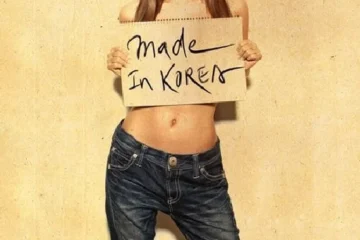
Decoding the Dwenjang-nyeo: The Evolution of Consumption Status and Gender Satire in Modern South Korea
Article Editorial Team

The term dwenjang-nyeo, or "bean paste girl," has transitioned from a niche internet slang to a significant sociological marker in South Korean discourse, gaining international prominence following the global success of Psy’s 2012 hit "Gangnam Style." While the song was celebrated for its infectious beat and humorous choreography, its lyrical content provided a sharp satirical critique of a specific subset of Seoul’s population. The "bean paste girl" is characterized as a woman who prioritizes luxury consumption and the outward appearance of wealth over financial stability, often sacrificing basic necessities to afford high-end designer goods and expensive Western-style coffee. This phenomenon serves as a lens through which to view South Korea’s rapid economic transformation, its evolving gender dynamics, and the lingering tensions between traditional frugality and modern materialism.
The Etymology and Definition of a Social Construct
The literal translation of dwenjang-nyeo derives from dwenjang, a fermented soybean paste that serves as the foundation for dwenjang jjigae, a humble and affordable stew. Traditionally, this soup is considered a staple of the Korean diet—nutritious, inexpensive, and deeply associated with domesticity and the "old" Korea. The term "bean paste girl" was coined to describe a woman who eats this cheap, $3 to $4 meal in order to save enough money to purchase a $6 designer latte at a franchise like Starbucks.
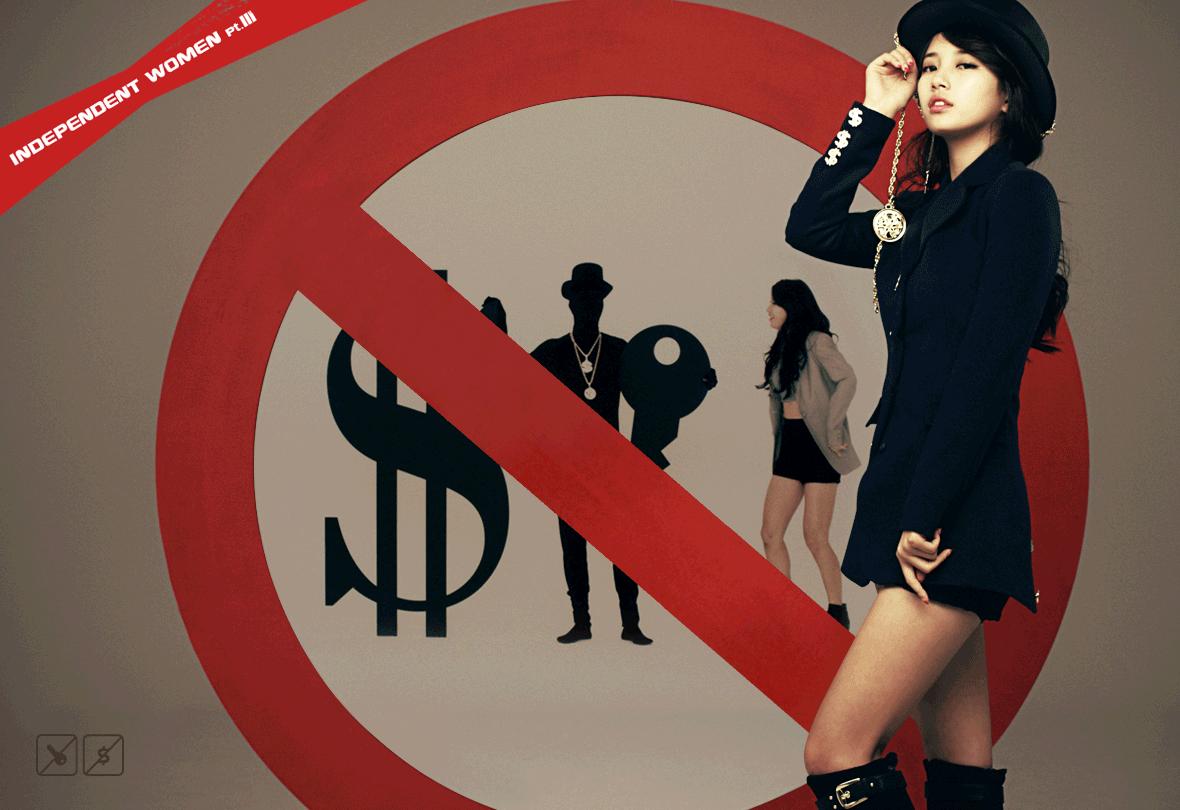
However, the definition is not monolithic. To some, the dwenjang-nyeo is a woman from a modest background who lives with her parents to minimize expenses, hoarding her salary to buy a single Chanel or Louis Vuitton handbag. To others, she is a "wannabe" who mimics the lifestyles of the truly affluent residents of the Gangnam District, dripping in brand names but lacking the cultural or financial capital to sustain such a lifestyle. A more radical, though less common, interpretation suggests she is a figure of economic independence—a woman who spends her own hard-earned money on the luxuries she desires, refusing to rely on a husband or father. Despite these varying nuances, the core of the label remains derogatory, targeting women who exhibit what society deems "conspicuous consumption."
Historical Context: From Destitution to the Miracle on the Han River
To understand the vitriol directed at the dwenjang-nyeo, one must examine the compressed modernization of the South Korean economy. Following the devastation of the Korean War (1950–1953), South Korea was one of the poorest nations on earth. During this era, the country was so impoverished that it received financial aid from nations like Ethiopia. For decades, South Korea lagged behind North Korea in industrial output and quality of life, leading to a national sense of urgency regarding economic survival.
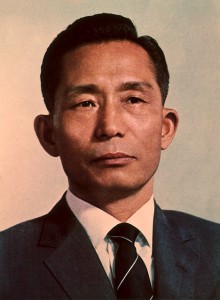
The rise of the authoritarian leader Park Chung-hee in 1961 marked a turning point. Park implemented a series of Five-Year Economic Development Plans, emphasizing export-oriented industrialization. Under his rule, the state promoted a culture of extreme frugality. National campaigns were launched to discourage kwasobi, or "excessive spending," which was framed as unpatriotic and a threat to national stability. South Koreans were encouraged to save every won, work grueling hours, and avoid imported luxury goods. This ethos of "tightening the belt" became a cornerstone of the Korean identity for the generation that built the "Miracle on the Han River."
By the 1990s, the economic landscape had shifted dramatically. South Korea had joined the ranks of developed nations, and the urgency of survival was replaced by the possibilities of the free market. The 1988 Seoul Olympics served as a global coming-out party, and by the mid-90s, the first generation of "lifestyle" consumers began to emerge. However, the psychological transition from a culture of scarcity to a culture of abundance was not seamless. The older generation’s disdain for kwasobi remained, creating a generational rift where the youth’s desire for self-expression through brands was viewed as a betrayal of the sacrifices made by their predecessors.
Chronology of the Phenomenon
The evolution of the dwenjang-nyeo label can be tracked through several key periods of South Korean modern history:

- 1960s–1980s: The Era of Frugality. Under the Park Chung-hee administration, consumption was heavily regulated. Foreign cigarettes and luxury imports were often seized, and those who displayed excessive wealth were socially ostracized.
- 1990s: The Rise of the "Orange Tribe" (Orenji-jok). This term was used to describe the wealthy children of the Gangnam elite who drove imported cars and spent lavishly. While similar to the dwenjang-nyeo, the Orenji-jok were criticized for their actual wealth, whereas the dwenjang-nyeo is criticized for her perceived or faked wealth.
- 2000s: The Birth of the Term. As coffee culture exploded in Seoul with the entry of Starbucks in 1999, the image of a woman carrying a branded paper cup became a symbol of Westernization and vanity. The term dwenjang-nyeo began appearing on internet forums around 2005-2006.
- 2012: Global Satire. Psy’s "Gangnam Style" brought the critique into the global pop-culture lexicon. The lyrics, "A girl who looks warm and human during the day / A girl who knows how to enjoy the freedom of a cup of coffee," were widely interpreted by Korean audiences as a direct jab at the dwenjang-nyeo archetype.
Supporting Data: Luxury Markets and Economic Disparity
Data suggests that the "bean paste girl" is not merely a figment of social media imagination but a reflection of a massive consumer trend. South Korea has consistently ranked as one of the world’s largest markets for luxury goods. According to a 2022 report by Morgan Stanley, South Koreans are the world’s biggest spenders on personal luxury goods per capita, spending an average of $325 per person, significantly higher than the $280 spent by Americans and $55 by Chinese citizens.
This high level of spending occurs against a backdrop of significant economic pressure. While South Korea is an OECD member with a high GDP, the cost of living in Seoul—particularly housing—has skyrocketed. For many young Koreans, the dream of homeownership is increasingly unattainable. Sociologists argue that "small luxuries," such as a $6 coffee or a $1,500 handbag, serve as a form of "compensatory consumption." When the "big" markers of success (like a house) are out of reach, consumers pivot to visible, portable status symbols to signal their place in the social hierarchy.
Furthermore, the gender pay gap in South Korea remains the highest among OECD nations, hovering around 31%. This economic reality adds a layer of irony to the dwenjang-nyeo criticism: women are being vilified for spending money in a society where they are systematically paid less than their male counterparts, often for the same work.
Gender Dynamics and Official Responses
One of the most notable aspects of the dwenjang-nyeo phenomenon is the lack of a prominent male equivalent. While "bean paste boys" (dwenjang-nam) theoretically exist, the term has never gained the same cultural traction or vitriolic usage. Men in South Korea also engage in conspicuous consumption, often through electronics, high-end watches, and luxury vehicles, yet they rarely face the same level of public shaming.

Feminist scholars in South Korea have responded to this trend by highlighting the inherent misogyny in the label. They argue that the dwenjang-nyeo trope is used to police women’s behavior and financial autonomy. By labeling women as "shallow" or "materialistic," the patriarchal structure maintains a form of social control, suggesting that a woman’s value should be tied to her frugality and domestic utility rather than her individual desires.
There has been no formal government "response" to the term, as it is a social colloquialism. However, various gender equality organizations and academic institutions have held forums to discuss the impact of such labels on the mental health of young women and the overall social fabric. These discussions often point to the "escape the corset" movement and other feminist waves in Korea as a counter-response to the rigid beauty and consumption standards imposed on women.
Broader Impact and Implications
The dwenjang-nyeo phenomenon is more than just a critique of coffee habits; it is a symptom of a society grappling with its own success. South Korea’s transition from a recipient of aid to a global cultural powerhouse happened in the span of a single lifetime. This "compressed development" has left a gap between the country’s economic reality and its social values.
The "bean paste girl" serves as a convenient scapegoat for deeper anxieties about class mobility and the perceived loss of "traditional" Korean values. In a hyper-competitive society where appearance often dictates professional and social success, the pressure to "look the part" is immense. The dwenjang-nyeo is, in many ways, a product of the very environment that criticizes her—a society that demands perfection and status while simultaneously condemning the methods used to achieve them.
As South Korea continues to influence global trends through music, film, and fashion, the nuances of its internal social critiques will continue to surface. Whether the label eventually fades or evolves into a new form of social branding, the dwenjang-nyeo remains a powerful symbol of the complexities of life in the modern "Dynamic Korea." For observers, she is a reminder that behind the polished veneer of Gangnam’s neon lights lies a complex history of sacrifice, rapid growth, and a persistent struggle to define what it means to be "successful" in the 21st century.
Related News