A Candid Disclosure of Fertility Challenges and Medical Setbacks
The core of Hwang’s narrative centers on her four-month endeavor to conceive a second child. Having already successfully navigated the birth of her first son, Woo In, the actress expressed a profound desire to provide him with a sibling. However, the biological reality of her journey has proven more arduous than anticipated. During the video, Hwang disclosed that she had previously been forced to suspend her IVF treatments due to severe adverse reactions to the hormonal injections required for ovarian stimulation. These injections, which are designed to prompt the ovaries to produce multiple eggs, often carry a heavy physiological toll, ranging from localized swelling and bruising to more systemic issues such as mood fluctuations, fatigue, and Ovarian Hyperstimulation Syndrome (OHSS).
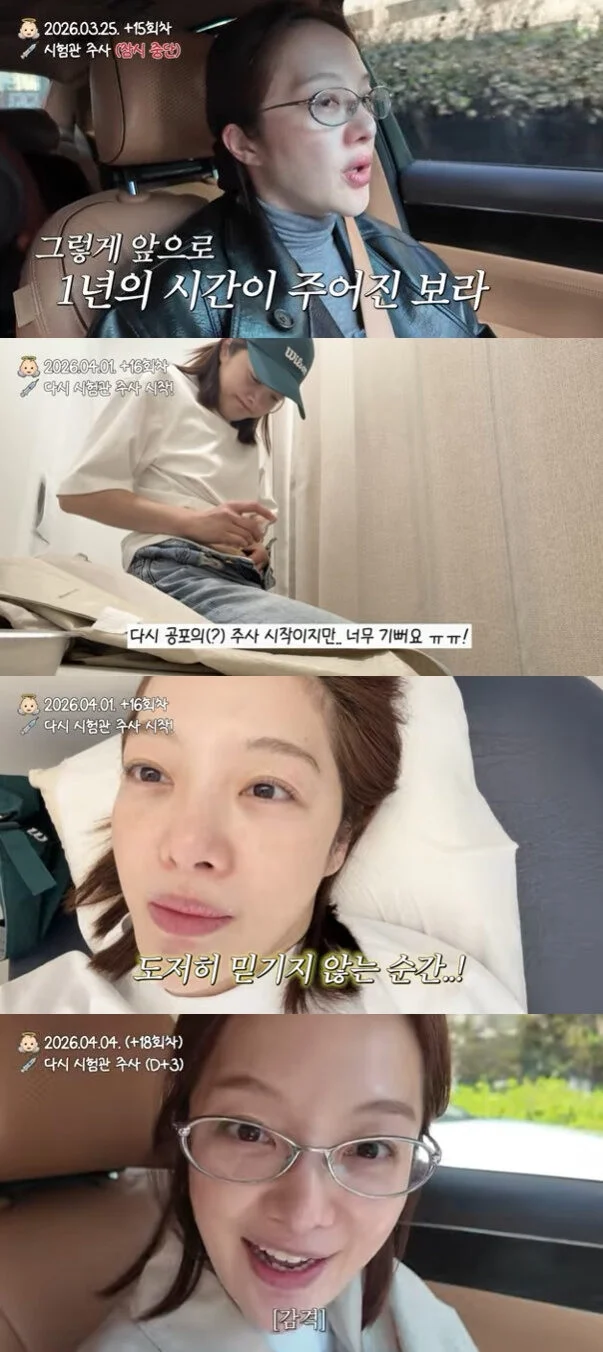
Despite the physical distress, Hwang returned to the fertility clinic after a brief hiatus, driven by a sense of urgency. The medical consultation provided a sobering update: she is currently in a state of perimenopause. In clinical terms, perimenopause, or the menopausal transition, is the interval during which a woman’s body makes the natural shift to menopause, marking the end of the reproductive years. For Hwang, the news was devastating. She recounted the doctor’s explanation that if ovulation fails to occur consistently over a year of induction efforts, the transition to menopause is considered complete. Hwang described this realization as feeling like a "terminal diagnosis," a sentiment shared by many women who face the closing of their reproductive window while still harboring the desire to conceive.
Chronology of a Four-Month Clinical Journey
The timeline of Hwang’s recent efforts illustrates the "stop-and-start" nature of assisted reproductive technology (ART). Four months ago, the actress began the preparatory phases for a second IVF cycle. The process was quickly interrupted by the aforementioned side effects, leading to a period of recovery and reflection. During this time, she contemplated taking an extended break to allow her body to stabilize. However, a "just in case" visit to the hospital proved to be a turning point.
During a follow-up examination, medical staff identified the presence of "miraculous follicles." In the context of IVF, follicles are small, fluid-filled sacs located inside the ovaries that contain immature eggs (oocytes). For a woman in perimenopause, the appearance of viable follicles is a significant clinical milestone, as it indicates that the ovaries are still capable of responding to stimulation. This discovery prompted a shift in the treatment plan, moving from observation back to active intervention. Hwang resumed her regimen of injections and intravenous fluids, expressing a mixture of disbelief and gratitude. The emotional weight of the situation was compounded by the daily pressures of parenting her first child, leading to moments of overwhelming vulnerability.
The commitment required for this journey also necessitated professional sacrifices. Hwang revealed that she withdrew from a long-planned company workshop—an event scheduled months in advance—to prioritize the egg retrieval process. "These precious follicles we’ve been waiting for come first," she stated, emphasizing that the narrow window of biological opportunity outweighed professional social obligations.
The Psychological Motivation: Building a Family Support System
A significant portion of Hwang’s disclosure focused on the "why" behind her persistence. At 40 years old, and with a husband approaching 50, she admitted to questioning whether her desire for a second child was a form of "greed." However, her motivations are rooted in a deep-seated philosophy regarding family structure and the psychological well-being of her firstborn.
Hwang reflected on her own upbringing as a lonely child, noting that for a young child, parents constitute their entire "universe." She expressed a concern that if that universe were to collapse or face hardship, the child would be left without a lateral support system. By pursuing a second child, she hopes to provide Woo In with a sibling who can offer comfort, strength, and shared experience throughout his life. This perspective highlights a common trend in South Korean society, where the shift toward single-child households has led to increased parental anxiety about the long-term social support networks available to their children.
Spousal Dynamics and the Stress of Assisted Reproduction
The actress also provided a candid look at the interpersonal stresses that IVF places on a marriage. Successful IVF is not solely dependent on the female partner’s health; it requires significant lifestyle adjustments from both parties. Hwang shared an instance of frustration with her husband, Kim Young-hoon (the CEO of Walk House Company and brother of actor Ha Jung-woo), regarding his lifestyle choices leading up to the egg retrieval.

According to Hwang, her husband had reduced his alcohol consumption for three days but chose to have a glass of wine the night before the scheduled sperm collection. This led to a heated exchange, with Hwang questioning his commitment to the process. "I got angry and shouted, ‘What are you even doing? I don’t want to try for a second child anymore,’" she recalled. While shared with a touch of humor in the video, the anecdote underscores the very real tension that occurs when one partner undergoes invasive physical procedures while the other struggles with lifestyle modifications. The success of IVF often hinges on the quality of the sperm sample, and medical professionals typically advise men to avoid alcohol and heat exposure to optimize motility and morphology.
Medical Enrichment: Understanding Perimenopause and IVF in the 40s
Hwang Bo Ra’s experience reflects a growing demographic reality in South Korea and globally: the rise of the "older" mother. As career and financial stability take precedence in early adulthood, many women are beginning their fertility journeys in their late 30s and early 40s.
Clinically, the success rate for IVF drops significantly with age. According to data from various reproductive health organizations, the live birth rate per egg retrieval for women over 40 is often below 15-20%, and it continues to decline annually. The primary challenge is both the quantity and quality of the remaining eggs. Perimenopause complicates this further, as hormonal fluctuations become unpredictable. The "miraculous follicles" Hwang referred to are rare in women showing signs of menopause, making her case one of high clinical interest.
The side effects she experienced—which led to her initial withdrawal—are also a major factor in treatment attrition. High doses of gonadotropins can cause significant physical discomfort, and the psychological toll of "failed" cycles or poor follicular response can lead to clinical depression or anxiety in many patients.
The Broader Context of Fertility in South Korea
Hwang Bo Ra’s public struggle occurs against the backdrop of South Korea’s demographic crisis. The nation currently holds the world’s lowest total fertility rate, which fell to a record low of 0.72 in 2023. The government has responded by expanding subsidies for IVF and other ART procedures, regardless of income levels, in an attempt to encourage childbirth.
However, the cultural stigma surrounding infertility and the private nature of medical treatments have often kept these struggles behind closed doors. By sharing her journey on a platform like YouTube, Hwang is contributing to a broader cultural shift. Other celebrities, such as singer Lee Ji-hye and actress Sayuri Fujita, have also been open about their use of IVF and egg freezing, helping to normalize the conversation and provide a sense of community for non-celebrity women facing similar hurdles.
Analysis of Implications and Future Outlook
Hwang Bo Ra’s journey is far from over. With the egg retrieval process underway, the next steps involve fertilization in a laboratory setting, monitoring embryo development, and eventually, the embryo transfer. Each of these stages carries its own set of risks and probabilities of failure.
Her story serves as a factual reminder of the limitations of modern medicine. While IVF offers hope, it is not a guaranteed solution, especially when biological markers like perimenopause are present. Her determination to "persevere for the next year" suggests a pragmatic approach to her fertility—acknowledging the "terminal" nature of the biological clock while exhausting every available medical avenue.
In conclusion, Hwang Bo Ra’s four-month journey highlights the intersection of celebrity life, medical reality, and the universal human desire for family. Her transparency regarding the side effects of treatment, the emotional impact of a perimenopause diagnosis, and the strain on marital relations provides a comprehensive look at the realities of 21st-century reproduction. As she continues her journey, her story will likely remain a point of reference for many navigating the complex and often heart-wrenching world of assisted reproductive technology.