
The 64th Miss Universe pageant, held on December 20, 2015, at the AXIS in Las Vegas, Nevada, remains one of the most discussed events in the history of international beauty competitions. While the event is primarily remembered for a high-profile announcement error by host Steve Harvey, its cultural legacy was further cemented by the discovery of the winner’s personal interests. Pia Wurtzbach, representing the Philippines, was eventually crowned Miss Universe 2015, but the days following her victory revealed a surprising narrative link between the world of international pageantry and the global South Korean pop music phenomenon known as K-pop.
The Miss Universe 2015 Coronation Controversy
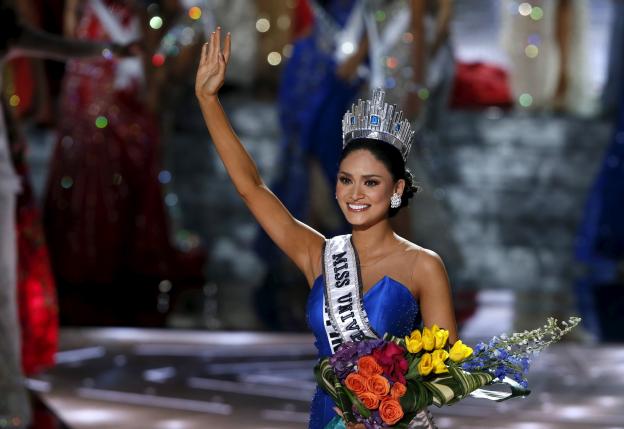
The coronation night of Miss Universe 2015 reached a climax that was unprecedented in live television history. Host Steve Harvey initially announced Miss Colombia, Ariadna Gutiérrez, as the winner. Gutiérrez was crowned, given a bouquet of flowers, and performed the traditional walk as the reigning Miss Universe. However, minutes into the celebration, Harvey returned to the stage to announce that he had misread the results card. Wurtzbach, who had been standing at the back of the stage as the first runner-up, was the actual winner.
The error caused an immediate media firestorm, with footage of the awkward transition—where the crown was removed from Gutiérrez and placed on Wurtzbach—going viral across all social media platforms. The incident drew record-breaking viewership numbers and generated millions of tweets, effectively placing the Miss Universe brand back at the center of global conversation. Amidst this chaotic transition, Wurtzbach maintained a level of poise and grace that was lauded by critics and fans alike. However, as the dust settled on the televised error, a new narrative began to emerge regarding Wurtzbach’s personal life and her long-standing history as a dedicated member of the K-pop fandom.
A Digital Discovery: The Hallyu Connection
Shortly after her victory, internet sleuths and K-pop enthusiasts in the Philippines and abroad began scouring Wurtzbach’s social media archives. They discovered a series of posts on her Twitter (now X) account dating back to 2009 and 2011. These posts revealed that the newly crowned Miss Universe was a self-proclaimed "ELF," the official name for fans of the South Korean boy band Super Junior.
The tweets were remarkably relatable to the K-pop community. In several posts, Wurtzbach referred to herself as "Mrs. Siwon Choi," a nod to one of Super Junior’s most prominent members, Choi Si-won. Her posts included typical "fan-girl" expressions, such as commenting on his physical appearance, his performances, and her general devotion to the group. For many K-pop fans, this discovery humanized Wurtzbach, transforming her from an untouchable beauty queen into a peer within a global subculture. The revelation bridged the gap between the traditional, often conservative world of beauty pageants and the modern, digital-first world of music fandoms.
Chronology of Events: From Error to Icon
To understand the full impact of this crossover, it is necessary to examine the timeline of events that occurred in late December 2015:
- December 20, 2015: The Miss Universe finale takes place in Las Vegas. Steve Harvey’s error occurs, and Pia Wurtzbach is crowned Miss Universe 2015.
- December 21–22, 2015: Global media focuses on the "Harvey Flub." Discussions regarding the ethics of the mistake and the resilience of the contestants dominate news cycles.
- December 23, 2015: Filipino K-pop fans begin sharing screenshots of Wurtzbach’s old tweets. The hashtags #MissUniverse and #SuperJunior begin to trend together in the Philippines and South Korea.
- December 25, 2015: International K-pop news outlets, such as Soompi and Allkpop, pick up the story, bringing it to the attention of the global Hallyu community.
- December 27, 2015: Choi Si-won of Super Junior officially acknowledges Wurtzbach’s fandom on his Instagram account, offering his congratulations and an invitation to a future "Super Show" concert.
- January 2016: Wurtzbach continues to acknowledge her love for K-pop in interviews during her New York media tour, further solidifying her status as a "Hallyu ambassador."
The Response from Super Junior and the K-pop Community
The response from the K-pop industry was swift and welcoming. Choi Si-won, who was serving his mandatory military service at the time, posted a photo of himself and Wurtzbach (digitally side-by-side) with a caption that read: "Pia Alonzo Wurtzbach 🙂 Heartfelt congratulations on your Miss Universe 2015 victory, and please be my guest for the next Super Show! Looking forward to seeing you shining the world :^)"
This interaction was significant because it validated the fandom of a high-profile figure. Super Junior’s leader, Leeteuk, also posted a congratulatory message, noting the power of the "ELF" fandom and how it extends to even the most beautiful women in the world. The official Super Junior social media accounts also shared the news, which served to cross-promote the Miss Universe brand to a younger, digitally active demographic that might not otherwise follow beauty pageants.
For the Filipino K-pop community, this was a moment of immense pride. The Philippines has long been one of the largest consumers of South Korean media in Southeast Asia. Having one of their own—the most famous woman in the country at that moment—be an open fan of K-pop served as a powerful cultural endorsement.
The Cultural Context of K-pop in the Philippines
The discovery of Wurtzbach’s fandom is not an isolated incident but rather a reflection of the deep-seated influence of the Hallyu Wave in the Philippines. Since the early 2000s, South Korean dramas (K-dramas) and music have been staples of Filipino entertainment.
Super Junior, in particular, holds a legacy position in the Philippines. Their 2009 hit "Sorry, Sorry" is often credited with sparking the mainstream K-pop explosion in the country. The group was one of the first K-pop acts to hold a large-scale solo concert in Manila, setting the stage for the massive "Super Show" tours that would follow. Wurtzbach’s tweets from 2009 coincide exactly with the peak of "Sorry, Sorry" mania, indicating that her fandom was rooted in the foundational years of the Hallyu movement in Southeast Asia.

Statistical Overview: The Hallyu Wave in Southeast Asia
Data from the Korea Foundation and Twitter’s internal analytics highlight the scale of the audience that Wurtzbach was tapping into:
- Social Media Volume: In 2015, the Philippines ranked among the top five countries globally for K-pop-related tweets.
- Economic Impact: By 2015, the export value of South Korean cultural content to Southeast Asia had seen an annual growth rate of approximately 12%, with the Philippines being a primary market for television licensing.
- Fandom Growth: The "ELF" fandom remains one of the most organized and longest-running fanbases in the world, with thousands of active members in the Philippines alone who contribute to charity work and large-scale event organization in the group’s name.
The intersection of these two worlds—Miss Universe and K-pop—represented a massive convergence of social media power. The Miss Universe pageant typically attracts around 500 million to 600 million viewers worldwide. When combined with the digital reach of K-pop fandoms, which number in the hundreds of millions, the resulting visibility for both Wurtzbach and the pageant was unparalleled.
Analysis of Implications: Humanizing Global Figures Through Fandom
The revelation of Wurtzbach’s K-pop fandom had several long-term implications for how public figures manage their digital identities. Traditionally, beauty pageant contestants were expected to maintain a highly curated, almost generic public persona. Wurtzbach’s "stanning" (a term for obsessive fandom) broke this mold.
- Relatability as a Brand Asset: Wurtzbach’s openness about her past interests made her more relatable to the millennial and Gen Z demographics. It shifted the perception of a Miss Universe winner from a "statue of perfection" to a person with genuine, relatable hobbies.
- Normalization of Fan Culture: For years, K-pop fans often faced stigma for their intense dedication to foreign-language artists. Having a Miss Universe winner openly share those same interests helped normalize and legitimize fan culture in mainstream media.
- The Power of Social Media Archives: The incident served as a reminder of the permanence of social media. While Wurtzbach expressed some playful embarrassment during her interviews about her "fangirl" past, the overall reception was positive, suggesting that authenticity in one’s digital history can be a strength rather than a liability.
Conclusion
The crowning of Pia Wurtzbach as Miss Universe 2015 was a landmark event for the Philippines and the pageant industry, but its cultural reach was significantly extended through the digital discovery of her K-pop fandom. By bridging the world of elite pageantry with the vibrant, global community of Super Junior fans, Wurtzbach became more than just a titleholder; she became a cultural bridge-builder.
The event demonstrated that the Hallyu Wave had moved beyond a niche interest into a dominant cultural force that influences even the highest echelons of international competition. As Wurtzbach moved forward in her reign, she continued to use her platform to advocate for various causes, but her identity as an "ELF" remained a beloved footnote in her journey, proving that even the most prestigious titles do not require one to abandon their personal passions. The "Mrs. Siwon Choi" tweets, once just the musings of a young fan, ultimately became a symbol of the interconnectedness of modern global culture.